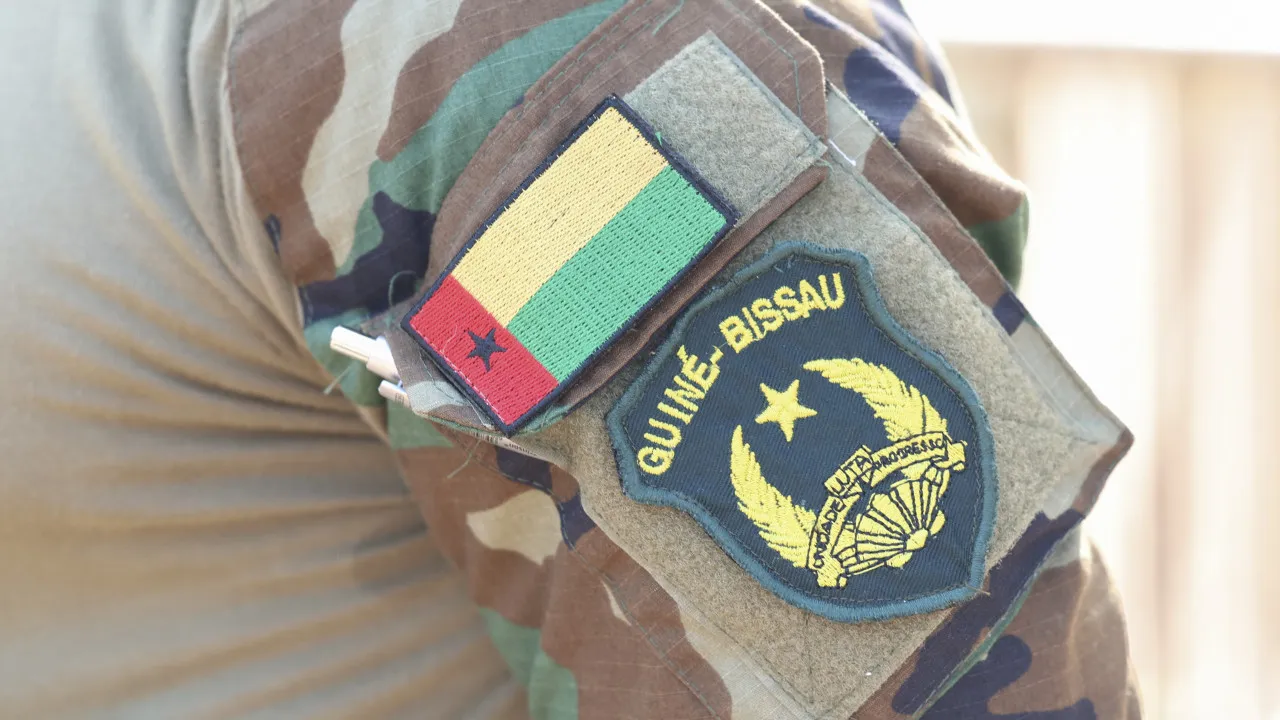
One year after the military coup that interrupted the electoral process in Guinea-Bissau, the 12-month transition period is on the 26th without a new date for the elections that had been announced for December 6.
© Lusa
22/11/2026
by
Lusa
Um year after the military coup that interrupted the electoral process in Guinea-Bissau, the promised 12-month transition period passes on day 26 without a new date for the elections that were announced on December 6.
The coup took place on November 26, 2025, eve of the announcement of the results of the legislative and presidential elections held three days before and whose victory was claimed by the opposition to the then President Umaro Sissoco Embaló.
Marked by the impediment of the candidacy of the historic African Party for the Independence of Guinea-Bissau and Cape Verde (PAIGC) to legislative and its leader, Domingos Simões Pereira, to presidential elections, the elections took place, according to observers on the ground, without incidents.
With the opposition to Sissoco Embaló gathered around Fernando Dias da Costa, president of the Social Renewal Party (PRS), the invasion of the headquarters of the National Election Commission by military prevented the dissemination of the results that, they claimed, dictated the defeat of the then President.
Sissoco Embalo ended up deposed by the military, in what the opposition interpreted as a “enacted coup” aimed at his return to power in time.
The military claimed that “there was an imminent danger of a civil war in the country”, justified by the alleged “division in society, in all ethnic groups and in families because of the elections”.
The military command appointed a general, Horta Inta-a, as President of the transitional Republic, created a National Transitional Council to replace parliament, and decreed a 12-month transitional period.
Inta-a chose a former Minister of Embaló, Ilídio Vieira Té, as transition prime minister, who also took the portfolio of Finance.
The coup led to the suspension of Guinea-Bissau of the organisations to which it belonged, such as the African Union, the Economic Community of West African States (ECOWAS) and the Community of Portuguese-speaking Countries (CPLP), whose presidency occupied and was taken over by East Timor.
In addition to the return of institutional normality, the international community demanded the release of political prisoners, in particular Domingos Simões Pereira, taken first to a police station, then placed under surveillance at home and arrested preventively on July 10, in the framework of a lawsuit at the Military Court for alleged involvement in a alleged coup attempt in October 2025.
Thirteen days later he was released on the grounds that he was to undergo medical treatment in Portugal for a period of 90 days, but he was not yet returned to the country.
In his first communication to the country in December 2025, after being appointed by the High Military Command (ACM) President of the Transitional Republic, General Horta Inta said that the elections are not a solution for the country, but in January he called for legislative and presidential elections for December 6.
Rather, the National Transitional Council changed the Constitution, giving the President more power, reducing the number of deputies and preventing Guineans in the diaspora from voting in presidential elections.
The new Constitution was brought to the referendum in August, with the opposition ensuring that it was marked by a very high abstention.
In September, Vieira Té admitted to being the leader of a new political party, the Guineense People's Party, moving away from Sissoco Embaló and stressing that the main objective of the transition period was to safeguard the state and prepare "solid bases" for the return to normality through elections.
With the political and partisan activity restricted in the country, the party headquarters located less than 500 meters from the Presidency, those of the PAIGC and the Madem G15 (party founded by Embaló and in the meantime divided into two factions), were invaded by the forces of order and closed.
At the end of September, Sissoco Embalo announced his return and his candidacy for elections, but the High Military Command warned that the conditions for returning to the country were not guaranteed for security reasons.
In the first week of October, military movements alarmed the inhabitants of Bissau, with rumors of “dismantling militias” faithful to Embaló, and Inta explained that it was a transfer of personnel from the presidential palace to other military units.
On October 8, the Prime Minister and the National Election Commission considered that legal and operational conditions for elections were not met, referring to an official announcement by the President with a new timetable, not yet announced.
Already this month, on the 06th, the MCA announced that it will make the restrictions on political and party activity flexible, starting on Tuesday, day 24, allowing meetings, but maintaining the prohibition of rallies and demonstrations.
Organizations such as the League of Human Rights and the Land Dust have insisted on the release of political prisoners and the investigation of “serious human rights violations”, in particular on the circumstances of the deaths of Mamadu Tano Bari, former member of the presidential guard, and the activist Vicar Balanta.
Meanwhile, some military personnel were released more than a year ago and the Attorney General's Office of the Republic announced a commission of inquiry to investigate the death of Balanta, president of the Land Powder.