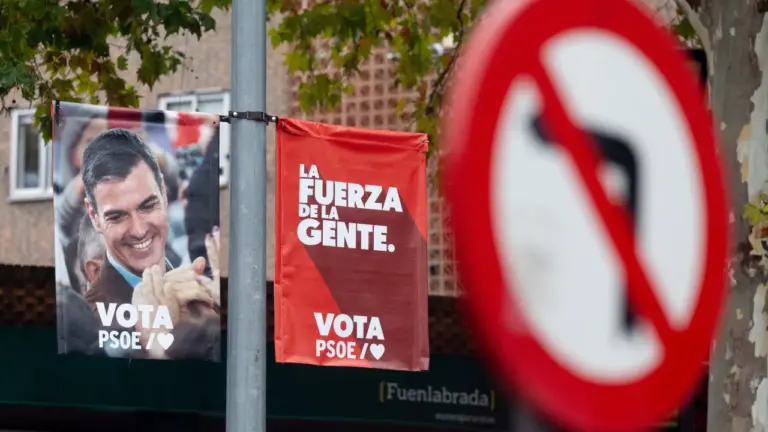
The Spanish general elections of November 29 are held normally in several countries of America, but with long queues and separate polls for citizens abroad.
© Eduardo Parra/Europe Press via Getty Images
24/11/2026
by
Lusa
Athe votes for the Spanish general elections of 29 November have been held normally since Saturday in several countries of America, but with long queues, while the consulates keep separate polls to collect votes.
The voting rights of these citizens residing abroad are suspended by the Supreme Court.
In Argentina, where the largest Spanish community in the region resides, more than 520,000 people are entitled to vote. Today the vote took place normally and without long queues, according to the representatives of the parties and consular authorities consulted by the Spanish news agency EFE.
In the special ballot box for those naturalized by the Law of Democratic Memory, known as the law of grandchildren, some 300 votes had been deposited since the beginning of the votes on the weekend. At the Spanish Embassy in Washington, more than 800 citizens had voted face-to-face until this morning, a number exceeding 562 registered in total in the general elections of 2023, according to diplomatic sources.
For the Spaniards affected by the precautionary suspension, five ballots had been received, which remain in a separate ballot box awaiting a judicial resolution.
In Venezuela, where 121,839 Spanish residents abroad are registered, more than 6,500 votes had been deposited by Monday night in the centers available for vote in Caracas and Valencia, about 5.5% of the census.
The queues in the Venezuelan capital stretched all over the street and the participation in these elections to surpass the 2023 record when they voted 8,831 people.
The votes of those affected by the precautionary suspension are deposited in an urn identified as the Democratic Memory Law (LDM), although its number is, according to consular sources, “very marginal”.
In Chile, where 70,018 resident Spaniards have the right to vote for the Spanish elections, votes take place without incident and with queues since the weekend, although without the crowds registered in other cities.
The Spanish Cultural Center in Santiago also has a special ballot box for suffrage affected by the suspension.
In Peru, the vote in Lima (capital) is more frequent than in previous elections, according to EFE on the spot.
At one table there were waits between 10 and 15 minutes, while at another there were no queues. The ballots filled more than half of the separate ballot for those naturalized by the law of the grandchildren, although no participation numbers or the number of voters were provided.
In Brazil, at the consulate of São Paulo, 15 votes had been deposited in the separate ballot box, according to EFE Vox's representative, Luis García Seoane, compared to the two conventional urns that were already full.
In Panama, where there have been large queues since Saturday, the ballot box specifies the possible votes of voters affected by the court order remains empty, as until today no person has been present in this situation.
The measure affects citizens who have obtained Spanish nationality under the Democratic Memory Act but who have failed to prove their status as descendants of exiles.
The Supreme ordered that their votes be received and kept separate to be sent to the provincial electoral councils without introducing them into the polls of the qualified voters.
The face-to-face vote at the consulates for Spanish residents abroad will last until Thursday, November 26.