
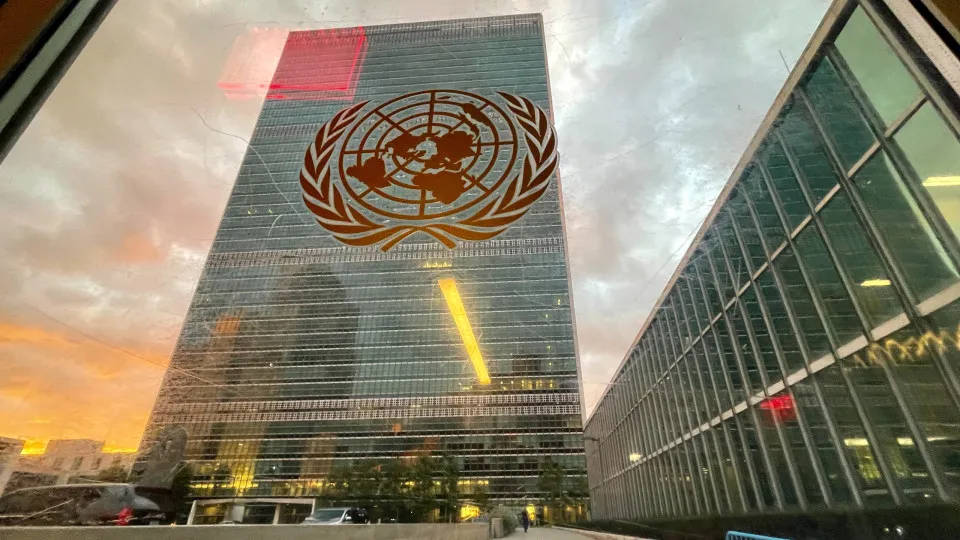
The United Nations warns that about 3.7 billion people live in 51 developing countries that spend more on public debt interest than on investments in education or health.
© Lusa
17/11/2026
by
Lusa
Aunited Nations warns that about 3.7 billion people live in 51 developing countries that spend more on public debt interest than on investments in education or health.
“ Developing countries paid nearly $1 billion in public debt interest in 2025, almost three times the 2010 level,” says UN Trade and Development (UNCTAD) in a report on developing countries’ public debt.
In the report entitled A World of Debt, UNCTAD argues that deepening the activity of the Borrowing Platform is “one of the global actions necessary to reduce the structurally high cost of indebtedness” of developing countries, in particular Africans.
“Reducing the difference between the cost of indebtedness of richer countries and the burden on developing economies could save the poorest countries about 500 billion dollars [450 billion euros] in interest,” enough to finance 1.3 million primary health centers or ensure a nutritious and diversified diet to 1.6 billion children per year, details.
The organisation states that these countries have faced successive economic shocks in recent years, from the covid-19 pandemic to the invasion of Ukraine by Russia and, more recently, the Middle East war, conflicts that have had a strong impact on fertilizer and fuel prices and contributed to rising inflation.
“ The debt should help countries to invest in their future, but in many developing countries, the cost of serving external debt is now greater than the input financial flows,” the report notes, which identifies a structural change: since 2022, interest payments have exceeded the new loans granted to developing countries.
This means, stressing UNCTAD economists, that external funding is no longer guaranteeing additional resources for development and is, on the contrary, making these countries increasingly dependent on internal funding, which is increasingly expensive.
UNCTAD further points out that global public debt reached $1111 billion in 2025, around €100 billion, more than twice as much as in 2010, and stresses that although the richest countries accounted for about two thirds of the total, “the debt grew much faster in developing countries.”.
According to the report, these countries pay on average 5.2% interest, more than twice the 2.2% paid by developed countries.
Among the solutions and recommendations pointed out by UNCTAD analysts is the deepening of the Borrower Platform, a mechanism created at the Seville Conference on Development Financing in 2025, which aims to unite borrowers in a common voice on global financial architecture.
At international level, UNCTAD highlights priorities to reverse the trend of decline in public development aid, extend the credit granted by multilateral and regional development banks and increase technical assistance to strengthen national capacities.
At national level, the organisation calls for increased macroeconomic management and public institutions, improved debt portfolio structures and increased use of innovative financial instruments.