
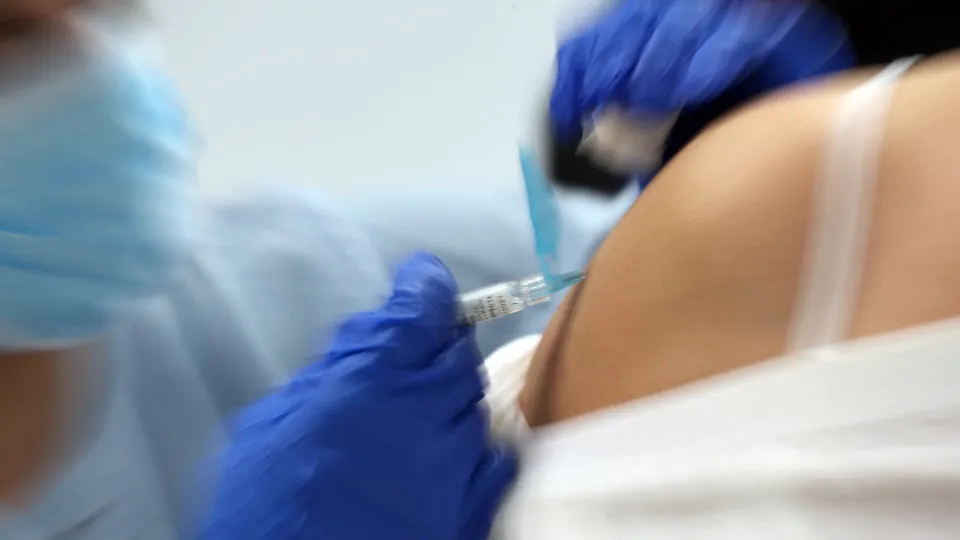
About 95% of respondents in a national study recognize the benefits of vaccination, but the majority are unaware of adult vaccines integrated into the National Vaccination Program and recommendations for their age group or health condition.
© Lusa
07/10/2026
by
Lusa
Aconclusions of the study published today on the barriers of vaccination in adulthood and on the knowledge of the portuguese in relation to vaccines recommended throughout life show “a population who believes in vaccination as a principle, a belief that, however, does not translate into an informed decision”.
According to the survey promoted by the Vaccination Patients Movement (VLOM), which involved a sample of 1,500 people aged 18 years and over, with and without a diagnosis of chronic disease, 94.4% of participants recognize the benefits of vaccination, highlighting “protection against serious diseases” and “group immunity” as the main benefits.
However, 63.9% do not know that vaccines are part of the National Vaccination Program (NPV), a percentage that rises to 76.4% in people without chronic disease, says the study “Vaccination Barriers in Portugal”, conducted between 28 May and 4 August 2026.
Half of the participants (50.2%) are also unaware of the vaccines recommended for their age group or health condition, and 41% have chronic disease.
Lack of knowledge is even greater in relation to vaccines for adults outside the PNV: 90.5% are unaware of their existence and 62.1% cannot identify which ones would like to be included in the future.
“ Vaccination is an act of individual and collective protection and people know it, as the data show. But it is not possible to ask them to protect themselves, and protect those around them, through vaccination, when they lack the basic knowledge about which vaccines are available ", says José Albino of MOVA, quoted in a statement accompanying the study.
Among participants who are not vaccinated annually against flu or covid-19, the main reason is that they do not feel at risk (38.8%). Half does not consider seasonal vaccination a personal priority, which rises to 67.5% among healthy people.
Among chronic patients with delayed vaccines (7.6% of the total), approximately 45% are aware of the delay, but they do not consider that vaccination is necessary.
Most (74.9%) have never heard of the concepts “vaccination hesitation” or “vaccination fatigue”. Still, 56.8% associate us with serious public health problems, although 21.1% admit never to having reflected on the impact of third-party vaccination on group immunity and community protection.
More than half (51.3%) do not identify barriers to vaccination and those who recognize them highlight fear of adverse effects (22.3%), lack of information (16.1%), doubts about efficacy (15.7%), lack of medical recommendation (10.1%) and distrust in health authorities or the pharmaceutical industry (6.8%).
Contact with health professionals stands out as a relevant factor for vaccination. While 74.9% of chronic patients report that the attending physician addresses the subject in consultation, this proportion falls to 43.3% among people without chronic disease. Among adults aged 18 to 35, 21.7% say that the doctor never approaches vaccination.
The study, which will be presented today in Lisbon at the meeting “Vaccination to the Long Life: Challenges and Opportunities in Portugal”, promoted by the Portuguese Association of People with COPD and other Chronic Respiratory Diseases, founder of MOVA, also reveals that, with the exception of covid-19 (80.3%) and influenza (53.3%), the use of other vaccines in the last five years is residual: 7.5% for pneumococcal, 4.9% for HPV, 1.5% for RSV and 1.3% for Herpes Zóster.
“ This study shows that there is still much to be done when it comes to vaccination. It is urgent that, in the name of public health, the PNV should also be extended to adulthood, as already happens in childhood, and the strengthening of information is imperative. Only with a structured program, and not only with scattered recommendations that few know, one can ask people to take responsibility for vaccination and protecting those around them ", concludes José Albino.