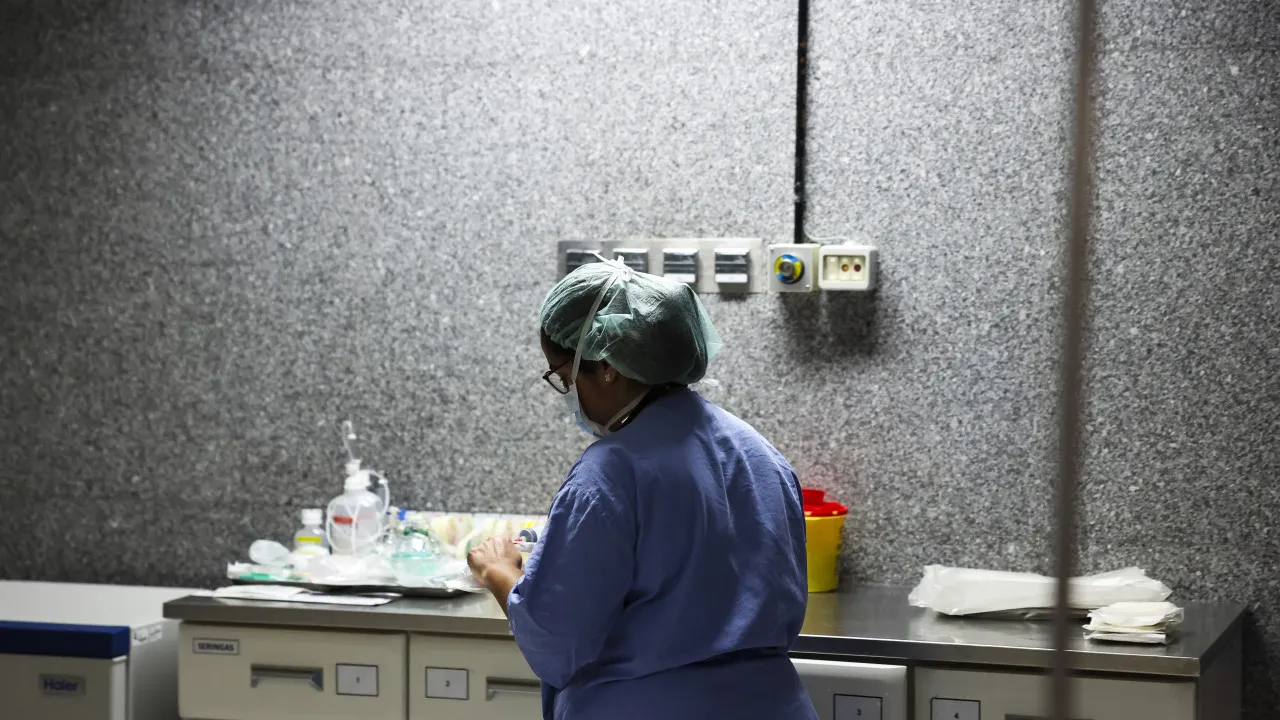
More than 90% of hospitals that participated in the National Medicine Access Index consider that they do not have enough professionals involved in the medication circuit and half say that the resources they have are not adequate.
© Lusa
20/11/2026
by
Lusa
Mais 90% of hospitals that participated in the National Medicine Access Index consider that there are not enough professionals involved in the drug circuit and half say that the resources they have are not adequate.
The Intercalar Study 2026 of the National Index of Access to Hospital Medicinal Products, developed by the Portuguese Association of Hospital Administrators (PAH) and which will be presented today, indicates that despite the progress made the lack of professionals remains one of the main challenges of the institutions of the National Health Service (SNS).
“ Pharmaceuticals are lacking, technicians are lacking to make purchases quickly and in a timely manner, and this, in fact, has consequences in the slowness of some processes and in some things that remain to be done,” said APAH president Xavier Barreto.
In statements to Lusa, the person responsible gave the example of the pharmaceutical consultation – which serves to ensure that the patient is complying with the therapy and even to readjust medication (therapeutic reconciliation), if necessary – referring that “most hospitals say they do, but then it is known that it is for very few patients”.
Among the hospitals that reported concrete situations in which the lack or inadequacy of professionals affected the access to the medication, the main difficulties were the performance of pharmaceutical consultations, the management of stocks and the execution of orders.
The study, to which 36 of the 43 institutions of the SNS - a response rate of 83.7% (68% in 2024) - responded, reveals that public hospitals are strengthening the models of pharmaceutical consultation and drug dispensing in close proximity, but they still have structural challenges that hinder patients' access to treatment.
The pharmaceutical consultation works in 94% of the institutions that responded, given 52% in the mid-term study of 2024, allowing specialized monitoring of the use of medicines.
“There is a lot of evidence that these consultations are very useful and in many cases they can save a lot of money,” Xavier Barreto said, stressing that there are “old people who are doing 10 or 15 medicines and reconciling everyone is not an easy task.”.
In parallel, 97% of hospitals already use nearby drug dispensing mechanisms, including pilot programs (22%), with community pharmacy being the most used route to get the medicine to the patient (91%).
Proximity hospitals (45.7%) and primary health care units (25.7%) are other ways for patients to access the medicine they need.
Despite some advances, the reach of these models remains limited, with the dispensing close to reaching, on average, only 6% of patients receiving outpatient hospital medication.
In spite of everything, Xavier Barreto acknowledges that both the pharmaceutical consultation and the discharge in proximity were the areas in which the ULS most progressed in the last year and says he hopes that the guardianship can hire all the young pharmacists who will finish the pharmaceutical residency (specialized training).
“ I hope that this will bring a great boost and a great improvement in the coming years,” he added.
Asked about the main areas or groups of medicines distributed in the dispensing in proximity, hospitals point out the drugs to treat multiple sclerosis, rheumatologic disease, crohn's disease and ulcerative colitis, psoriasis, antineoplastic drugs (hormones) and HIV, among others.
The data show some evolution in the reorganization of management models, with more than half of the institutions (53%) claiming to have gone through these processes in the last two years, mainly associated with the constitution of the Local Health Units (ULS). All reorganized institutions reported a positive effect on drug management.