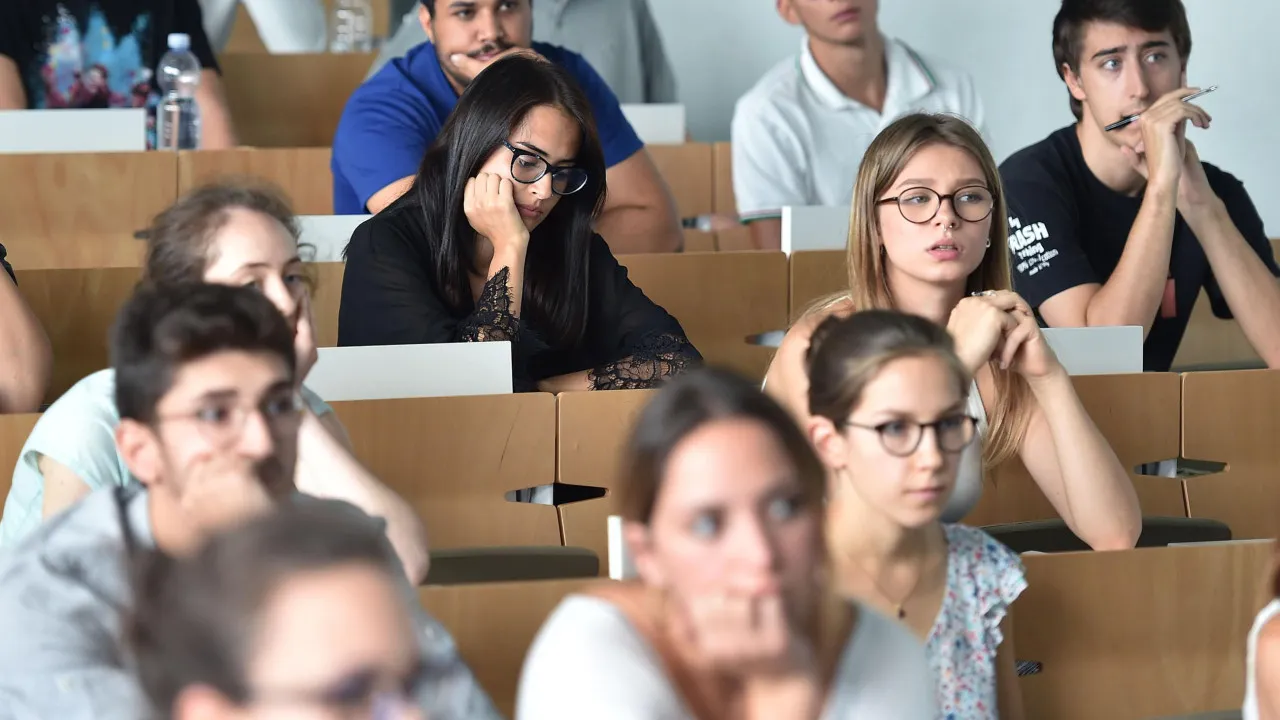
Half of the elderly and more than 40% of young people have a low ability to access and understand health information, indicates a study published today, which warns of the danger of digitization leaving the older ones out.
© Lusa
20/11/2026
by
Lusa
Meta of the elderly and more than 40% of young people have low ability to access and understand health information, indicates a study published today, which warns of the danger of digitization leaving the elderly apart.
The information, worked by the team of the Portuguese Laboratory of Healthy Work Environments (Labpats), coordinated by psychologist Tânia Gaspar, traces, for the first time, the picture of health literacy throughout the life cycle, showing that who knows more about health lives better physically, psychologically and socially.
This work, which gathers data from more than 12,000 people – from the 6th grade children to the 98-year-olds – shows that the health literacy of the Portuguese is fragile at all ages, but that they are the youngest and oldest who are at higher risk, because they are 44.2% and 49.7% of low literacy, respectively.
“ More and more talk about the patient's involvement in decision-making. But if the person does not have the right tools, if he is not aware, the option he takes is not a true choice”, he explained to Lusa Tânia Gaspar.
The work of the team that also integrates the Social Adventure project is the result of two national studies: the Health Behavior in School-aged Children (HBS) of the World Organization and Health (WHO) of 2022, with 7,649 students from 6th to 12th year, and Labpats 2023, with 1,600 students from higher education, a.1677 professionals and 1,796 elderly adults.
The data point to almost half of the elderly (49.7%) with low health literacy and only 3% with high level. The digital scenario worsens: two out of three elderly (66.6%) have low health literacy and only 0.6% have high levels.
Only 17.5% of the elderly feel confident to use Internet information in health decisions and only 26.2% know how to distinguish sources of good and poor quality. Men, younger (up to 65 years) and graduates have higher ‘e-literacy’ and these are the ones with the least depression, anxiety and stress.
In the elderly, the coordinator of the study also draws attention to the need for digital transformation in health to take into account the low literacy of the elderly: “if information and health procedures really become digital, there is a part of at least 70% of the elderly population that is outside of access to this health”.
“ If we want to promote the autonomy of the elderly, if we want the person to continue to have his/her role and autonomy, we cannot increasingly confront him/her with structures and resources that the person cannot understand”, he/she added.
Looking at health literacy as the ability to find, understand, evaluate and use information to decide on their own health, the team started from the perspective that health depends on the person, but also on the family, school, work and community.
For this reason, health literacy was crossed with four dimensions — physical health and lifestyle, psychological health, social relationships and life contexts.
Health e-literacy was also measured in the elderly, that is, the ability to use the Internet for health decisions, analyzed as an innovation factor and, when missing, as a risk factor.
Mental health information is the hardest to find. For example, finding information to deal with stress, anxiety or depression is difficult or very difficult for 48.4% of the elderly, 28.7% of the university students and 25.9% of the adult professionals. Making decisions to improve your own health is difficult for 30% of college students.
Researchers are concerned about the difficulty in finding information on mental health and the digital gap in older people.
The data also indicate that students with higher literacy have more family support, better relationships with teachers and colleagues and they like the school more. In the elderly, attending a senior university reduces the low literacy level from 54.9% to 35.7%.
Among students, girls, 6th graders and those with higher socioeconomic status have higher literacy and, in adults and the elderly, education makes a difference.
The information was condensed in four brochures proposing answers for each phase of life: in schools, they suggest integrating health literacy and mental health into the curriculum and strengthening psychologists and school health teams and, in higher education, they ask for health promotion institutions, with accessible psychological support and measures to combat disinformation and screen dependence.
In workplaces, they suggest that professionals are trained in stress management and burnout prevention, right to hang up and physical activity programs and, for the elderly, the proposals are aimed at creating community digital health literacy programs, and face-to-face and telephone alternatives to digital services.