
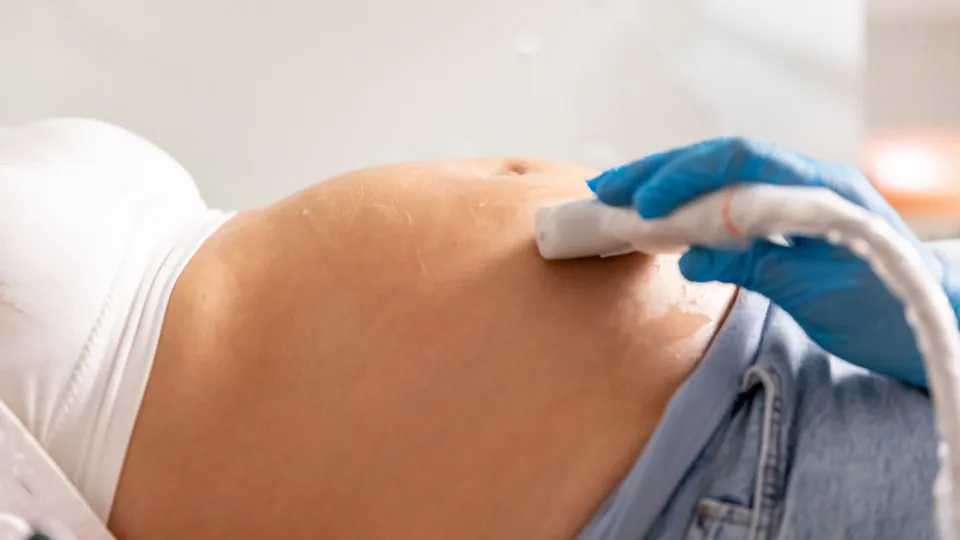
The head of the Perinatal Palliative Care of the Local Health Unit (ULS) of Coimbra said that there are more and more mothers who choose to continue pregnancy even in the face of diagnoses of serious or threatening pathology of the child's life.
© Shutterstock
17/10/2026
by
Lusa
A responsible for perinatal palliative care of the local health unit (ULS) of Coimbra said that there are more and more mothers who choose to continue the pregnancy even before the diagnosis of serious or threatening pathology of the child's life.
“What we have observed in recent years is a paradigm shift. Faced with some serious, limiting or life-threatening pathologies, we have found more and more mothers who choose to continue pregnancy — situations that were much less frequent in our clinical practice some years ago,” doctor Sofia Morais observed.
The hospital assistant graduated from neonatology at the Bissaya Barreto Maternity and specialist in perinatal palliative care pointed out to the agency Lusa that “it has assisted the appearance and growth of these situations in clinical practice, when previously they were less common”.
He said that it is precisely in this context that perinatal palliative care plays an important role in monitoring families, “whatever their decision is, respecting their values and choices and ensuring that when they choose to continue pregnancy they are not alone in the face of such a complex diagnosis”.
Recognized by the Empathy in Health Award 2026, attributed by the Active Principle movement, the work developed by the team of the ULS of Coimbra seeks, “before a devastating diagnosis, to receive the family in an environment of listening, without haste and without judgment, where there is room to understand their values, fears and expectations”.
Instead of focusing solely on the disease, the team seeks to get to know that baby and that family, building together a care plan and an early individualized birth plan, always respecting the wishes of parents and ensuring that they participate in clinical decisions, it was helpful.
When the baby is born, even knowing that it can live only minutes or hours, the priority is to provide comfort, relieve symptoms and create time and space so that parents can exercise their parenthood – take hold, dress the baby, gather the family, take photographs or create memories that will have an invaluable value in the grieving process.
“ When there is death it is the most difficult and painful time for families and, no matter how much it costs us, it is something that when we know that the probability is very high, we also anticipate and prepare the parents to be able to have and create memories of small moments they have with their baby to facilitate the mourning later”, said Sofia Morais.
The expert said that one of the pillars of the team “is also to give parents the chance to create memories so that afterwards mourning can be done in a nonpathological way”.
The team accompanies parents before, during and after delivery, helps the baby's farewell, preserves memories when the family wants it and keeps up with them during the mourning period, preventing these moments from being experienced alone or dehumanized.
Right now, the perinatal palliative care team at ULS. Coimbra has two poles with neonatologists, obstetricians, psychologists and social workers as links to the different parts of the maternity hospitals Bissaya Barreto and Daniel de Matos (delivery room, hospitalization and consultation).
“ The situations we have are serious and complex. That is, our focus covers families in which there is a diagnosis either in the fetus or in the newborn of diseases that limit or threaten life or, then, diseases that there is still some uncertainty regarding the diagnosis or prognosis and, therefore, we follow this path ", explained Sofia Morais.
Operating since the end of 2022, the multidisciplinary team of Perinatal Palliative Care of the Local Health Unit of Coimbra has accompanied families from the prenatal diagnosis of life-threatening or limiting disease to the postnatal period and mourning, and to date has registered 47 visits.
“The number of visits has been increasing and only in the year 2026, which has not yet ended, we have had more references than in the previous three years, because obviously at the beginning we had not yet defined the reference criteria,” he said.
The Health Empathy Awards 2026, which began this year, intend to recognize professionals, caregivers and projects that promote more humane practices and focus on the person in the context of health care in Portugal.
In addition to the Intra-Hospital Perinatal Palliative Care Support team of the ULS of Coimbra, they were also awarded in this first edition Isabel Maria da Conceição Luta Semeão (Leiria), Joana Crilo — Project NAVE (Lisbon), Sofia Magalhães and Teresa Tavares (both from Porto).