
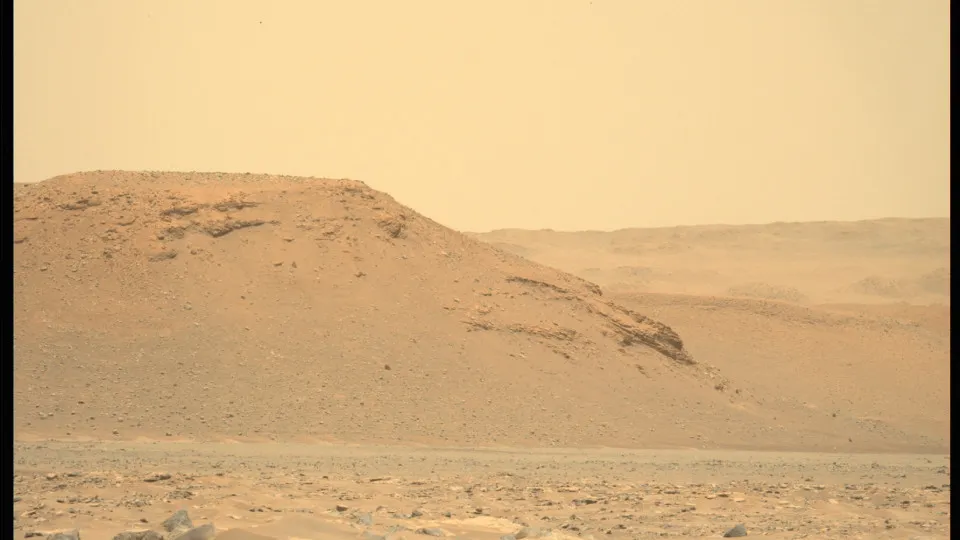
A study revealed that Earth microbes can grow in extreme conditions similar to those that would exist below the surface of Mars, opening new possibilities in the search for life.
© Lusa
06/11/2026
by
Lusa
Earth microbes
Uthe investigation revealed that microbes on Earth can grow in extreme conditions similar to those that could exist just below the surface of Mars, suggesting new lines of research in the search for possible cellular life in the “Red Planet”.
The paper was published in the journal ‘Applied and Environmental Microbiology’, a publication of the American Society of Microbiology, reported on Thursday the Efe agency.
The study, led by Adam Robinson, researcher at the University of Florida, tested whether a hallophilic microorganism could do more than just survive Mars' various adverse conditions.
These conditions include those that would exist on the surface and potentially underground.
The microbe has been able to reproduce and use chemicals from its environment to maintain its metabolism, although its growth has been considerably slower than in similar crops kept under Earth's atmospheric pressure.
Microbes grew for months in only a fraction of the Earth's normal atmosphere, in a solution seven times saltier than sea water and breathing bleach-like chemicals.
Scientists focused on Haloferax volcanii, a microbe known as an extremophile due to its ability to tolerate extreme conditions here on Earth.
They chose Haloferax due to their well-known preference for environments with high salt concentrations, similar to those found in the shallow underground of Mars.
Previous experiences have tried to answer similar questions. Researchers cultivated terrestrial microbes under specific stress conditions associated with Mars, such as high salt concentrations or low pressure.
Other studies have verified whether organisms survive after simultaneous exposure to various extreme conditions, often for just a few hours or days.
“Much less studies have managed to combine these conditions and demonstrate that microorganisms can actively grow“, highlighted Robinson.
For this experiment, the team maintained Haloferax cultures in oxygen-free conditions and rich in carbon dioxide for 160 days.
Microbes received nitrate or perchlorate, compounds relevant to Mars that could be used instead of oxygen during breathing.
Cultures that did not receive any of these chemical compounds remained viable, but did not show appreciable growth, which helped scientists to distinguish between survival and reproduction.
Observation of microbial processes in these conditions can help scientists to differentiate possible biosignatures from extinct cells from biological processes of living or existing cells.
Researchers also observed dense structures called biofilms in cultures growing under low pressure.
It is possible that these biofilms helped to retain water in the saline solution, since the crops lost little water during the experiment.
The lab didn't reproduce all the conditions the organisms would find on Mars. The crops were kept at 21 degrees Celsius, while most of the Martian underground is much cooler.
In addition, they received nutrients provided by researchers. And the existence of liquid water bags, whose presence the experiment aimed to simulate, has not yet been confirmed on Mars.
“The environment we are simulating in this experiment has not been observed on Mars, but it is believed to exist“, Robinson saved.
This distinction is important. The results do not prove that there is life on Mars today. However, they suggest that future missions exploring the underground of the planet should consider the possibility of some environments harboring active life, rather than seeking only evidence that life existed billions of years ago.