
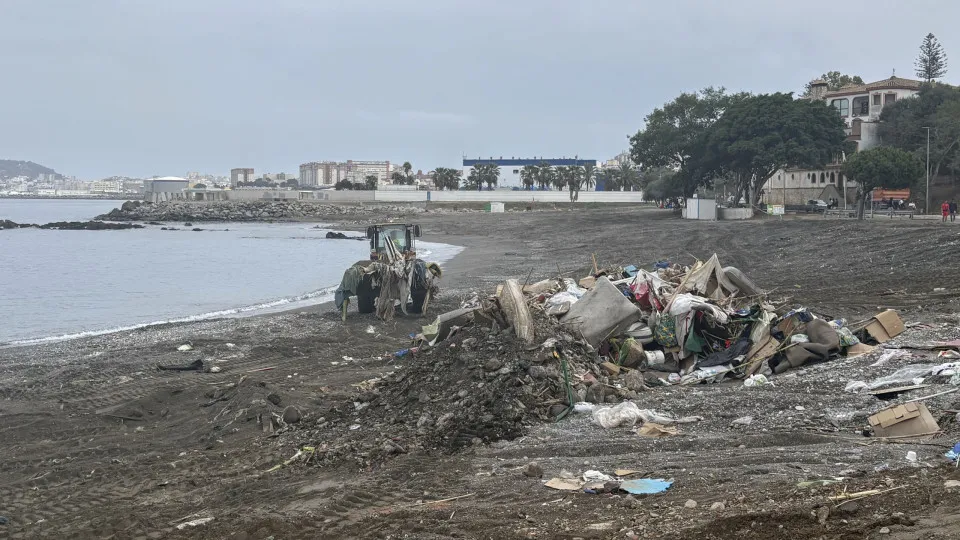
More than 2,700 people who had been in Ceuta illegally since the illegal mass entry of late July voluntarily returned to Morocco last week, according to the Spanish government.
© Lusa
08/10/2026
by
Lusa
Malas of 2,700 people who were in Ceuta illegally since the illegal mass entry of late July voluntarily returned to Morocco last week, the Spanish government said today.
The executive stressed that illegal camps were dismantled on the two major beaches of the city over two months ago.
Thousands of people who were sleeping on the beaches of Trampoline and Benítez either voluntarily left Ceuta or entered a temporary accommodation centre to register and initiate proceedings for the repatriation or granting of asylum, Spain’s Minister for Territorial Policy, Ángel Victor Torres, who coordinates the government’s response to the situation in the city.
Most of the 70,000 people who illegally entered Ceuta in a human avalanche on 30 and 31 July left almost immediately, in the hours and days following the Spanish enclave in North Africa, bordering Morocco.
Since 10 August, another 11,026 people have left, of which 2,783 did so last week, today Minister Ángel Victor Torres revealed.
Among these people who have returned to Morocco since 10 August 513 have been expelled for crimes and offences (64 last week).
As for minors, there are 2.827 in Ceuta reception centres. On the other hand, 86 minors were regrouped with relatives who already lived in Spain and another 179 were transferred to reception centres in other regions of the country, according to the data updated today by the government.
Minister Ángel Victor Torres explained the “important relief” of the number of illegal persons in Ceuta last week with the awareness of many migrants that they would end up repatriated to Morocco by police and judicial decision to expel.
“Many do not want to have a police record,” he said.
The Spanish press in Ceuta has reported that migrants, when they are removed from the beaches, have been informed that if they have a log of expulsion in Spain they will not be able to enter the Schengen area for the next five years or will be immediately reprimanded if they attempt illegal entry, without any procedure or possibility of seeking asylum.
In this context, when arriving on buses to the border, from the beaches where they were sleeping, they chose to cross voluntarily to the side of Morocco, without the Spanish authorities recording their data.
Spanish police sources cited by the EFE agency and testimonies collected by various media outlets in Ceuta said that an unquantified number of migrants on the beaches have left for forest areas and neighborhoods away from the centre in recent days, where they try to escape the authorities.
The minister said today there was no estimate at this time of how many people remain in Ceuta illegally.
There will only be numbers when the process of housing, registration and repatriation of all people is completed, Ángel Victor Torres said.
“ And we are closer to this ending”, he added.
According to the executive, there are currently more than 7,000 places for temporary accommodation and registration of migrants in Ceuta, with around 6,000 adults remaining in these centers.
The government estimated that by October 15, all the beaches and other spaces of Ceuta will no longer have illegal camps and has said that it hopes to have the situation normalized in the city by the end of the year.
The kings of Spain visit the city next week, on the first trip of a head of state of the country to the autonomous city in 20 years.