
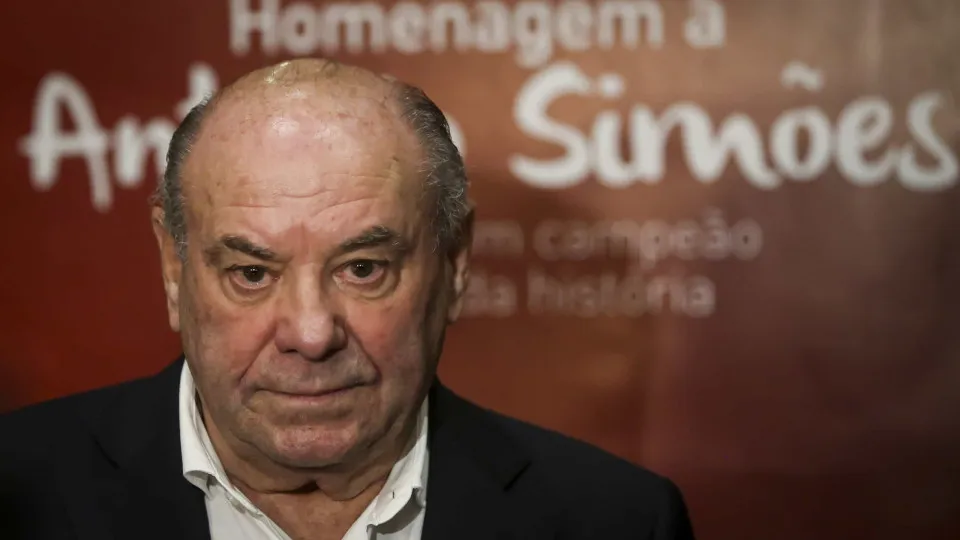
The newly created Benfiquist movement UNUM launched today 17 measures, based on six pillars, to reform arbitration in Portuguese professional football, which will make available to the leadership of the club I Liga.
© Global Images
06/10/2026
by
Lusa
O the first public event of the movement took place in a hotel unit in Lisbon, with the presentation of the report entitled “The whistle and trust”, with interventions from some of the founders, followed by a debate on this subject.
The six pillars in the report are Independence, Professionalization, Transparency and Responsibilization, Videoarbitration (VAR), Criteria and Technology, and Integrity and Relations with Clubs, having several measures as subtopics.
Among the UNUM's proposals is the creation of an autonomous structure for arbitration and an elite fully professional, in addition to an investment in the semi-automatic game outside the I League and explained arbitration decisions, with deadlines.
On the autonomous structure, it will have to have direction, budget, accounts and own facilities and outside the perimeter of the Portuguese Football Federation (PFF), including the center of operations of videoarbitration, with an independent supervision.
Regarding the professionalization of the arbitrators, the movement considers that they will have to have contract and stable remuneration, in addition to the creation of a National School of Arbitration, to double the recruitment base, and have former football players in the VAR.
The introduction of the semi-automatic out-of-game system, similar to what is already happening in other competitions, is the largest proposed investment of EUR 6 million, which covers about 3.7% of the expected revenue for 2026/27 in FPF.
The UNUM also wants to see notes on a recognised error within 24 hours of each game, with the audio and image of the VAR made public from 48 to 72 hours and the public response to club complaints until the eve of the next day.
In other measures, the movement wants the appointment of the arbitrators to have public criteria and an auditable track, with the arbitrators to gain advisory voice, as well as exchanges with other federations and deadlines audited every year.
Lawyers José Eduardo Martins and Fernando Gonçalves, economist António Mexia, sports commentator Jaime Cancella de Abreu or former footballer António Simões were the players, facing about a hundred partners.
“Improving arbitration is not just about referees. It has to do with leaders with speeches that burn and cause discomfort. Coaches have to realize that their players have to be competitive but honest men. I see players having no respect for themselves, the referee, the opponents and the public. Until this is changed, nothing has been done”, said António Simões, who considered that this change will have to start at the training levels.
In addition, the presentation featured video interventions by former English players Steven Gerrard and Alan Shearer and concluded with a debate on the Portuguese model, which was attended by former Portuguese referee Pedro Henriques.
In the presence of the former eagle player Eliseu and coach Nelo Vingada, in the audience, the proposals of the movement now follow for public consultation from October 19th to November 15th, with sessions scheduled in the Houses of Benfica and digitally, before delivering the consolidated version, with contributions, to the management.
The UNUM movement took advantage of the Latin expression of the motto of the Lisbon club and is “a house of Benfiquist ideas, created to gather knowledge, experience and different perspectives around a common purpose: to contribute to a stronger and more winning Benfica”, having a group of 32 founding members.