
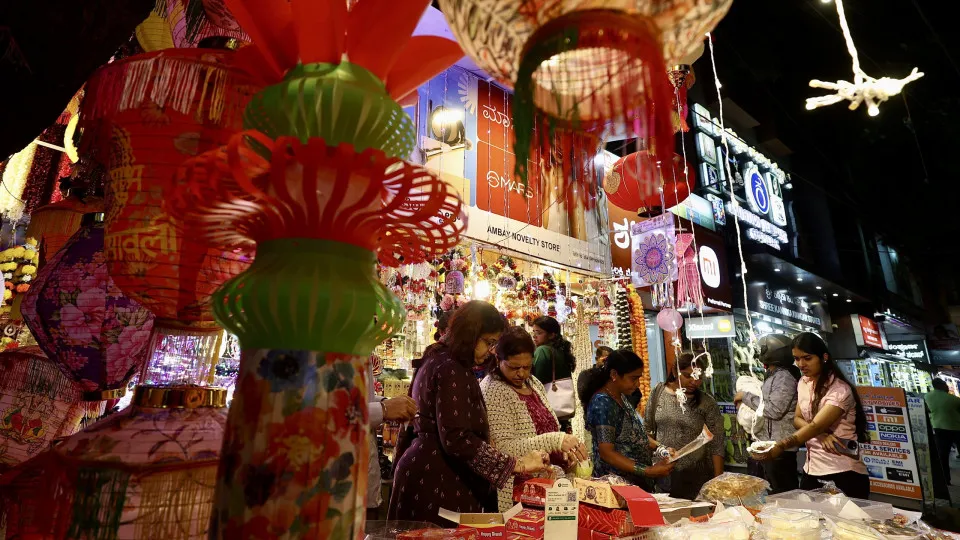
New Delhi awoke in a toxic fog after the Diwali celebrations, which aggravated the seasonal pollution crisis, with the air quality index reaching severe levels.
© Lusa
09/11/2026
by
Lusa
Uma thick layer of pollution covered the capital of India today, after fireworks had illuminated the New Delhi sky during the celebrations of Diwali, the Festival of Lights.
The use of rockets further increased pollution levels, already dangerously high, and intensified the seasonal air quality crisis that strikes the city every year.
Despite restrictions on fireworks, New Delhi's inhabitants celebrated the Hindu festival of lights using rockets on Sunday night, releasing smoke and fine particulate matter into the atmosphere.
This morning, the Air Quality Index exceeded 350 at various points in the capital, reaching the category “severe” and representing significant health risks.
Monitoring stations throughout the city have experienced equally alarming levels, while visibility deteriorated, with a grey fog covering high streets and buildings.
In October, the Supreme Court of India tried to limit the pollution caused by Diwali, restricting conventional fireworks and allowing only so-called “ecological fireworks”, approved under specific conditions, during three-hour windows on Saturday and Sunday.
Although these rockets produce less emissions, they are not free from pollution and also release particulate matter and other pollutants, aggravating air quality, which is already dangerous in the city.
New Delhi and the metropolitan area, which houses more than 30 million people, are regularly among the most polluted areas in the world during the winter.
Pollution worsens when Diwali fireworks coincide with the coldest climate and smoke from burning agricultural waste in the neighbouring states of Punjab and Haryana.
After harvesting the rice, farmers usually burn the remains of the crops to prepare the soil for the next crop. Smoke is driven by the wind towards New Delhi, adding to the pollution generated by vehicles, industries, construction dusts and other local sources.
The problem becomes particularly serious between the end of October and November, when lower temperatures, low wind speed and atmospheric stagnation prevent the dispersion of pollutants.
The result is a dense fog that can remain over the capital and neighboring areas for several days.
New Delhi authorities implemented a number of measures to contain pollution, including restrictions on construction activities and the use of diesel generators, and the judiciary sought to limit the use of fireworks.
However, the measures have not been sufficient to prevent the return of severe levels of pollution every year.
Environmentalists say that long-term solutions such as cleaner energy and stricter controls on vehicle emissions are needed to prevent the annual crisis.