French Prime Minister today will make a statement to the country, where it will address the situation of students in the country.
© Getty Images/ Clement Souchet/NurPhoto
07/10/2026
by
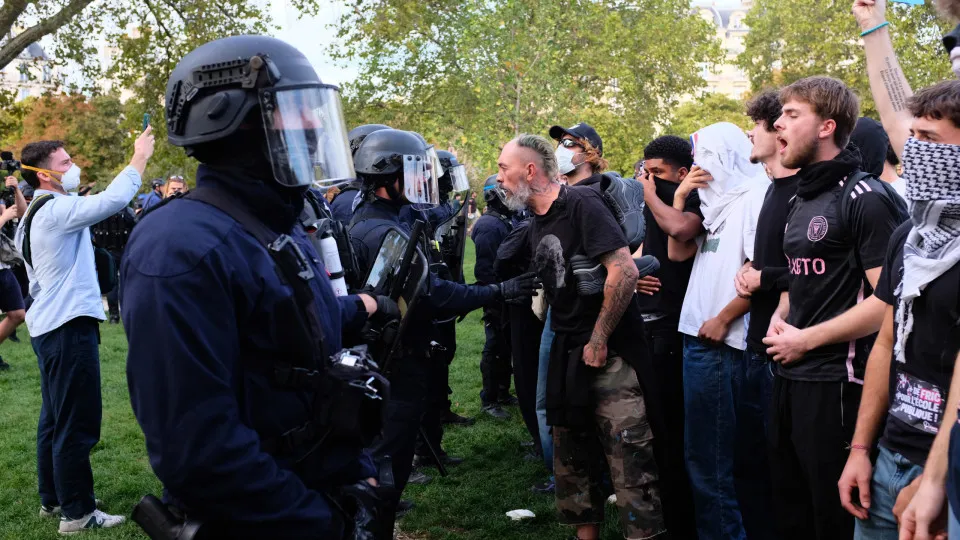
Ostudent protests in France have been marked by clashes between demonstrators and police forces, arrests and damage in various establishments. The situation has been going on for about two weeks, and for those who still remember, much is said about the similarities with the famous May 68.
“ We are witnessing the most powerful movement in secondary schools and colleges since May 1968′′, reminded the presidential candidate of Insubmissive France (LFI), Jean-Luc Mélenchon, drawing attention to the similarities between the two demonstrations.
May 1968 was marked in world history as the month in which students demonstrated their intention to transform the world.
For many, it was not just a revolt of students, not just a generational explosion, not just a revolution of customs. Its decisive historical core was the entry into the scene of the French working class through a general strike involving millions of workers and paralyzing the country.
Now what?
The protests now began in mid-September with the blockade of a high school in Créteil, on the outskirts of Paris, in protest against the lack of teachers and media in schools, then extending to other regions of the country and becoming a national movement of pressure on the government of Emmanuel Macron.
Today demands are expected to remain. According to Le Figaro, 528 schools will be completely or partially closed.
Violent protests
Since the beginning of the protests, in late September, at least 215 students and about 85 teachers were injured, in addition to 715 police and Republican guards, according to the balance sheet presented by the French Prime Minister, Sébastien Lecornu.
The National Advisory Commission on Human Rights (CNDH) of France also expressed the “maximum concern” with the “disproportional use of force” during the mobilizations and called on the Government to strengthen dialogue with young people.
Already today, the Minister of the Interior announced that “they will no longer be used within the framework of the student movement of secondary education” stun grenades.
The decision announced by Laurent Nuñez happens after a 15-year-old had his hand amputated in the use of explosives. It is also recalled that the Public Prosecutor today formally accused the agent who fired the grenade launcher who injured a 14-year-old student during a student blockade in Saint-Ouen-l’Aumône, in Val-d’Oise. The minor suffered a double fracture in the jaw after being hit by a tear gas grenade.
Lecornu speaks to the country today
The French President, Emmanuel Macron, has avoided commenting on the matter. But for Wednesday a statement is scheduled by Prime Minister Sébastien Lecornu who will have to pronounce from Matignon on secondary education, fuel, agricultural crisis and debt.
“Violence is part of your political project”
For his part, the French Prime Minister, Sébastien Lecornu, accused the radical left of intending “to launch the country into chaos” before the Presidential elections in 2027 and of fuelling violence in student protests.
“ The reality is that you are ambiguous about violence because violence is part of your political project to launch the country into chaos between now and the presidential elections,” Lecornu said.
“ Lying about the government's intentions will not save you electorally. To sow chaos, as they have done since the beginning of the student movement, is a scandal ", said Lecornu.
Protests Concern Europe
European Commissioner for Intergenerational Equity, Youth, Culture and Sport, Glenn Micallef, today expressed concern about student protests.
“ When teenagers suffer, during protests, injuries that change their lives, that should worry us all. Authorities must maintain order, but their response must be proportional, especially when there are minors involved,” he said.
According to Micallef, democracy must be able to reconcile “the right to protest, the responsibility to do so peacefully, the duty to guarantee people’s safety and the obligation to listen before frustration turns into confrontation”.
“ I hope that now the attention can refocus on what led young people to go out on the street initially”, he concluded.