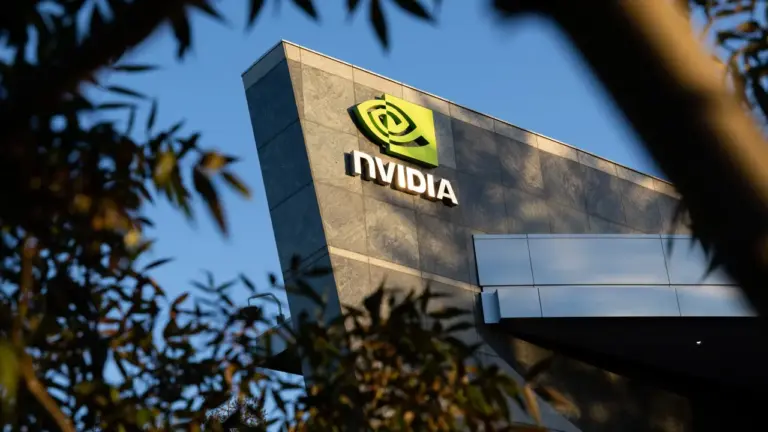
Nvidia suspended the sending of computer servers equipped with their artificial intelligence chips (IA) to four Southeast Asian countries, according to the Financial Times. The measure appears after reinforcements in the export restrictions of sensitive components in response to a espionage scandal involving the company.
© Getty Images
27/11/2026
by
Lusa
A american semiconductor giant Nvidia no longer authorized the sending of computer servers equipped with their artificial intelligence chips (IA) to four countries in Southeast Asia, today reported the Financial Times.
The news comes after Washington has strengthened export controls on sensitive components following an espionage scandal involving Nvidia and led to the departure of Executive President Jensen Huang, reinstated on Sunday.
Invoking national security concerns, the United States has since 2022 restricted exports of Nvidia semiconductors used in the training and operation of AI tools to China.
Last week, Washington sought to bridge a gap in these controls in order to combat semiconductor smuggling, but also the use of Chinese companies to lease computer capacity in data centres located in third countries, often in Southeast Asia.
According to the Financial Times, Nvidia asked its partners to suspend sending computer servers to buyers in Singapore, Thailand, Malaysia and Indonesia.
The newspaper identified the North American groups Dell and Supermicro, which integrate Nvidia's AI semiconductors into servers for data centers, as two of the partners covered by the measure.
The affected buyers include the Singapore-based Aolani cloud computing company, which planned to provide, by rental, access to Chinese equipment byteDance, owner of the TikTok social network, according to the Financial Times.
The British diary, which quoted three sources familiar with the subject, indicated that it is not clear whether the suspension of shipments is temporary.
The scandal that involved Nvidia arose after revelations about a love relationship between Jensen Huang and a former leader of Megaspeed, Singapore-based company that is under investigation for the alleged transfer of semiconductors from Nvidia to China, aiming to circumvent US restrictions.
Alice Huang is also suspected, according to some US officials, of espionage in favor of Beijing.
The huge investments of the US and Chinese technological giants have driven the construction of data centres in Southeast Asia, especially in the neighbouring countries of Singapore.
The capacity of data centres in that region should triple by 2030 compared to 2025 levels, driven by a tenfold increase in the use of AI, according to KPMG.