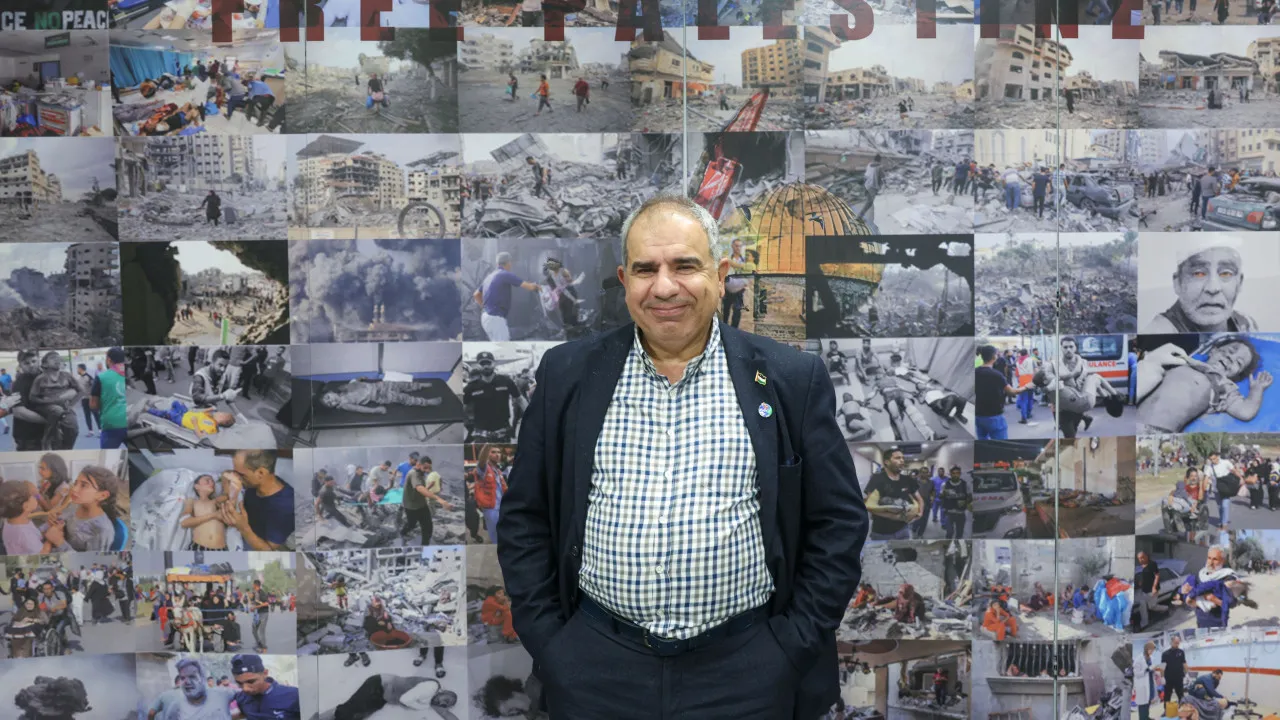
Palestine dreams of a green reconstruction for Gaza, where turning on a faucet or turning on a light are still challenges of the day and where climate resilience is just another concern.
© Lusa
21/11/2026
by
Lusa
A Palestine dreams of a green reconstruction for Gaza, where turning on a faucet or turning on a light are still challenges of the day and where climate resilience is just another concern.
With a delegation of four people, Palestine moved to the 31st United Nations Conference on Climate Change (COP31) in Antalya, Turkey, to defend that climate funds help rebuild Gaza's water, sanitation and electricity networks.
While in the corridors of the blue zone of COP31, with more than half a million square meters of the Antalya Expo Center, it is discussed whether or not to end with fossil fuels, emissions targets and funding of adaptation, in Gaza the urgency is others: to have water to drink, recover electricity and find shelter when the rains flood the tents of the displaced.
“ We will do everything we can to ensure that reconstruction is as green and sustainable as possible,” Lusa Samer Kalbouneh, Acting Director-General of the Palestinian Environmental Quality Authority, told Lusa.
“ People can't choose whether they fit in or not. It's their lives and they'll try to adapt anyway. They'll adapt to what comes. But we know that the situation is very difficult”, he assumed.
According to Kalbouneh, the war left almost 85% of Gaza’s agricultural land unfit for cultivation and nearly 93% of the trees were torn up during the conflict.
“ The climate problems cannot be separated from the problems of occupation and development needs”, he summarized.
The war also destroyed a project supported by the Green Climate Fund that allowed reuse of treated waste water in agriculture.
“The Israeli army completely destroyed this project,” he denounced.
“ It was a very good example of what we can do to combat the effects of climate change in the community, to strengthen people’s resilience and ability to adapt to these changes and to enable them to live with dignity and to remain on their lands,” he said.
Kalbouneh also estimated that war and its effects will result in the emission of nearly 30 million tonnes of carbon dioxide and that the reconstruction of Gaza will cost about 70 billion dollars.
“ When we talk about rebuilding the water supply, sanitation and electricity distribution networks, this is a purely climate component, for which we can seek climate finance”, he explained, aiming to find more sources of funding.
In the West Bank, he added, the occupation prevents Palestinians from accessing natural resources such as water and pasture.
“ The occupation worsens environmental problems both in the West Bank and in Gaza. In the floods in Gaza the tents of refugees were torn (...). It is catastrophic, but I always say that we are resilient and that one day we will overcome this”, stressed the interim Director-General of the Authority for Environmental Quality of Palestine.
For the person responsible, the climate resilience of the Palestinians is part of national resilience, the “ability to remain in Palestine and to live normally, like the people of any other country”.
Kalbouneh led to COP31 the message that “climate justice is part of justice for all people in the world and for that reason the Palestinian people” and argued that the sustainable development of Palestine depends on the end of the occupation.
“ We believe that ending the occupation is essential to ensure a promising and sustainable future for Palestine,” he concluded.