
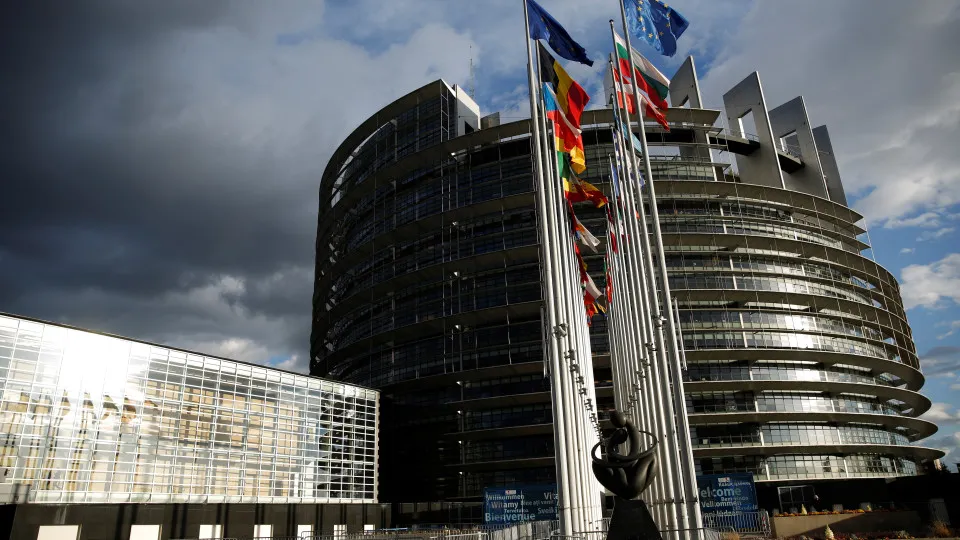
The European Parliament has asked the EU to use the Blocking Statute to protect the International Criminal Court, the subject of sanctions from the United States.
© Reuters
19/10/2026
by
Lusa
O Parliament today asked the European Union to use “all instruments”, including the Blocking Statute, to protect the International Criminal Court, which is the subject of sanctions and an attempt to dismantle the United States.
In a report adopted today by the Committee on Foreign Affairs of the European Parliament with 50 votes in favour, 18 against and four abstentions, MEPs condemn the “unilateral coercive measures adopted by third countries” against the International Criminal Court (ICC)” and the “pressures exerted” on other countries to abandon it in an allusion to the United States.
In this context, MEPs call on the European Union (EU) to develop a strategy to “strengthen the international justice system, protect judicial independence and safeguard the EU’s legal order and strategic autonomy as well as the rule of law”.
The European Parliament (EP) argues in particular that the bloc must “use diplomatic, political and, where necessary, legal instruments” to counter the impact of US sanctions on the ICC, based in The Hague.
In particular, MEPs call on the EU to activate the so-called “EU Blocking Statute” – a mechanism aimed at protecting citizens and businesses on European soil from sanctions imposed by third countries – to “counter the extraterritorial effects” of the US decision.
MEPs also call on the bloc to draw up an “action plan to ensure that people and organisations affected” by US sanctions continue to have “access to essential services, including wages, banking services, insurance, healthcare and digital accounts.”.
At diplomatic level, this EP committee calls on the EU to integrate support for the ICC in its external action, as well as in its policies and agreements with third countries.
Cited in the statement, the MEP who wrote this report, Frenchman Mounir Satouri, argues that “the coercion exercised by third countries against those seeking justice for crimes of atrocity undermines international accountability and the rule of law”.
“The EU must urgently mobilise all available instruments to protect the ICC, the United Nations and human rights defenders against these pressures, ensuring that external pressure does not obstruct investigations and judicial proceedings, nor does it deprive victims of their right to justice,” he says.
For this MEP, “Europe and the international community as a whole must now act to defend international law and enforce universal values”.
On October 9, the U.S. Government announced further sanctions on the ICC, just hours after the former South African judge Navi Pillay was awarded the Nobel Peace Prize, notably in recognition of her work at the institution.
The Washington decision to include the ICC itself in its sanctions regime follows the measures imposed a few months ago against 17 persons linked to the institution, including judges and prosecutors.
The new sanctions imply, in principle, the freezing of ICC assets and interests in the United States or under the control of US citizens and companies, as well as restrictions on transactions with the institution.
Trump signed, in February 2025, a presidential decree that paved the way for the imposition of sanctions on ICC officials to participate in investigations or proceedings against US citizens or allied countries, having expressly referred to the arrest warrants issued in November 2024 against Israeli Prime Minister Benjamin Netanyahu and his former Defense Minister Yoav Gallant.
The ICC is an independent body founded in 2002 to prosecute and prosecute war crimes; it includes 125 countries, including all Member States of the European Union (EU) and NATO, with the exception of the United States and Turkey.