New Zealand’s Prime Minister Christopher Luxon today admitted the prospect of “difficult” coalition negotiations after losing the absolute majority in the legislative elections.
© Getty Images
27/11/2026
by
Lusa
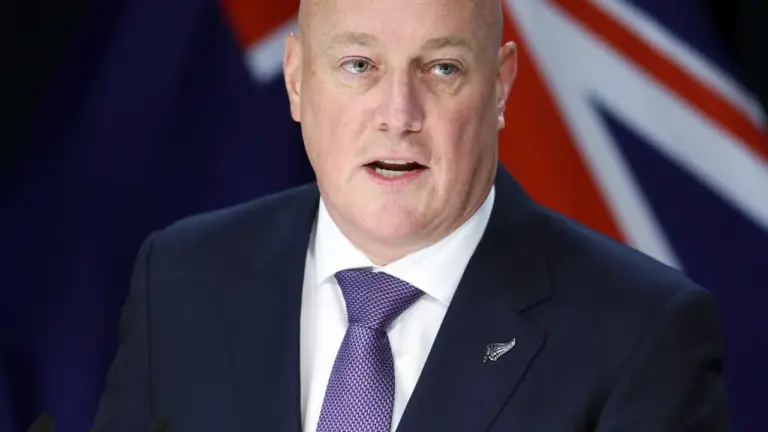
O new Zealand Prime Minister Christopher Luxon today admitted the prospect of “difficult” coalition negotiations after losing the absolute majority in the legislative elections.
According to the official results released today, the coalition led by Luxon won 65 seats, less one than the 66 required to secure the absolute majority in Parliament of 130 Members.
The result confirms the projections that gave conservatives a slight advantage over the centre-left opposition, but without a parliamentary majority. Nevertheless, Luxon stressed that there is a “margin to form the next government”.
The outgoing coalition lost two seats in the elections. The Luxon National Party won 40 deputies, while the NZ First populist party won 12 and the ACT libertarian party secured 13 while remaining allies of the head of the government.
In the opposition, the Labour Party (Labour) elected 36 deputies, the Greens 17 and the Maori Te Pāti Māori party five.
To remain in power, Luxon will need the support of the new centrist party Opportunity, led by Qiulae Wong.
“I want to be clear with the New Zealanders: these negotiations may be difficult and may take some time,” the Prime Minister told journalists.
Opportunity, which has achieved seven seats in Parliament, has campaigned by promising a more conciliatory approach and measures to combat climate change, in an opposite direction to Luxon's policy.
Wong stressed that a possible support from his party for a coalition will depend on “red lines”, particularly in matters such as the fight against climate change, the cost of living and the transparency of political life.
The leader also excluded any collaboration with NZ First leader Winston Peters after the outgoing Deputy Prime Minister told Chinese Deputy Lawrence Xu-Nan to “regress to his country.”.
Wong's rise to the role of decisive figure has crowned a meteoric trajectory since the 38-year-old KPMG consultant took the lead of a party that collected only about 1% of voting intentions last August.
During the campaign, he denounced populism and political polarization, defending a “pragmatic policy” aimed at “focusing simply on the future of the country”.
After the elections in 2023, Luxon needed more than six weeks to form a coalition government, a process that may now be even longer, admitted the conservative leader.
“ It's much more important to do things right than to do them quickly. New Zealanders need a stable government, capable of teamwork and fully fulfilling their mandate,” he said.
Asked about future negotiations, Qiulae Wong also considered that they should be “difficult”.
If a government agreement is not reached, new elections will have to be convened, while Luxon remains in charge of a management executive until then. Wong didn't rule that out.
“All we can do is show ourselves as constructive and proactive as possible” to reach an agreement. “But we’re not the only ones at the negotiating table,” he added to the press.