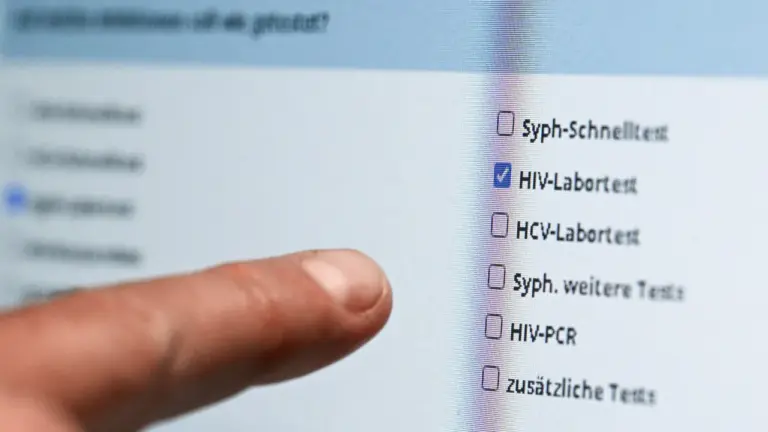
Portugal has achieved UNAIDS 95-95 targets for the fight against HIV, with 95% of infected people diagnosed, reveals a report released today.
© Jens Kalaene/picture alliance via Getty Images
24/11/2026
by
Lusa
Portugal reached the 95-95-95 targets set by UNAIDS for the fight against HIV, with 95% of infected people diagnosed, representing “a significant milestone” in the national response to infection, reveals a report released today.
“ Estimates made for the year 2024 revealed that 51.386 people with HIV infection lived in Portugal, 95% of whom were diagnosed, indicating that Portugal achieved the first UNAIDS goal ", stresses the Report HIV infection in Portugal 2026, prepared by the Directorate-General for Health and the National Institute of Health Doctor Ricardo Jorge.
Regarding the second objective, data collected in 23 hospitals identified that 97.9% of the 42,257 people with at least one consultation in 2025 were receiving antiretroviral therapy.
Among these, 96.1% presented virological suppression, thus achieving the third objective of the goals 95-95-95.
The report states that there are still limitations in the national monitoring of indicators, since the data do not cover all health units and there are differences between hospitals in the availability, structuring and extraction of clinical information.
Of the 23 health units that reported data for all the indicators requested, it was possible to verify that in 17 the second and third UNAIDS targets were achieved, while six reached at least one of them.
“ Available data indicate that Portugal has achieved UNAIDS’ 95-95 targets, representing a significant milestone in the national response to HIV infection”, highlights the report released on World AIDS Day, marked on 1 December.
According to the document, “the information collected, although with the reservations that the absence of a uniform data collection system motivates, allows a more concrete knowledge of the HIV cascade in Portugal and highlights the strategic importance of developing an integrated national monitoring system capable of continuously and automated monitoring progress towards targets 95-95-95”.
The report also points to the consolidation of progress in the prevention and diagnosis of HIV infection, highlighting the expansion of PrEP (Pre-Exposure Prophylaxis to HIV), the recovery of testing using the rapid test and the continuous improvement of the connection to care.
It warns, however, of the persistence of “relevant challenges” related to territorial inequalities in access to preventive interventions and the need to adapt the response to new risk profiles, particularly associated with Chemsex (use of specific drugs to facilitate, improve and/or prolong sexual intercourse) and the migrant population.
“ Overall, the results of 2025 reveal a robust and consolidated national response to HIV, with significant progress in access to prevention, diagnosis, using various methodologies and in various contexts and timely connection to care.”.
It warns, however, that “the sustainability of these gains will require a strengthening of territorial equity, the ability to monitor and adapt responses to new epidemiological and behavioral profiles, in order to keep Portugal aligned with the international targets for eliminating HIV infection as a threat to public health by 2030”.
In 2025, 961 new cases of HIV infection, more than half (53%) were reported late, and 175 new cases of AIDS were diagnosed.
“ The number of new cases of HIV infection and the high proportions of late diagnoses, with particular expression among heterosexual men, persons aged 50 or over and people born in other countries, justifies the strengthening in the implementation and development of actions aimed at promoting early screening and diagnosis and the prevention of transmission to these specific populations ", points out.