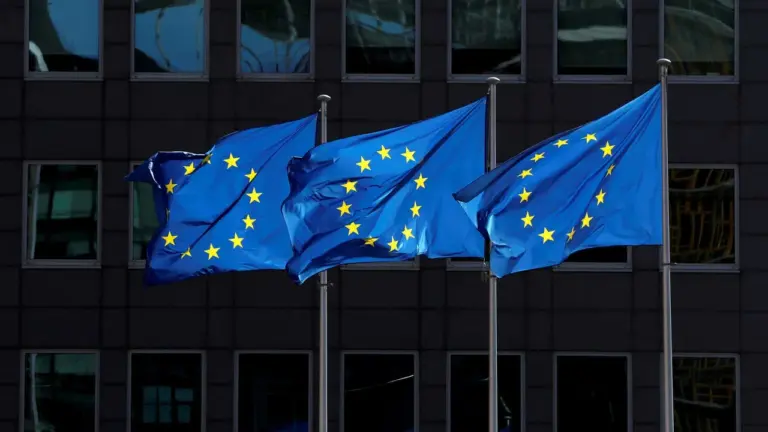
Portugal and 33 countries, including the European Union, today condemned the use of chemicals by Russia in Ukraine, demanding the immediate end of this practice.
© Reuters
25/11/2026
by
Lusa
Portugal plus 33 countries and the European Union have today called for the immediate end of the use of chemicals used by anti-motim forces as a weapon of war in Ukraine.
The joint statement, released by the British Ministry of Foreign Affairs, appears in response to the publication by Ukraine last week of a report on the use of “anti-motim agents” by Russian forces, a practice prohibited by the Chemical Weapons Convention when it is a method of war.
According to the Center for Disease Control and Prevention (CDC), riot control agents, also known as tear gas, are chemicals that temporarily incapacitate people, causing irritation in the eyes, mouth, throat, lungs and skin.
Ukraine has documented since 2022 more than 14,000 cases of use of ammunition with riot agents and toxic chemicals by Russian forces against Ukrainian military on the front line.
The Ukrainian report, according to the signatories, presents “clear proof of a chemical incident” in the Dnipropetrovsk region in September 2024, whose responsibility it assigns to the Russian armed forces.
National leaders for the non-proliferation of chemical weapons added that “munitions used to disperse the riot agent are produced in series” and that the incident “is not an isolated case on the battlefield”.
The Ukrainian investigation is mainly based on the results of a technical assistance visit from the Technical Secretariat of the Organization for the Prohibition of Chemical Weapons (OPAQ), which confirmed the presence of anti-motim agents on the front lines.
According to the statement, the Technical Secretariat also confirmed that the methodology used by Ukrainian research is in accordance with the standards and procedures followed by the organization.
The subscribers include, in addition to Portugal, the United Kingdom, France, Germany, states such as Canada, Japan, Australia and New Zealand, as well as Ukraine and the European Union.