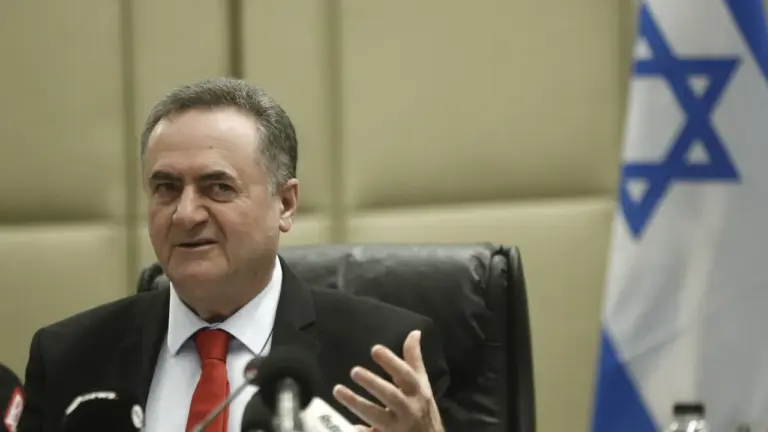
The Israeli Defense Minister accused Iran of developing chemical weapons, in a new alert on the Iranian threat, after the head of the government, Benjamin Netanyahu, had alerted the issue since the parliamentary elections on October 27.
© Lusa
24/11/2026
by
Lusa
O israel’s outgoing minister of defense accused Iran today of developing chemical weapons after the head of the government, Benjamin Netanyahu, warned on several occasions of the Iranian threat since the legislative elections on October 27.
“Iran is developing chemical weapons,” said Israel Katz, without further details, at a press conference held in Tel Aviv exclusively for Israeli journalists, according to KAN and other national media.
The State of Israel “will not allow Iran to acquire these weapons,” he added, according to statements reproduced on the network Telegram for your party, Likud.
Israel has been at a political standstill since the legislature, which gave the victory to Likud of Netanyahu, but was his main opponent and leader of the Yashar party! (Integrous!), the former commander of the Gadi Eisenkot armed forces, who received more recommendations to form government.
Following the post-election consultations of the Israeli President, Isaac Herzog, Eisenkot and his bloc of opposition parties have not yet succeeded in presenting a viable government in parliament, while Netanyahu calls for a national unity executive, run by himself.
Since the elections, the head of the outgoing government has made increasingly belligerent statements and regularly brandished what he considers to be Iran's threats against Israel.
Several news reports in the American and Israeli press revealed that, prior to the legislatures, Netanyahu sought to attack Iran, having been fought by the army chief, Eyal Zamir, and by the US President Donald Trump himself, with whom he launched a joint offensive against the Islamic Republic on 28 February.
The Israeli opposition bloc in turn accuses the current Prime Minister of exploiting the Iranian threat in order to remain in power.
On Monday, Gadi Eisenkot dismissed the need for any immediate military operation against Iran.
Today, Israel Katz again denied the news about the intention of an attack on Iran during the electoral process.
“ We told the Americans: we do not want this before the elections,” the minister said, claiming that Trump was the one who “started the discussion” about a pre-election offensive.
Last week, the CNN television station, citing seven U.S. authorities, reported that US intelligence services had data indicating Iran was preparing a chemical attack on Washington.
However, according to CNN, this threat was not imminent.
Iran strongly denied these allegations, considering that they were “absurd” through Foreign Minister Abbas Araghchi.
Tehran then compared these accusations to those made in the past by the United States against Iraq under the leadership of Saddam Hussein.
The U.S. invasion of Iraq in 2003 was justified by the presence of weapons of mass destruction, including biological, chemical, and nuclear weapons, which were never found.
At his press conference today, Israel Katz again raised the possibility of preventive attacks against Tehran, if necessary.
“ If we see that the Iranians intend to attack Israel, can we not order the army to attack and frustrate the threat?”, the minister questioned, adding that if the Iranian forces take the initiative, this will be “a failure”, according to a transcript of Channel 12.
Earlier this month, Katz stated that the outgoing government did not need opposition approval to launch new military operations in response to calls for moderation from its political opponents.
“Israel’s Defense Forces and the U.S. Central Command are preparing to strike together,” said the Israeli minister, saying that “the plans are ready” and Donald Trump will decide.
The indirect peace negotiations between the United States and Iran continue without progress.
The main Iranian negotiator and president of parliament, Mohammad Bagher Ghalibaf, stated that Tehran will not negotiate with the United States “until Iran’s seven conditions are met,” according to state television.
The authorities of the Islamic Republic have not publicly revealed what the conditions are.
However, Iranian state media have indicated that they include lifting sanctions, ending US naval blockade to Iran’s ports and releasing frozen goods abroad.
Ghalibaf threatened that Iran “will broaden the geographical scope of the conflict if the enemy makes a mistake.”.
The United States has for its part demanded the end of Iran's naval blockade to the Strait of Ormuz, where 20% of world hydrocarbons passed before the war, and guarantees on the end of the Iranian nuclear programme, whose military ends are denied by Tehran.