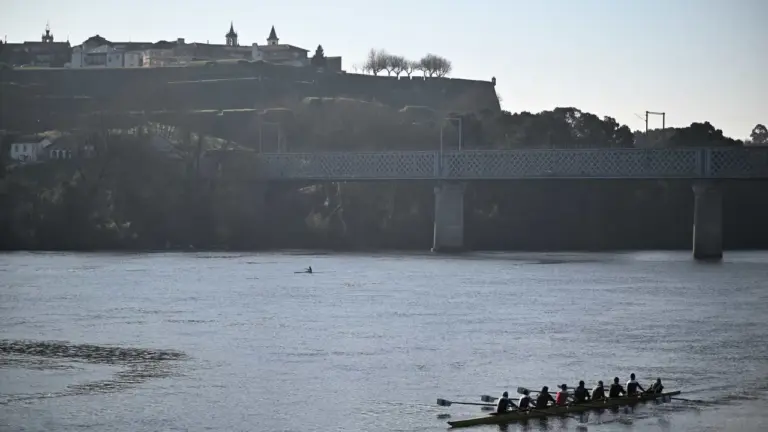
Authorities from Portugal and Spain have developed a system to predict floods and drought in the basins of the rivers Minho and Lima, protecting people and goods, according to a study published today.
© Global Images
25/11/2026
by
Lusa
Athe authorities of Portugal and Spain manage to “prevent and anticipate” risk of floods or drought in the basins of the rivers Minho and Lima, protecting people and goods, after a study developed in Alto Minho and Galicia, was today published.
“ Now we have the ability to predict and anticipate flood and drought risk phenomena and, with this, safeguard the safety of people and goods ", explained, in statements to Lusa, António Afonso, regional administrator of the Northern Hydrographic Region Administration of the Portuguese Environment Agency (APA).
The project, whose conclusion was marked today in Monção, in the district of Viana do Castelo, was based “on flood-related risk situations” and aimed to “better know the territory, install or improve existing monitoring stations,” added António Afonso.
The responsible spoke in Monção, on the margins of the closing day of the RISC PLUS project, which brings together the APA, the Confederation Hydrographic del Miño-Sil (CHMS), the Faculty of Engineering of the University of Porto (FEUP) and the University of Vigo (UVIGO).
The four entities also signed a declaration of collaborative intentions “in order to formalize the desire to continue collaboration between the partners and the continuation of the work carried out under RISC PLUS”.
With the implementation of the project we can obtain “data and information so that the authorities that manage the floods and the territory, and those that are responsible for the security of people and goods, can make decisions in advance in case of flooding”, signaled.
The water catchment areas of the Lima and Minho rivers are concerned, both international (cover Portuguese and Spanish territory).
In addition to the risk associated with floods, “work related to monitoring, training, modulation, to facilitate decision support, also related to droughts, has also been done,” he described.
“There is more talk here of floods. Fortunately there are not so many drought problems on the Portuguese side. The Spanish side is already slightly different. But the objective of the program as a whole is to empower the administration with information to manage risk situations related to floods and droughts,” he explained.
The Regional Administrator of the Northern Hydrographic Region Administration stated that areas with flood risk are already identified.
“ Within the flood risk management plans we have two cross-border areas identified here in the Minho region as areas of significant potential flood risk: in Monção and Valença”, he noted.
The project’s mission was to “capacitate the competent water management authorities – which, in this case, on the Portuguese side is the APA and on the Spanish side is the Hydrographic Confederation – so that, in situations of extreme events, they can provide relevant information to civil protection authorities so that they themselves, in the context of their competences, can guarantee the protection of people and goods”.