
The Attorney General of the Mozambican Republic today demanded the National Criminal Investigation Service (Sernic) investigation and detention of illegal mining financiers and equipment suppliers, dismantling the illicit export circuit of these resources and their beneficiaries.
© Lusa
16/11/2026
by
Lusa
O attorney General of the Mozambican Republic today demanded the National Criminal Investigation Service (Sernic) investigation and detention of illegal mining financiers and equipment suppliers, dismantling the illicit export circuit of these resources and their beneficiaries.
“ It is necessary to investigate who finances these activities, who organizes the operations, who provides the equipment, who ensures the transport, who buys and markets the minerals and who, eventually, guarantees institutional protection to these networks. We need to reach the real economic beneficiaries of illegal mining”, demanded Américo Letela.
The responsible spoke in Maputo, by conferring possession to the National Inspector of the Sernic – criminal investigation police, protected by the Attorney General of the Republic (PGR) -, to the national directors and provincial directors.
“ We need to identify the circuits of circulation and illicit export of mineral resources, track the gains obtained and promote the recovery of assets from these criminal activities. Our goal should not only be to stop the illegal activity, but to dismantle all the economic, financial and logistical structure that makes it possible and profitable ", appealed.
Américo Letela wants, in particular, that the provincial directors in charge pay attention to the areas with the highest incidence of illegal mining exploitation, promoting the survey of the focus of activity, identifying the main actors and producing criminal information that allows coordinated and sustained interventions.
He also called for concrete actions between criminal investigation in conjunction with the Public Prosecutor, including coordination with authorities responsible for the administration of mineral resources, environmental inspection institutions, customs and migration authorities.
“ The exploitation of mineral resources must take place within the framework of the law, with respect to environmental, fiscal, labour and safety requirements. We cannot allow the wealth of our subsoil to become a source of illicit enrichment of some, to the detriment of collective development and the welfare of Mozambicans ", said.
For the prosecutor, it is imperative to stop all kinds of crime linked to the illegal exploitation of mineral resources, stressing that their sustainable use can be an instrument of economic development, job creation, wealth creation and improvement of the living conditions of the population.
“ It is worrying when these activities are developed using organized structures, involving national and foreign citizens, economic operators, intermediaries and, eventually, individuals who should be the first to prevent and combat such practices,” he noted.
“ Even more serious is when illegal mining is associated with corruption, money laundering, forgery of documents, illegal immigration, exploitation of labour under degrading conditions and deliberate degradation of the environment,” he added, requiring further efforts to find what he called true beneficiaries.
In September, the Mozambican President announced soon the adoption of the regulation of the new Mine Law, aimed at strengthening the mechanisms for monitoring and controlling mining activity, following accidents associated with the illegal exploitation of mineral resources.
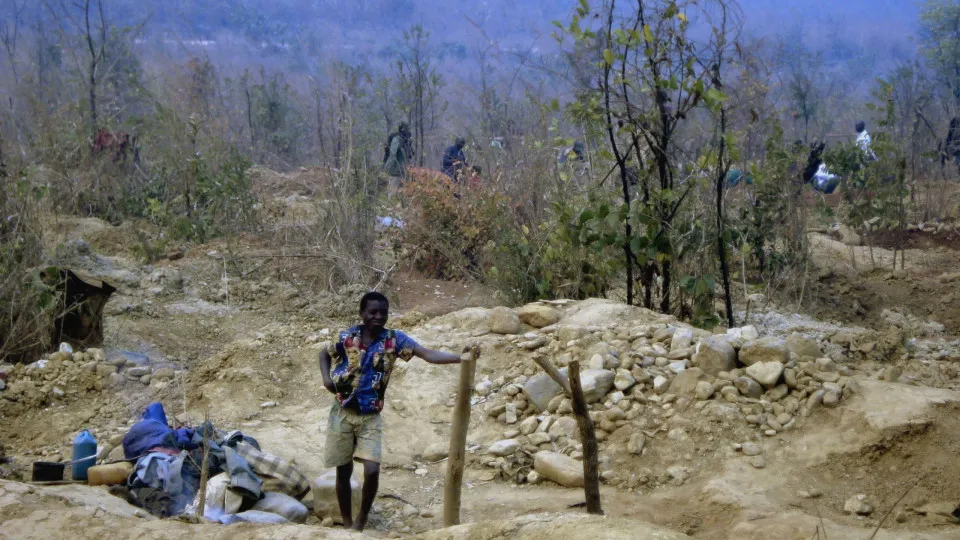
In July, the RMP warned of the presence of minors in illegal mining holdings in the province of Manica, where it identified about 900 excavation sites.
In 2025, the government suspended licenses from mining companies due to environmental irregularities, including the absence of land recovery plans and waste containment systems, after an official report pointed to an “uncontrolled mining” situation in Manica.
However, according to information released by the government in August, 30 of the 41 mining companies suspended in that province have already resumed their activity after complying with environmental requirements and operating standards, remaining under evaluation.