
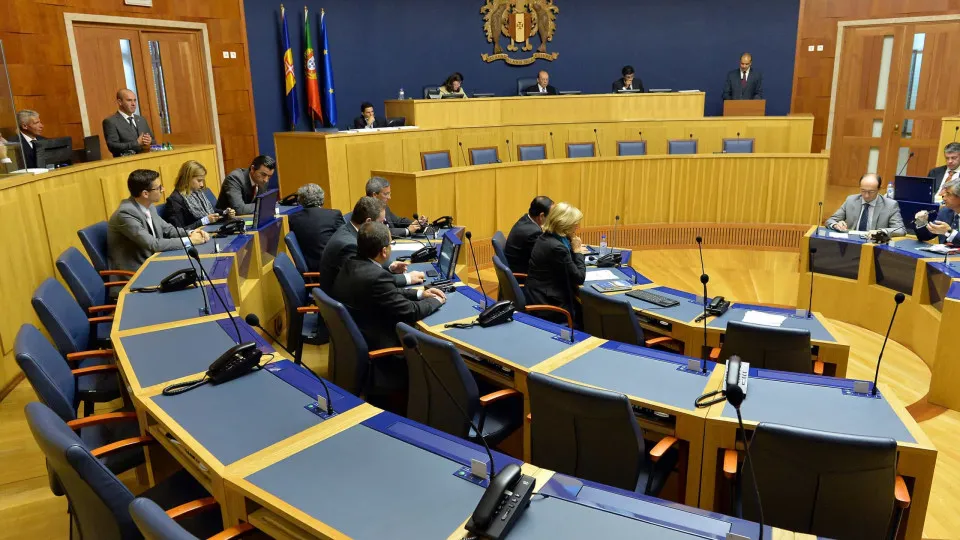
The PSD/Madeira today highlighted the importance of the bill approved in the Council of Ministers establishing the tax regime of the Free Zone by 2033, but stressed that the party does not give up fighting for its own tax system.
© Global Images
17/11/2026
by
Lusa
O PSD/Madeira today highlighted the importance of the bill approved in the Council of Ministers establishing the tax regime of the Free Zone by 2033, but stressed that the party does not give up fighting for its own tax system.
“ Defending the Free Zone is not abandoning the defence of the tax system itself. The PSD defends the Free Zone without this being incompatible with its own tax system,” said the Madeiran Social Democrat Member Brício Araújo, in a speech at the plenary of the Madeiran Legislative Assembly in Funchal.
The proposed law approved by the Council of Ministers approves the new tax regime applicable to licensed entities to operate in the Madeira Free Zone between January 1, 2027 and December 31, 2033, with benefits until December 2037.
Brício Araújo pointed out that the measure has an urgent character, and it is necessary to “take the most of what this instrument represents for the region”.
The initiative, he stressed, also provides predictability, is an important instrument for the regional economy in terms of tax revenue, and represents the setting of more than 4,000 direct jobs.
By the arrival, parliamentary leader Hugo Nunes considered that tax measures should also benefit all Madeiran companies, so the regional government should reduce the intermediate tax rate. On Added Value (VAT).
In his view, the tax revenues collected serve only to “fill the safes of the Fifth Watch [Regional Government Presidency].”.
As for the single Member of the Liberal Initiative (IL), Gonçalo Maia Camel, welcomed the measure of the national government and said “stranger” that appeared late, only in November, so questioned the feasibility of coming into force at the beginning of the year. It also indicated that “the diploma needs some corrections”.
In debate was also the draft resolution of the Together By the People (JPP) that recommends to the Regional Government the regulation of the housing program House Own, created three years ago.
“ Those who approve a public policy have the responsibility to create the conditions for it to be executed ", said the MP of JPP Lina Pereira.
The elect associated the approval of this program in 2023 with the holding of regional elections that year, pointing out that “the time of a family cannot be measured by the electoral calendar”.
The parliamentary leader of the PS, Paulo Cafófo, pointed out that “the housing issue is an emergency and there is a need for intervention” and considered that it is “not acceptable” that regulations continue to be lacking to take advantage of the program measures.
“ We were puzzled when a measure by the Regional Government has been unregulated for more than three years and does not depend on this House, it is an executive ordinance,” he stressed, suggesting the creation of a Housing Secretariat that concentrated on various competences.
Hugo Nunes also blamed the Madeiran executive PSD/CDS-PP for being “incapable” of advancing the regulation: “We are not here to bleach the incompetence of the Regional Government.”
The only IL deputy described the delay as “inexplicable” and stated that the measure “had at least the merit” of not being the State to build.
“There are many programs. Is this for regulation and enforcement or not? Has the regional government come to the conclusion that it has no value? The real estate promoters transmitted that the program had no legs to walk?" asked Gonçalo Camel.
In the opinion of the non-attached deputy, Miguel Castro (ex-Enough), “public housing should be a rule and the social one an exception”, and it is necessary to have “the courage to call banking to this solution”.
He accused the parties that have governance responsibilities of being “bankers” and stressed that local authorities should debureaucratise the processes.
The PSD, through Mrs Duarte, resorted to the situation of political instability experienced in Madeira, with the lead of the Regional Budget of 2025 and the Regional Government Program, to justify the situation, emphasizing that “the working group worked, made an assessment of reality and had to adjust the program”.
Debates of the European Parliament.