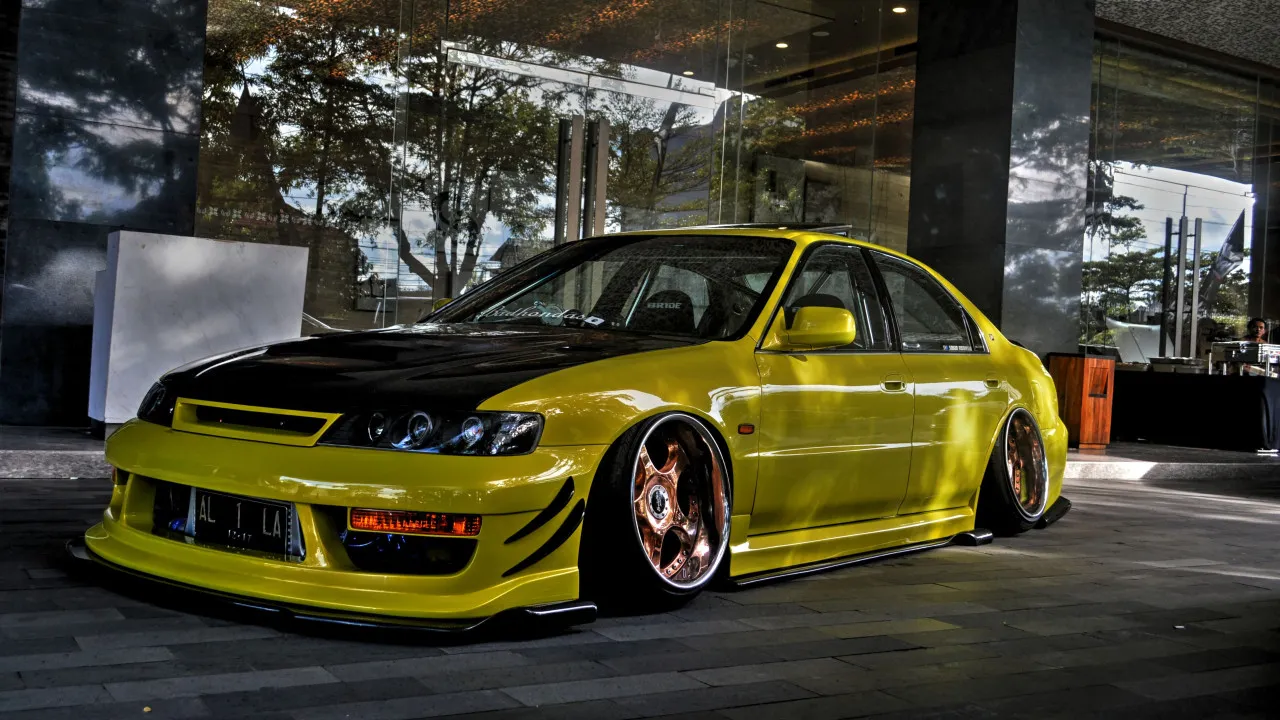
The new rules for vehicle modification are already in force, introduced by a decree-law approved in September and which began to have legal force at the beginning of the week (on November 15).
© Willy Akhsani Taqwim / Shutterstock
19/11/2026
by
IMT may have to approve
Any change in the characteristics of a vehicle or trailer must preserve their level of road safety and environmental protection. There are several aspects where the change of characteristics needs approval from the Institute of Mobility and Transport (IMT).
The list is extensive: from basic aspects such as identification of the vehicle to essential systems such as engine, transmission, axles, suspension, steering, brakes, frame and bodywork. Lighting and light-signalling, masses and dimensions, mechanical systems and coupling and elements contained in the Single Automobile Document (DUA) are others.
Where the modifications regulated in the decree-law require the modification of elements of the DUA, the replacement is mandatory and has no additional costs for those who request it.
Two types of transformation
The processing of a vehicle may take two forms, in accordance with the legislation now in force: general, which “can only be required by a processor recognised in accordance with” stipulated; or individual, “required by the vehicle owner or his authorised representative”.
A general transformation it concerns a set of vehicles and falls within the competence of the authority to which approval is granted, while an individual transformation it is only valid for the specific vehicle which will be modified and is the responsibility of the owner or a recognised processor.
The certification of the modified vehicle may have to be carried out by a qualified technician if the IMT so requires. It may also require a favourable opinion from the manufacturer for the amendment to be approved.
It is also defined that “changes in safety or environmental protection systems can only be made by using original brand systems and components or brand systems and components”. In other respects, “reconstructed elements, used or not specific to the model” can be used, but they must be in good condition.
Approval procedure
The process of approval of the processing shall be defined with three essential elements: descriptive design (with information and, if necessary, photographs or drawings); report of a technical service designated by the IMT or the manufacturer; and certificate of transformation.
If after processing the vehicle corresponds to an approved type, presentation of the design shall be waived. It is also possible that the IMT requires the transformation projects “to be subscribed by qualified technician”, depending on the degree of complexity.
Inspection
When a vehicle is transformed, may have to be subject to technical inspection, with the entity to verify “the correct execution of the transformation” and the existence of conditions to circulate safely and the correct environmental protection.
In case of conformity, a certificate of approval shall be issued, which is valid for 90 days and may have digital format. The owner must bear the costs of the inspection carried out by the IMT or a Category B inspection centre.
If a processed vehicle has to be subject to inspection or testing, it may move without passengers and load to be submitted for inspection, or on the day of the scheduled test.
How do you order?
Applications for approval should be made through the IMT electronic platform for this purpose, but there are some unsupported types of transformation that can be sent by “alternative means to be established by deliberation of the IMT Governing Board”.
What can't be done?
According to the new rules, the processing of a vehicle cannot completely or partially eliminate elements “of the pollutant emission control system”, nor can it modify or inhibit normal operation with an increase in pollutant emissions.
Nor shall components “not complying with the prescribed approval criteria” be fitted, nor shall “any component of a vehicle, which has been approved under specific technical regulations, be replaced by another which does not comply with that Regulation” or is not intended for the vehicle.
From the outside is the “use of elements that constitute prototypes or are intended for research purposes”, or if the production of replacement elements has been discontinued.
Furthermore, the Decree-Law prohibits marketing “systems or components intended for use in motor vehicles and their trailers which do not have type approval”.