
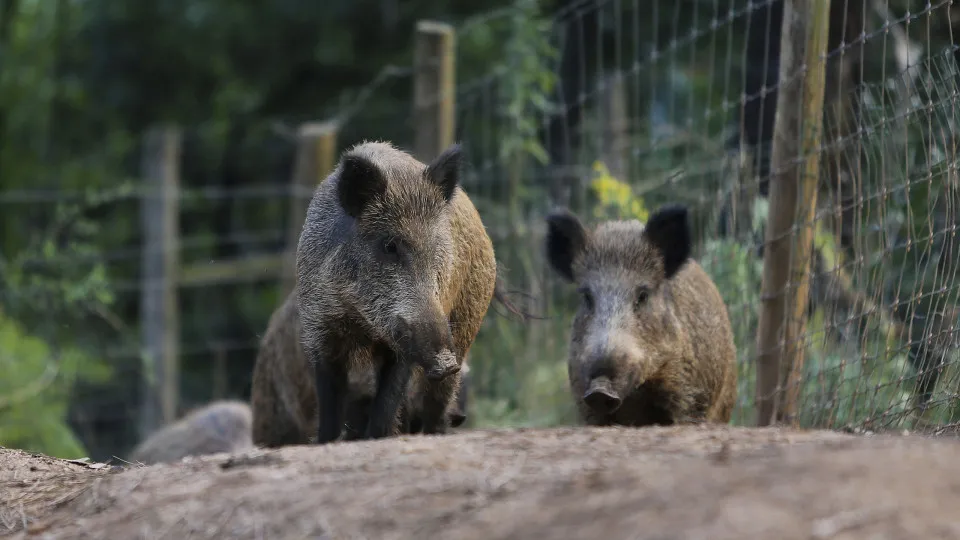
The environmental organisation Quercus today advocated the creation of a “structured and comprehensive” plan to control the increase of wild boars in urban areas, considering that the Government’s pilot project to encourage slaughter is insufficient.
© Lusa
08/10/2026
by
Lusa
“ A population management of the boar in Portugal should be framed, in Quercus' opinion, through a structured and comprehensive Action Plan, with multisectoral measures that address the root of the problem and present long-term results ", says the association, in a statement.
The position of the environmental organisation arises at a time when there have been problems in different regions of the country, such as damage to agriculture and road accidents, due to the presence of wild boars.
The association considers that “before paying for the slaughter of animals, it is necessary to know if and where there are actually excessive densities”, stressing that the Institute for the Conservation of Nature and Forests (ICNF) speaks of “density correction, so paying per head and slaughtering as many animals as possible will not necessarily mean an effective result and a reduction of losses”.
To combat the damage caused by the presence of wild boars, Quercus is moving forward with measures “that can and should be implemented”, such as investment in the protection of agricultural crops, the need to ensure that compensation to affected farmers is fair and is being paid and the adoption of strategies aimed at sustainable hunting.
“If hunting is presented as a population management tool, it is also necessary to assess its effect on the population and the damage to the ecosystem and biodiversity, and not only to present the total number of animals slaughtered,” the organization said, who also wants to know if the population density of the boar will be quantified before and after the implementation of the pilot project.
The Government will launch a pilot project, which is based on an incentive to combat the increase in the population density of wild boars in 60 counties of the country, by paying for the slaughter of males (50 euros) and females (70 euros), according to Quercus, a non-governmental and non-profit organization.
“Paying for the head and slaughtering as many animals as possible will not necessarily mean an effective result and a reduction in damage,” Quercus said, stressing that “he carefully sees the creation of the pilot project to encourage the slaughter of wild boars, as it ends up treating the consequence rather than dealing with the causes.”.
According to Quercus, the “historical regression of the Iberian wolf, a natural predator of the boar, in much of the Portuguese territory is one of the key factors that explains the apparent greater population density and geographical dispersion of the boar”.
Another factor that also contributes to the spread of the wild boar is, according to the organization, related to “the progressive abandonment of the management of the territory and the reduction of the natural habitat available”, since with fewer resources available in natural ecosystems, animals seek food elsewhere, invading farms or even urban waste containers.