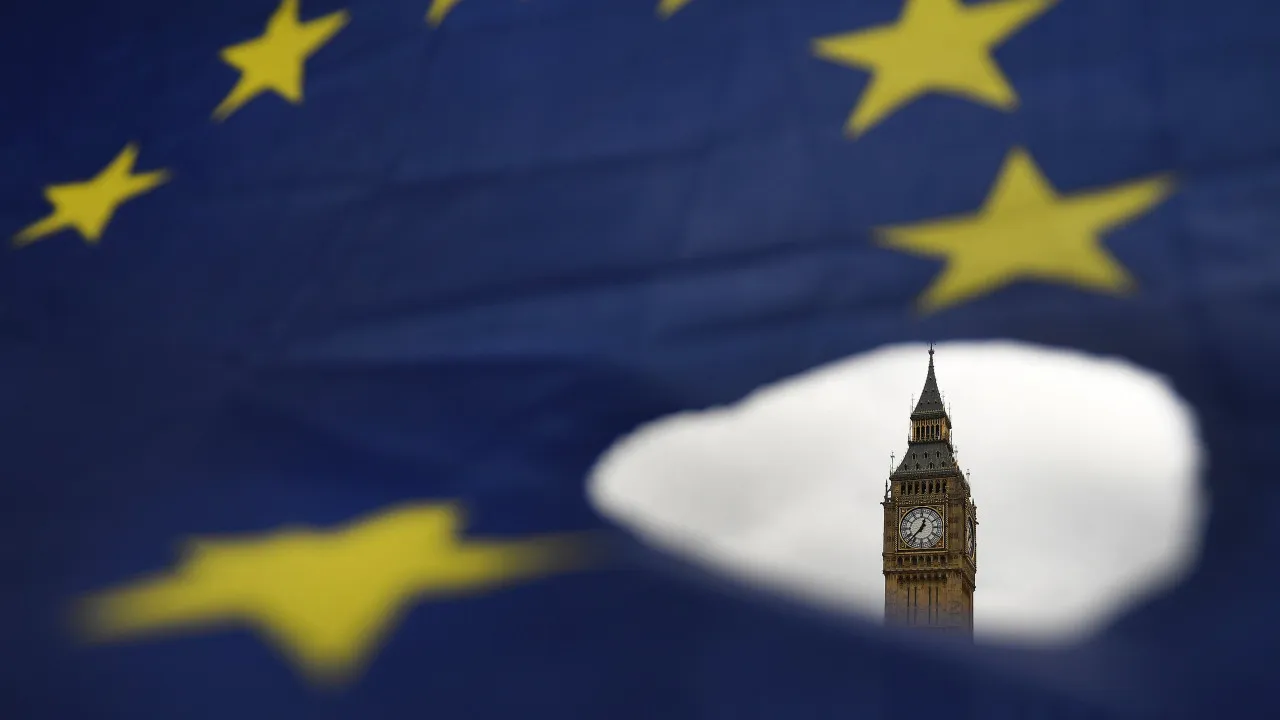
The second United Kingdom-European Union summit is an opportunity for the British Government to reduce friction at borders and alleviate the cost of living without formally reopening the issue of returning to the EU at this stage.
© Lusa
18/11/2026
by
Lusa
A the second United Kingdom-European Union summit is for the British Government an opportunity to reduce friction at borders and alleviate the cost of living without formally reopening the issue of returning to the EU at this stage.
London hopes to close a package that includes a health and phytosanitary agreement for agri-food products and plants to eliminate part of the bureaucracy introduced after leaving the block, including certificates, inspections and trade fees.
The Executive argues that this measure will facilitate exports and reduce costs for businesses, contributing to lower prices for consumers.
In economic terms, it estimates that it can contribute up to GBP 5.1 billion (EUR 6.11 billion) annually and an increase of up to 0.4% in gross domestic product (GDP).
A link between greenhouse gas emission allowance trading systems and a youth mobility programme should also be announced on Friday, which provides for temporary reciprocal stays for young people aged 18 to 30 to study or work.
The UK’s main demand is to participate in the European industrial strategy “Made in Europe”, which focuses on European components and production in sectors such as the automobile.
London fears that British companies will be penalised by endangering jobs.
On the other hand, Brussels continues to press for a reduction in university tuition for EU students in the UK, bringing them closer to the values applied to British students.
The summit also marks a political test for Burnham, which succeeded Keir Starmer in July and assumed a “repositioning” on the EU relationship.
The Prime Minister reiterated on Monday that Brexit brought “lost more than he earned” and that the country should reflect on “options for our long-term relationship”.
However, he ruled out significant changes before the forthcoming parliamentary elections and insisted that “at all stages, the British people will command”.
Several recent opinion studies, including from the Bertelsmann Foundation, which has collected data over the past ten years, most British would now vote for the UK as an EU member.
In March 2026, this support was 57%.
Burnham's boldness divides the government itself: some ministers support more ambitious cooperation and even reintegration into the bloc, while others are more cautious about a possible return to the single market or the EU.
The opposition, in particular the Conservative and Reformist parties, both Eurosceptics, accuse the government of using the summit to reintroduce European rules and threaten to rescind the new agreements if they come to power.
The most sensitive point is the so-called “dynamic alignment”, which makes the UK automatically monitor changes to EU legislation in areas such as food and health standards.