Russia today accused Latvia, as it did a few days ago with Estonia, of intending to provoke an “open war” by escalating tensions in the Baltic Sea, hours after a drone violated Latvian airspace.
© Sefa Karacan/Anadolu via Getty Images
27/11/2026
by
Lusa
A Russia today accused Latvia, as it did a few days ago with Estonia, of intending to provoke an “open war” by escalating tensions in the Baltic Sea, hours after a drone had violated Latvian airspace.
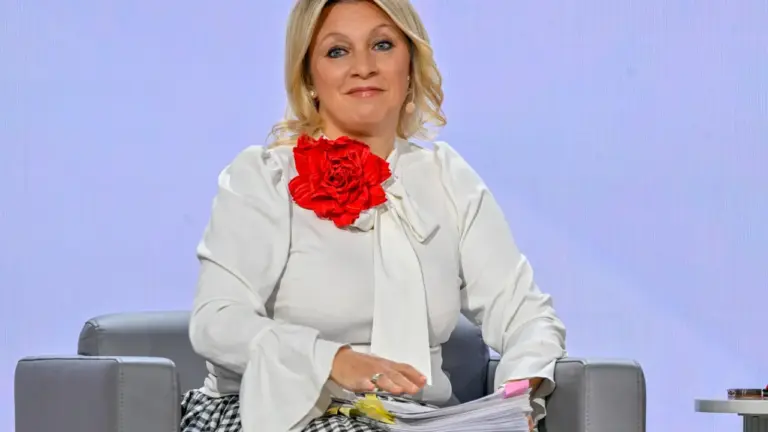
“ The present Latvian authorities, of course, have no desire to normalize relations with Russia. On the contrary, they constantly follow a path of increasing escalation, to the point where, when the time comes, they provoke an open war”, said the spokesman of the Ministry of Foreign Affairs, Maria Zakhrova, in a statement.
Zakharova pointed out that Russia “cannot ignore threats and reserves the right to adopt firm response measures of a political and diplomatic nature to secure Russia’s national interests and the rights of its citizens”.
The Russian diplomat accused Riga of creating “artificial barriers” to prevent Russian cereals from reaching world markets, with the consequent risk of global food security, as when they seek Ukrainian cereals stolen by Moscow in the annexed regions in 2022.
The spokesman for Russian diplomacy also stressed that Moscow has on several occasions detected cases in which the Baltic countries – Estonia, Lithuania and Latvia – give in to their airspace for the passage of Ukrainian drones that carry “terrorist attacks against Russian infrastructure”.
Zakharova also denounced that NATO carries out military exercises in Latvian territory, where the permanent military presence of allied troops has increased, “which creates an additional threat to our Western borders”.
“The potential opponent in these exercises is well known: maneuvers are being prepared to carry out military actions against Russia,” he said.
Moscow's warnings appear hours after Latvia detected an unknown drone in its airspace at dawn, which led to the mobilisation of several NATO fighters, while both that country and neighbouring Estonia sent warnings to the population of several provinces due to a possible air threat.
This week the Russian Ministry of Foreign Affairs called on Estonia’s business manager Marek Juhtogi, who warned that his government’s “dangerous” and “provocative” actions threaten to trigger an “open war” between countries.
According to Moscow, Estonia’s decision to close the border on 1 December will ‘represent, above all, another blow to the Estonian economy and will have negative consequences for both Tallinn and its EU and NATO allies’.
In this sense, Moscow warned Tallinn that “the right to adopt political and diplomatic measures is reserved” to defend their national interests.
According to the Russian side, the closure of the border — some 135 kilometres — is a measure aimed at “extremely shaking relations” with Moscow and the Baltic region.
The Estonian Government announced a week ago the decision to close the land border with the Russian Federation.
Tallinn denounced what he termed “continuous hostile activities against Estonia and other European countries” in reference to the recent attempt to sabotage an Estonian defence company attributed to Moscow.
The Estonian executive also announced that it will re-evaluate the situation within six months to determine whether the repeal of the measure would be beneficial for national security and public order.
The Russian authorities have registered 24-hour waits at the border with Estonia, a country with a large Russian population, particularly in the city of Narva.
The Russian customs authorities added that the reinforcement of border controls by Estonian officials caused “long queues” in the passage between the Russian city of Ivangorod and Narva.
After the closure of the Finnish border, Norway, Latvia, Lithuania and Poland will be the only European countries to keep the borders open with Russia, the last two through the Russian enclave of Kaliningrad.