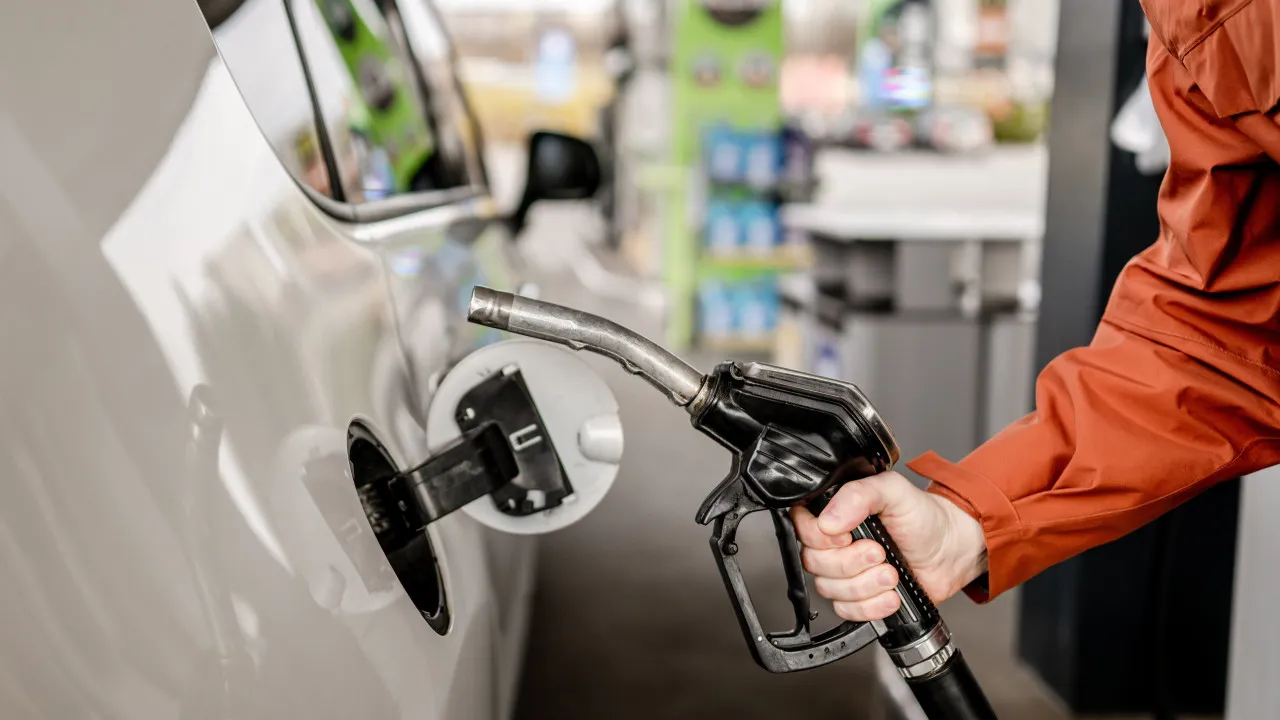
Fuel prices should be cheaper by the beginning of next week. Source of the sector told News to Minute that estimates point to a reduction of three cents in diesel and four and a half cents in gasoline.
© Shutterstock
20/11/2026
by
News to Minutes
Sand you need to attest, it's best to wait for the beginning of next week, since the fuel prices should get cheaper again. Source of the sector advanced to News to Minutes that provisional estimates point to a reduction of three cents in diesel and four and a half cents in petrol.
These values may still be changed, and the final figures should be known at the end of the afternoon of Friday.
The average price of simple diesel is EUR 2,071 per litre and simple petrol 95 is costing, on average, EUR 1,883 per litre, according to the data updated by the Directorate-General for Energy and Geology (DGEG).
It should be noted that the “daily average prices are calculated on the basis of the prices reported by the fuel stations, weighted by the quantities sold during the last known period, incorporating the discounts charged at supply stations as fleet and other cards”.
Government wants to cut gas and diesel consumption by 52% by 2040
Portugal presented, on Wednesday, at COP31, which takes place in Antália, Turkey, the “Portugal Roadmap for the Transition of Fossil Fuels”, which provides, “in the reference scenario, [that] the consumption of diesel and gasoline in road transport goes down 52% until 2040”, the Ministry of Environment, in a statement.
“ The document establishes two major strategic guidelines: achieving climate neutrality in 2045, as foreseen in the National Energy and Climate Plan (PNEC 2030), and halving external energy dependence between 2026 and 2034. To achieve these objectives, the roadmap identifies the main areas of intervention, the public policy instruments and the necessary funding mechanisms ", can be read in the note published by the guardianship.
According to the Executive, “the strategy is based on five priority areas: electricity, buildings, industry, transport and aviation. It includes existing measures and instruments, such as policies for the acceleration of renewable electricity, the National Storage Strategy, the Social Climate Plan, the Biomethane Action Plan and sustainable aviation fuels. These initiatives add a new measure aimed at one of the most oil-dependent sectors: the National Strategy for the Decarbonization of Road Liquid Fuels”.
The government argues that “in January 2027 it will open a 30-day public consultation on the areas of measurement and trajectory; the final version, with goals and measures, will be completed in the first quarter of 2027. The process will be coordinated by the National Entity for the Energy Sector (ENSE), with DGEG and the National Laboratory of Energy and Geology (LNEG)”.
The government argues that transport concentrates around 80% of the final consumption of petroleum products in Portugal and is the sector with the most emissions: 35% of the national total in 2024, according to the Climate Agency.
“ Only road transport consumes 41% of the country's fossil fuels and, through diesel and gasoline, explains about 24 of the 64.5 percentage points of external energy dependence. In 2024, the import balance for energy products was €5.7 billion”, reads.
The strategy will therefore give priority to the electrification of light vehicles and buses and the incorporation of renewable and low carbon fuels where electrification is more difficult, such as heavy goods transport and vehicles already in circulation.