
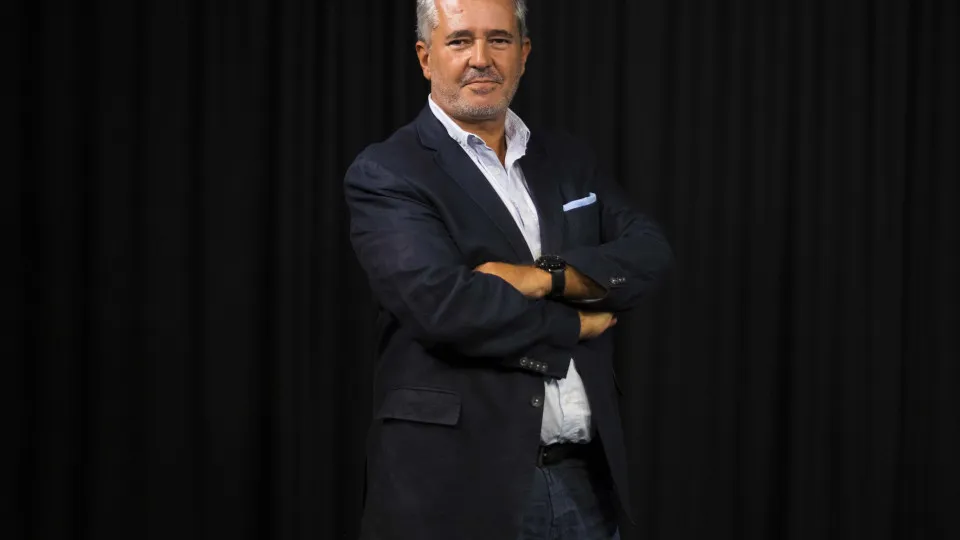
SEDES proposed to the Government the Lisbon candidacy to the Olympic Games, with the aim of accelerating structural works and requalifying degraded areas, its president revealed.
© Global Images
09/10/2026
by
Lusa
A The Association for Economic and Social Development presented to the Government a proposal to apply for Lisbon at the Olympic Games, anchoring in the world's largest sporting event structural works and the requalification of degraded areas, today revealed its president.
In statements to Lusa, the president of the Association for Economic and Social Development (SEDES), Álvaro Beauty, revealed that the document – which falls within the framework of strategic planning work for the Lisbon region, with a 10-year horizon – was also referred on Thursday to the Olympic Committee of Portugal (COP) and the president of the Lisbon City Council, Carlos Coins.
The responsible considers that setting a date for the Games could help to meet the timetables of works such as the new airport, the high-speed railway link between Lisbon, Porto and Madrid and a third crossing of the Tagus.
“The idea is, having a date, it forces the country to fulfill and even finish the works”, he said, arguing that the organization of an event of this dimension could function as a mobilizing objective to achieve long-awaited investments, such as Expo98.
The responsible acknowledged that the timetable for an application for the 2036 Olympic Games is tight, as the deadline for expressing interest expires on 31 October, but distinguished this stage from the presentation of a formal application.
“Pré-application is not an application. Just say, raise your arm, we are here and we also want to go to the game ", said, defending that the process should start even if Portugal cannot compete for the 2036 edition.
In this case, SEDES admits to point to issues of 2040 or 2044, as the preparation of a project of this size requires several years.
“ This path must be started and, even if it is not possible for 2036, continue the way ", said.
The president of SEDES considers that Lisbon is able to host the Olympic Games, highlighting the presence of the river and the sea, the availability of space, the temperate climate in summer, geographical location and security.
“Lisbon has obvious conditions for Olympic Games,” he said, recognizing, however, the need to create some infrastructure, including swimming pools.
Álvaro Beauty argued that a possible organization should take advantage of existing equipment and distribute some modalities to other regions of the country.
As examples, he pointed out the possibility of performing gymnastics tests at the Pavilion Rosa Mota in Porto, and rowing and canoeing competitions in Montemor-o-Velho.
From its perspective, this decentralisation would allow for broadening the impact of the Games beyond capital and taking advantage of the sports infrastructure available in the country.
India, Qatar, Germany, Hungary, Turkey, South Korea and South Africa are among the countries that have expressed interest in organising the 2036 Games, but SEDES believes that Portugal can benefit from its geographical location, security and European integration.
Urban requalification is another argument put forward by SEDES.
Álvaro Beauty argued that the Games could contribute to recovering degraded areas and creating housing for young people, with the construction of an Olympic Village that, after the event, could be converted to housing use.
The person responsible pointed out Barreiro and Seixal as areas that could benefit from such interventions.
To Lusa, Álvaro Beleza revealed that she had already spoken with two members of the Government and felt openness to analyze the proposal and also said that she should meet next week with COP president Fernando Gomes.
Beauty also admitted the possibility of a future articulation with Madrid, which can also aim to host the Olympic Games, and argued that Lisbon should begin to prepare this objective regardless of the edition to which it will compete.
The decision on the host of the 2036 Games must be taken seven years earlier in 2029, and the countries concerned will have to present their initial project in November, and more candidates may appear by the end of October, with the final list to be approved in March 2027.