
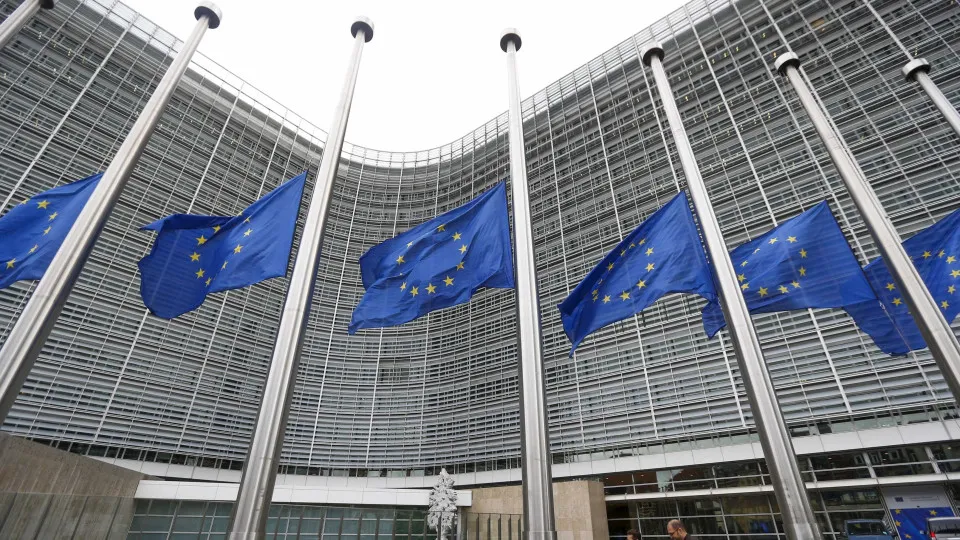
The European Union (EU) closely monitors the condemnation of Tundu Lissu, Tanzanian opponent, to four years in prison, and calls for respect for the rule of law, freedom of expression and democracy.
© Reuters
07/11/2026
by
Lusa
A European Union (EU) said today to follow closely the case of the Tanzanian opponent Tundu Lissu, sentenced to four years in prison, and called on the authorities to respect the rule of law, freedom of expression and democracy.
“The EU encourages the Tanzanian authorities to maintain their commitment to reconciliation, the rule of law, freedom of expression and multi-party democracy”, refers to a statement released today by the European External Action Service, quoted by the Spanish EFE agency.
The body also refers to the findings of the United Nations Working Party on Arbitrary Detention, according to which the arrest of Lissu “was arbitrary, lacked sufficient legal basis and raised serious doubts about the impartiality of the case”.
The same source adds that detention “would contravene the guarantees enshrined in the Universal Declaration of Human Rights and the International Covenant on Civil and Political Rights, of which Tanzania is a State party”.
The 58-year-old opposition leader was sentenced on Friday to four years in prison for incitement to violence, after being acquitted of the charge of treason, a crime that could lead to the death penalty.
The chairman of the panel of three judges of the Superior Court of Dar es Salaam, Dunstan Ndunguru, stated that the defendant had committed the lesser crime of incitement, considering that the prosecution failed to demonstrate fundamental elements of the crime of treason.
Tundu Lissu, president of the Party of Democracy and Progress (Chadema), considers that he is being subjected to political persecution and criticised the judges for condemning him for a crime he had not been formally accused of.
“ You made up excuses to arrest me and you judges are the cause of it. I was not accused of incitement, but you judges condemn me for this only to impress the person who grants you your titles ", said in court, accusing the magistrates of obeying the "directives".
The political leader was arrested in April 2025 when he finished a speech at a rally.
The prosecution maintained that it had called for the general elections to be prevented on 29 October of that year, but Lissu always argued that his speeches were not a crime in the light of Tanzanian law.
Chadema intended to run for election, but ended up away from the electoral process.
Tindu Lissu, nominated this year for the Sakharov Prize for Freedom of Thought, awarded by the European Parliament, returned to Tanzania in 2023 after a period of exile.
He survived earlier than his party considered an assassination attempt for political reasons.
The opponent had already been arrested several times, but faced for the first time an accusation of treason.
The trial was the third trial for treason of great mediatism in the history of continental Tanzania. The previous two, in the 1970s and 1980s, involved defendants suspected of plotting to overthrow and assassinate the country's first President, Julius Nyerere (1922-1999).
The political situation in Tanzania has been marked by accusations of violence and repression of the opposition.
A commission of inquiry set up by the President of the country, considered partial by the opposition, announced in April that electoral violence caused 518 deaths without identifying responsible.
The opposition and human rights organizations claim that about 2,000 people were killed by security forces.