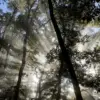
The project “Plantar Água” has already contributed to restoring 200 hectares of forest in the Algarve, in seven years, with the planting of 100,000 autochthonous trees and shrubs, as well as the recharge of aquifers and other actions.
© PATRICIA DE MELO MOREIRA / AFP via Getty Images
27/11/2026
by
Lusa
O project “Plantar Água” has already contributed to restore 200 hectares of forest in the Algarve, in seven years, with the planting of 100,000 autochthonous trees and shrubs, in addition to the recharge of aquifers and other actions, was today released.
Tavira welcomed the closing session of the WWF Portugal project today and the promoters highlighted the importance of the recovery strategy implemented, which also allowed the recovery of 475 million liters of water per year, since its beginning in 2019, quantified.
At the beginning of the project, an integrated intervention was made in the mountains, the barocal and the Algarve coast, covering the entire water cycle, which articulated “refurbishment actions of the Mediterranean forest” and promoted “infiltration and recharge of aquifers and improvement of water efficiency in agricultural activities”, the promoters needed in a statement.
“ With an integrated approach to the territory, the project sought to respond to the specific challenges of each area of the Algarve: to increase the water retention capacity in the high areas of the mountain, to promote infiltration and recharge of aquifers in the barocal, and to promote a more efficient use of this resource in the agricultural areas of the coast ", characterized.
Ângela Morgado, executive director of WWF Portugal, stressed that, in addition to the “concrete benefits” for the entire ecosystem of the region, the project also had positive effects for local communities, contributing to the resilience of the territory.
“ It is this integrated work, based on the nature and involvement of local communities, that allows to build lasting responses to the challenges of climate change and water scarcity”, he said, quoted in the statement.
The promoters stressed the importance that the continuity of the project had for the regeneration of Serra do Caldeirão, recovering 200 hectares of forests and forests near the Ribeira da Foupana, in Cachopo, in the municipality of Tavira, district of Faro, with the planting of about 100,000 autochthonous trees and shrubs.
The new vegetation helped to retain water in the soil, to combat erosion, to promote biodiversity and to increase the resilience of this area to forest fires, but also to value the forest for recreation and leisure and to develop sustainable economic activities, they exemplified.
With the recovery of 405 million liters of water per year, an important contribution was made to the strengthening of the aquifers of the Algarve’s leeve (east) , “a region particularly vulnerable to drought and the irregularity of precipitation”, they observed, also highlighting the work done with crops such as avocado, which helps to have “more sustainable agricultural practices”.
Those responsible for the project also highlighted that, since its inception, the “Plantar a Água” covered “more than 20 rural owners, eight mentors, four entrepreneurs and about 120 students, contributing to the dissemination of knowledge, local training and the valorization of the territory”, the fight against rural abandonment and the establishment of communities.