
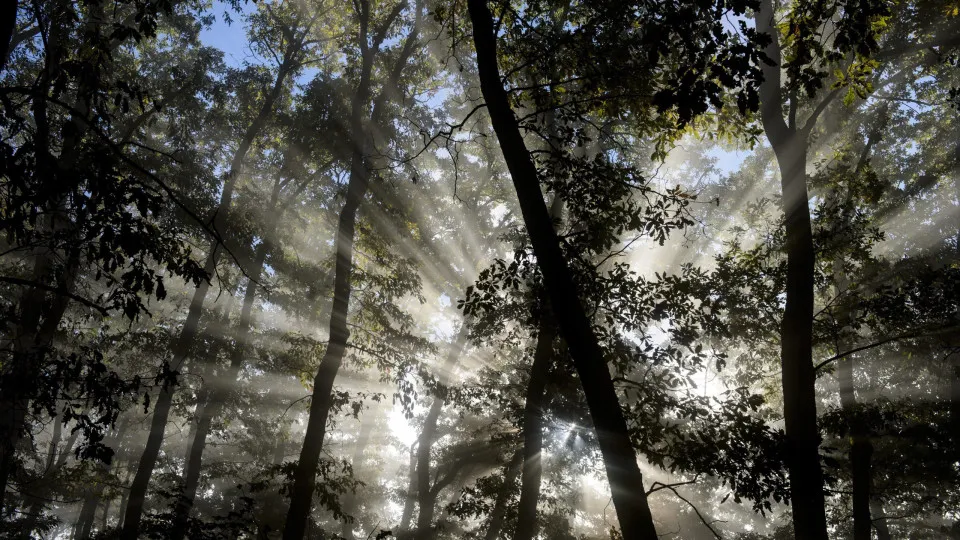
WWF is restoring 25 hectares of the Valado National Forest in Nazareth with an investment of 100,000 euros due to the damage caused by Kristin depression.
© Lusa
27/10/2026
by
Lusa
A environmental organization WWF is restoring 25 hectares of the National Forest of Valado, in the municipality of Nazaré, an investment of 100,000 euros of recovery of the area affected by the depression Kristin.
The project, initiated in May, aims to implement an urgent intervention of forest management and ecological restoration in the Forest of the Valado dos Friars and at the base of the Monte de São Bartolomeu, recognized by promoters, the WWF – World Wide Fund for Nature Inc., as “a true island of biodiversity”.
The intervention, in an area of 25 hectares, that following the storm Kristin (in January this year) suffered significant damage with the fall of trees, “departed from a proposal from Lidl Portugal”, explained today the executive director of WWF Portugal, Angela Morgado, in the presentation of the project budgeted at 100,000 euros, financed by this supermarket chain.
The restoration was started in May of this year, with the removal of woody material and the recovery of visitation trails to the Monte de São Bartolomeu, where annually is held the pilgrimage and traditional feast of S. Brás (on 3 February), which marks the start of Carnival in Nazareth, in the district of Leiria.
The intervention will extend until May next year, with actions that will go through the elimination of invasive species (such as acacia and crybaby) and the planting of indigenous species “more resilient to fire and climate change”, explained WWF technicians.
The plantation will focus on species such as pine-bravo, medronho, hangman and adherent, among others.
The project is part of the D-Evolution initiative, promoted by WWF Portugal, in partnership with entities and companies that support the financing of environmental restoration and ecosystem regeneration interventions in various locations in the country.
“ This initiative identified priority areas for restoration,” Lusa Ângela Morgado told the agency, admitting that through it, this body “also intends to give an indication to the government that it is occupied with the National Restoration Plan, on priority areas to intervene”.
According to the same person, WWF currently has “a project in the Peneda Gerês National Park”, where the funding of several companies is enabling intervention “in more than 40 hectares”, in an investment that amounts to “the 400,000 euros”.
In Serra do Caldeirão, where there was already a restoration project funded by a United States foundation, WWF launched “with Brisa and with an individual donor, a foundation, another restoration project”, worth 120 thousand euros.
With the same investment value, but with different objectives and methods, the WWF is developing a project in the Tagus Estuary, lasting two years, based “on a logic of implementing facilities made from old supermarket carts, which Lidl gave in to the fixing of populations of seahorses,” explained Angela Morgado.
Still in the aftermath of the damage caused by the storms of the beginning of the year, the WWF will soon advance with a recovery project in Serra do Montejunto, released the same responsible.