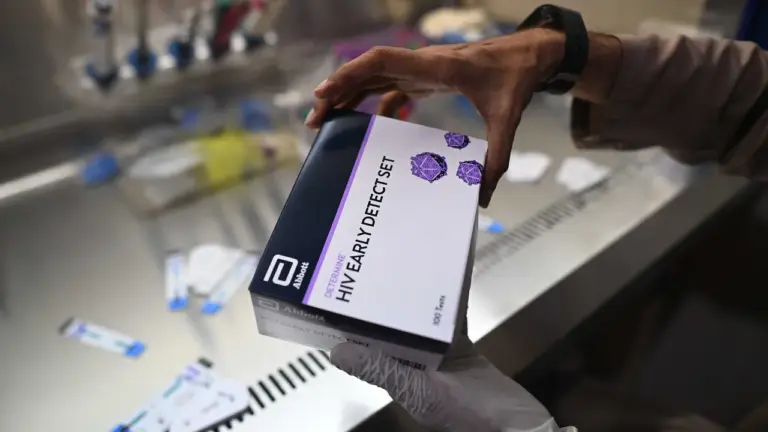
The director of the National Institute for the Fight against AIDS assured today that Angola has antiretrovirals, despite the reduction of external funding, which mainly affected the community interventions of non-governmental organizations.
© Lusa
25/11/2026
by
Lusa
A director of the National Institute for the Fight against AIDS assured today that Angola has antiretrovirals, despite the reduction of external funding, which mainly affected the community interventions of non-governmental organizations.
“ We are doing a closer check, so that no one will run out of antiretrovirals,” said Maria Furtado, during the ‘Workshop’ on the Financing and Sustainability of HIV Response in Angola, in the framework of the World AIDS Fight Day (Acquired Immunodeficiency Syndrome), which marks December 1.
According to Maria Furtado, the institution received additional credit at the beginning of the year, held a public procurement competition and at this time companies are delivering the antiretrovirals.
Maria Furtado advanced that data from 2025 indicate that the country had about 377,000 people with HIV/AIDS, 21,000 new infections and recorded 14,000 deaths associated with opportunistic diseases, especially hepatitis B and the abandonment of treatment by patients.
In 2025, they received antiretroviral treatment 188,062 people, said Maria Furtado, advancing that the transmission rate of HIV (Human Immunodeficiency Virus) from mother to child decreased from 26% in 2019 to the current 13%.
Of the total number of people living with HIV/AIDS in Angola, 240 thousand are women and from this universe between 24,000 and 28,000 are seropositive pregnant women.
The source stressed that the province of Lunda Sul had the highest prevalence rate, with 4.9%, that is, in 100 people five are infected, followed by Lunda Norte (4.4%), Cunene (3.3%), Cuando (2.7%) and Moxico (2.5%).
She stressed that, despite mortality and incidence rates, the trend is reduction.
Despite the reduction of some external support, the director continued, Angola assures the national funding of more than 86% of tests, antiretrovirals and other inputs, stressing that the Global Fund is a major external funder, with investments concentrated in three provinces.