
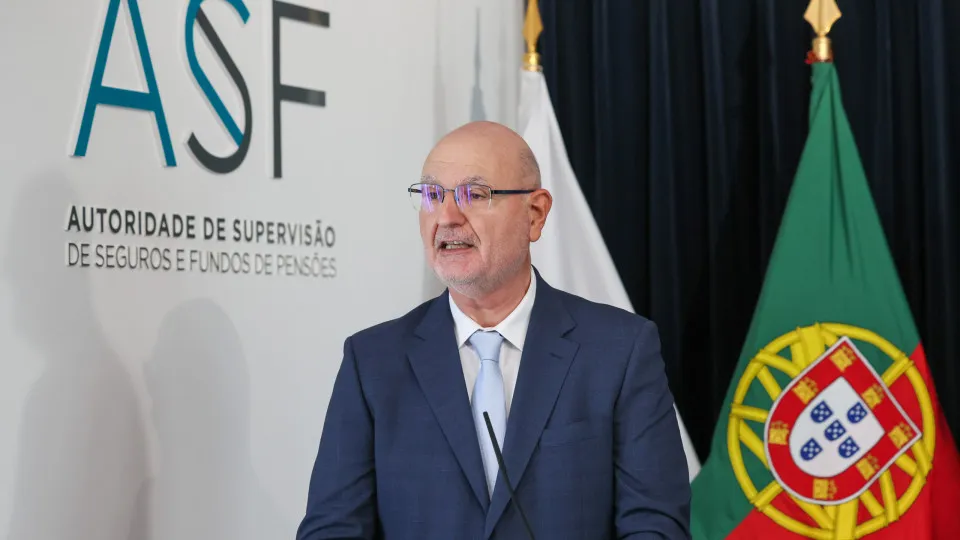
The chairman of the Insurance and Pension Funds Supervisory Authority (ASF) recognised in parliament that there is a ‘failure’ between what consumers expect to be the coverage of insurance and what is actually contracted.
© Lusa
07/10/2026
by
Lusa
Na hearing today at the Eventual Commission for National Resilience, Prevention of Natural Disasters and Monitoring of Portugal Transformation, Recovery and Resilience (PTRR), Gabriel Bernardino indicated that there are already “mechanisms today so that people, when they do their insurance, can access a simulation of what is the value of reconstruction of the house, because that was what should be the closest to safe capital”.
According to the regulator’s leader, if a consumer subscribes to “a safe capital that is half of what the reconstruction value is, he will only receive half of the compensation when there is a sinister”, pointing out that “this has to be said in a more transparent and clearer way”.
“What we even propose in the protection system is that there be a public system where anyone has access to a simulator, which would be a simulator made with a public entity, that allows the person to go and know what the closest reconstruction value is, to avoid these unsafe situations, obviously”, he said.
Gabriel Bernardino then tried to justify the reason for this “failure between what is the consumer’s expectation and what is, in fact, what is in the contract”.
“ It is the duties of information, it is literacy, it is the behavior, often also of insurance companies who want to refuse some claims? I think it’s a bit of all this,” he said.
“ Often to lower the prize, what do you do? Safe capital goes down. And then, obviously, the result will not be good ", highlighted.
Bernardino also pointed out that, in the case of companies, the big problem is “the operating losses”.
“ Only a very small number of companies had insurance against loss of operation and there were also a small number of companies that did not have multirisk insurance even,” he lamented.
The president of the ASF recalled the data from the study that the regulator presented in July on the impact of the so-called ‘storm train’.
The latest figures point to around 223 thousand claims that have been reported to insurance companies and a cost of around EUR 1.45 billion, with the total national losses being around EUR 5.3 billion, “which shows that we only have around 26% insurance,” he said.
He also recalled the proposal that the entity submitted to the government in March, with the basis for establishing a national system of protection against natural disasters.
This system involves the existence of “a disaster fund covering not only earthquakes, but also the situations of so-called climate risks and, therefore, all these risks of flooding, forest fires, storms”, as well as “a set of proposals so that there is an element of aid to citizens with lower incomes so that they can ultimately have that protection”.
The FSA also told the government of the need for a “prevention pillar”, indicating that it is necessary to “act as much as possible in risk mitigation and risk prevention”.
This system goes through “mandatory disaster insurance coverage, which has standard conditions,” he stressed.