
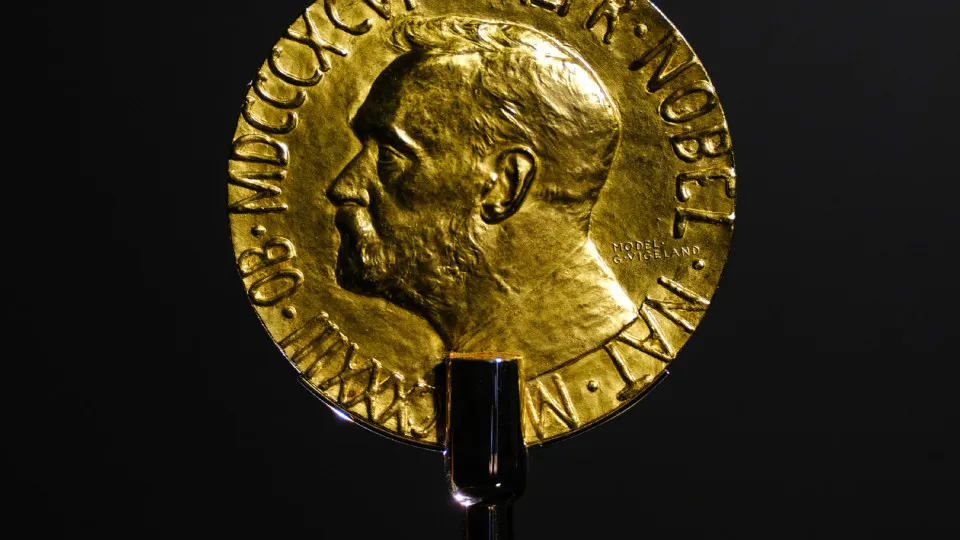
The usual lists of betting houses that precede the Nobel Prize for Literature are composed of usual names, from Chinese Can Xue to Australian Gerald Murnane, but also include Portuguese Lídia Jorge, a few places below.
© NobelPeaceOslo/X
06/10/2026
by
Lusa
Pthe Swedish group Betsson, in a statement released today, the list is headed by applicant Can Xue, followed by Canadian Anne Carson and Australian Gerald Murnane, with the ‘top’ 5 to be completed by Argentinean César Aira and Mexican Cristina Rivera Garza.
Other probabilities lists, such as those of the widely cited British Ladbrokes, consulted today at 3:00 p.m. by Lusa, also had Xue at the top, but tied (10/1) with Carson, followed by the Japanese Haruki Murakami and Murnane, with American Thomas Pynchon at the same level.
Ladbrokes puts Lídia Jorge at 20/1, at Garza level, at Enrique Vila-Matas, at the north-american level, born in Antigua and Barbuda Jamaica Kincaid, at Lyudmilla Ulitskaya and at the Canadian Margaret Atwood.
More below the list of Ladbrokes, between Argentina Maríana Enriquez and the Canadian born in Sri Lanka Michael Ondaatje, appears the Mozambican Mia Couto, with odds of 25/1.
Brazilian Adélia Prado is also listed, with 33/1, the same odds, for example, of Israeli David Grossman and American Colson Whitehead.
The French News Agency AFP has heard several literary critics who expect the award to go to a non-European woman, with a Swedish journalist predicting that it is time to award the Nobel Prize in Literature to a Latin American writer of hispano-speaker, giving the example of Argentinean Samanta Schweblin.
The Nobel Prize in Literature of 2026 will be revealed on Thursday, after 12:00, in an announcement made from Stockholm as usual.
In 2025, the winner was the Hungarian Laszlo Krasznahorkai. Since 2018 the prize has interspersed a man and a woman, having been awarded in 2024 to South Korean Han Kang.
First awarded in 1901, the Nobel Prize in Literature aims to distinguish a person who “in the field of literature has produced the most exceptional work in an ideal direction”.
The Nobel Committee receives applications by the end of January each year from institutions or academics in the field.