
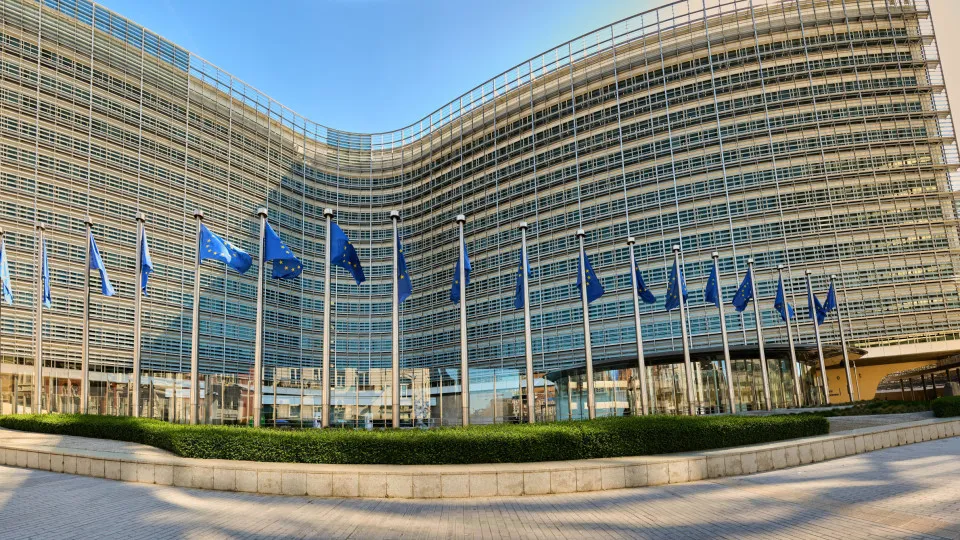
The European Commission has today asked for a political agreement by the end of this year on the next multiannual budget of the European Union (EU) for 2028-2034, advocating a “significant package” of new revenue to avoid falling funding.
© Shutterstock
04/11/2026
by
Lusa
A The European Commission today asked for a political agreement by the end of this year on the European Union's next multiannual budget (EU) for 2028-2034, advocating a "significant package" of new revenue to prevent a drop in funding.
“ It is essential to reach a political agreement on the Multiannual Financial Framework by the end of 2026, including a significant package of new own resources, in order to avoid a fall in funding with harmful consequences,” says the Community Executive in the Communication on the institution's work programme for 2027, presented today in Brussels.
At a crucial time of negotiations between EU leaders prior to several European summits by the end of the year, Brussels calls for a “modern, flexible budget with adequate financial resources”.
“ The preparatory work of the Multiannual Financial Framework for 2028-2034 will be accelerated in 2027 so that the funds will begin to be made available from 1 January 2028 to support the EU’s competitiveness, security and defence, food security, cohesion and decarbonisation efforts, as well as Europe’s role in the world,” the institution listed.
Also next year, the Community executive undertakes to work “intensibly with the European Parliament, the Council and the Member States to complete sectoral legislation and preparatory work”.
In parallel, “the protection of the EU budget will be strengthened by the next revision of the regulations on the European Anti-Fraud Office (OLAF) and the European Public Prosecutor’s Office (EPPO), as well as the Directive on the protection of the Union’s financial interests (PIF Directive), following the review of the anti-fraud architecture,” he said.
The work programme for 2027 sets out the main legislative and non-legislative initiatives that the European Commission intends to present next year, with priorities including strengthening European competitiveness, defence and security, supporting Ukraine, housing, climate transition and protecting democracy.
In the social area, Brussels plans to present a housing simplification package aimed at increasing the supply of houses by reducing the bureaucracy associated with construction and renovation.
In the economic area, the institution wants to take steps to respond to high energy prices, strengthen the single market and reduce the administrative burden of companies.
It is also planned to set up a European Criminal Matters Corporation and to submit proposals to complete the Savings and Investments Union, including a reform of the risk capital framework and a package of banking competitiveness and simplification.
The Community executive also intends to present an action plan to promote the use of artificial intelligence in the health, transport, agri-food, manufacturing, defense and space sectors, as well as a digital transformation package.
In the field of defence and security, Brussels wants to strengthen European military capabilities, deepen cooperation with the Ukrainian industry and improve the common response to threats, also providing for measures to strengthen the security of external borders and modernise the Schengen visa regime.
In the environmental area, initiatives are planned to improve water management and response to heat waves, as well as the review of the rules for the protection of the nature and emissions of heavy vehicles.
The European Commission also wants to strengthen the protection of democracy and deepen trade partnerships, including with Canada, India and Australia, while maintaining support for Ukraine and efforts to promote stability in the Middle East.