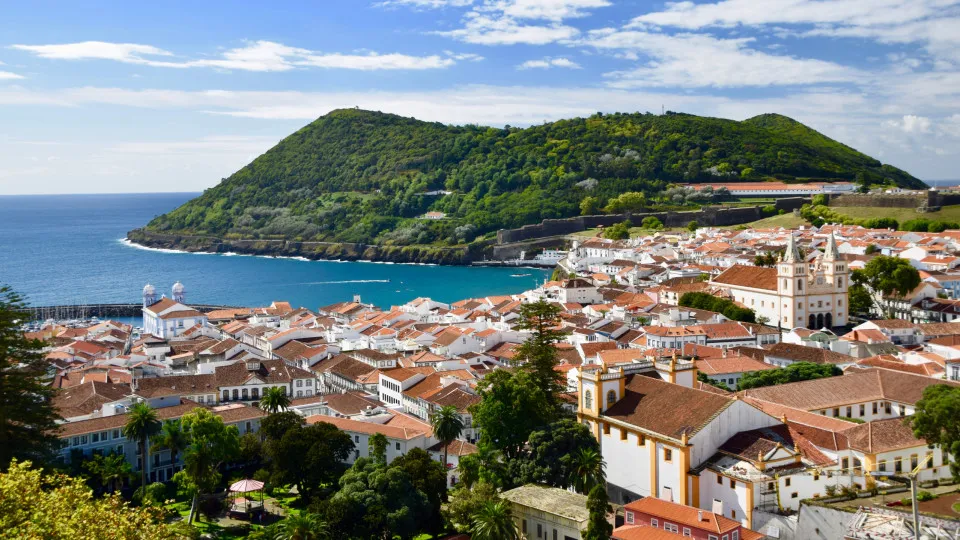
The Chamber of Commerce and Industry of Angra do Heroísmo (CCIAH) today advocated a reflection on the current model of regional air operation in the Azores, after disturbances on Monday due to adverse weather conditions.
© ShutterStock
18/11/2026
by
Lusa
A Câmara do Comércio e Indústria de Angra do Heroísmo (CCIAH) today defended a reflection on the current model of the regional air operation in the Azores, after disturbances on Monday due to adverse weather conditions.
In a statement released today, CCIAH states that “follows with concern the disturbances in the regional air operation last Monday, November 16, when adverse weather conditions, particularly in Ponta Delgada, caused the cancellation of about three dozen flights and delays in several links between islands.”.
The business organisation recognises that meteorology constitutes an inevitable conditioning of aviation activity in the Azores and the efforts of the professionals involved in managing these situations, but it is important to reflect “on the capacity of the current operational model to limit the spread of weather disturbances to other islands and to ensure, where conditions permit, the continuity of unaffected air links”.
Therefore, the management of CCIAH considers it appropriate to deepen, in collaboration with SATA and the competent authorities, “a technical reflection on the organisation of the regional air operation”, including the distribution of aircraft and crews, contingency procedures and the ability to recover programming after adverse weather events.
The assessment should also consider “the potential of a more distributed operational capacity, valuing the complementarity of existing airport infrastructure, including in Ponta Delgada and Lajes [on Terceira Island], without presupposing duplication of means or disproportionate cost increases”.
The CCIAH reaffirms its willingness to “constructively contribute” to this work, convinced that strengthening the resilience of regional air transport is a common objective, in the interests of companies, populations and all Azores islands.
After mentioning that for an archipelagic region interillary air transport is not only a mobility service, but it is “an essential instrument of territorial cohesion, of the operation of the economy and of the access of populations to fundamental services”, he recalls that each cancellation may represent the loss of a connection to the outside world, a displacement for health reasons, a professional commitment or a business opportunity.
“ It is not a question of questioning operational decisions made in adverse weather circumstances, but of seeking to identify opportunities for improvement that make the system progressively more robust, predictable and efficient”, he concluded.
On Monday the fog cancelled and delayed some flights at several airports in the Azores, and the SATA airline alerted passengers to the situation.
On that day, the SATA group informed the Lusa agency in writing, at 16:22 local times, that weather conditions had “conditioned air operations throughout the day” and “the main impacts had been recorded in interilha links”.
The same source said that, as usually happens in these situations, “flights are reprogrammed and passengers informed of the alternatives, seeking to restore operational normality as soon as possible, always taking priority the security of connections”.