
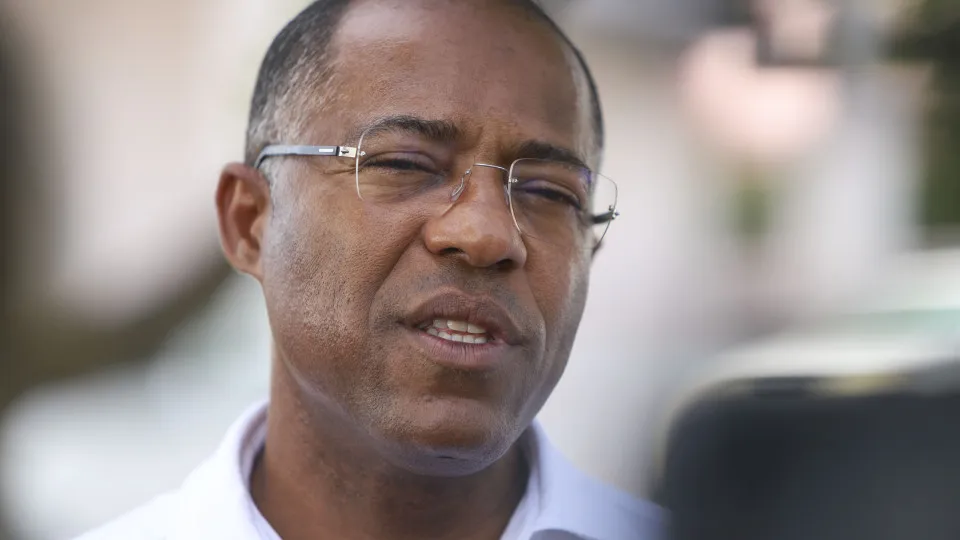
The Prime Minister of Cape Verde said today that the Government is reviewing mechanisms in the 2019 laws to protect the country from fluctuating fuel prices.
© Lusa
05/10/2026
by
Lusa
“ ANDwe are working on the review of the mechanisms provided for in the legislation of 2019 so that the country has more effective instruments for stabilizing and protecting families, transport, fisheries and companies,” Francisco Carvalho said.
He said, “when a reality changes, the State also needs to be able to review the answers and act”.
The Prime Minister spoke during a ceremony to present the balance sheet of the first 100 days of government.
Gasoline and diesel rose 12% in Cape Verde on Thursday, and the leader of the Movement for Democracy (MpD, opposition) asked the following day for the government to reactivate a mechanism that was applied by the former executive to limit fuel rises.
In the 100-day balance sheet, Francisco Carvalho reaffirmed the commitment to “put people at the center of decisions”, but said he found “a more demanding reality than was initially anticipated”.
“ Problems accumulated for years and reflected in the lack of water and light, in the precariousness of roads – which put people at risk – in the absence of social inclusion and economic development ", said.
Among the measures initiated indicated the subsidization of daycare centers and preschool, free of charge for higher education, the Barraca Zero program, to eliminate precarious housing, increase water security, with desalination projects in the city of Praia and Calheta de São Miguel, as well as support for agriculture and fisheries.
“ In health, we have already begun the fundamental change: to ensure universal and free access to public health with its inclusion among the priorities of the proposal of the State Budget for 2027 ", indicated.
Beyond 100 days, Francisco Carvalho pointed to the goal of the origin of electricity in Cape Verde “to reach 70% of renewable energy by 2031 and 100% by 2040”.
The Prime Minister also said he was “rebuilding a fundamental relationship between the government and the municipal councils,” ensuring that no municipality “will stay behind”.
“ One must have the courage to say that governing does not mean promising that everything will be resolved quickly. It means setting priorities, making choices, mobilizing resources, executing, monitoring, correcting when necessary and accountability”, he concluded.
The African Independence Party of Cape Verde (PAICV) led by Francisco Carvalho won the May parliamentary elections with an absolute majority in parliament and the new government took office in June.
In a global inflationary context, with the rise in fuel prices having implications for the rest of the shopping basket, the new government has passed a amending budget and has already included EUR 10.8 million in the proposal for 2027 to cope with new fluctuations.
The reduction in inter-ile transport prices and the gratuitousness of public health and higher education are some of the main measures promised by the executive.