
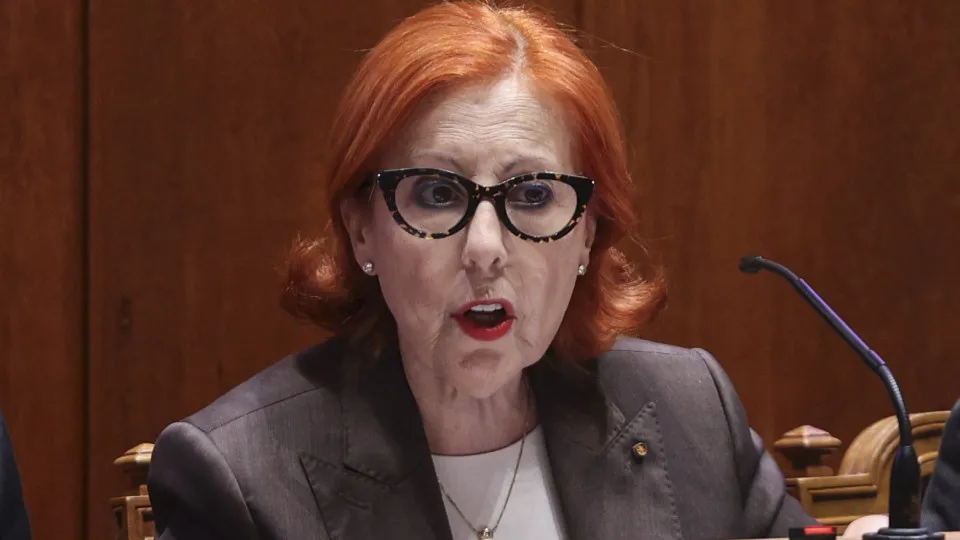
The Minister for Environment and Energy expects agreements on renewable energy, fair transition and dependence on fossil fuels to be reached at the climate summit starting on Monday, but warns about the crisis climate.
© Lusa
08/11/2026
by
Lusa
A minister for Environment and Energy expects agreements on renewable energy, fair transition and dependence on fossil fuels to be reached at the climate summit starting on Monday, but warns about the crisis climate.
Regarding the 31st meeting of the United Nations on Climate Change (COP31), Maria da Graça Carvalho considered, in an interview with the Lusa Agency, that it would be a “good COP” if all countries agreed with the objectives of increasing renewable energy, making a fair transition, reducing dependence on fossil fuels and paying great attention to adaptation. That these issues, stressed, were consensual and in conclusions.
The conference, in Antália, Turkey, takes place between 9 and 20 November and the minister will be representing Portugal in the second week (the first will be the Secretary of State for the Environment). It should then, I told Lusa, be responsible for the link between the European Union, Brazil and South Africa, and on the part of the “dossiers” should negotiate the question of fair transition.
In COP31 the European Union (EU) will reaffirm the need to triple the production of renewable energy, the importance of the world abandoning fossil fuels “in a fair, orderly and equitable way”, and reaffirm the commitment to triple funding for adaptation by 2035.
Turkey has proposed that a 35% target of electricity be approved in COP31 as final consumption on the planet by 2035, a goal with which the EU also agrees.
And at national level? Maria da Graça Carvalho replied: “We take our example, what we are doing, our example in electrification, reductions in emissions, bet on renewable energy and how it protected us in the price of electricity.”.
“ And we will also reaffirm our intention to become increasingly independent of fossil fuels. This is a very important point for us, and we must continue to act in this area,” he said.
On the fair transition, the ruler says that in this matter Portugal is one of the best examples at European level, recognized by the Commission, for the way it helps families and vulnerable companies to make this transition, through programs such as “E-lar” or “Vouchers” or electric cars.
In the interview with Lusa, the minister insisted on the need for the world to reduce dependence on fossil fuels, a single issue addressed at the Dubai COP in 2023. “This is an objective that I consider essential and that is reaffirmed again, that each country has its calendar and its action plan to reduce dependence on fossil fuels.”.
Maria da Graça Carvalho admitted that there is still much dependence on fossil fuels, Portugal included, which was visible in the current fuel crisis caused by the Iran war.
“Our life here, and in most countries, is very organized around the means of transport and systems that use fossil fuels and therefore will be difficult” he said.
“ For me it is perhaps the most important point in the COP and the most important point also in Portugal, how we managed to electrify more and what cannot be electrified, replace it with fuels, but of renewable origin, what we call green molecules, renewable gases”, said the minister.
And this transition, he said, is not just a climate issue, it is less dependent on wars, conflicts that can pose serious problems to the security of supply and sovereignty of a country.
“ I know that negotiations are going to be difficult negotiations because last year they were very difficult with the oil producing countries, very led by Saudi Arabia,” said Maria da Graça Carvalho, also pointing to Russia and its positions.
Last year, in Brazil, it was difficult to negotiate, because there was more aggressiveness of the oil producing countries. It is because, the minister said, they have always been firm countries to defend fossil fuels but the stance now “is more aggressive”, are countries “that have become more vocal and uncompromising”, which is part of the international climate.
Still optimistic, Maria da Graça Carvalho said that these meetings are always important, because they are a place where countries continue to meet and, even with difficult negotiations, continue to negotiate. “And that’s important.”.