
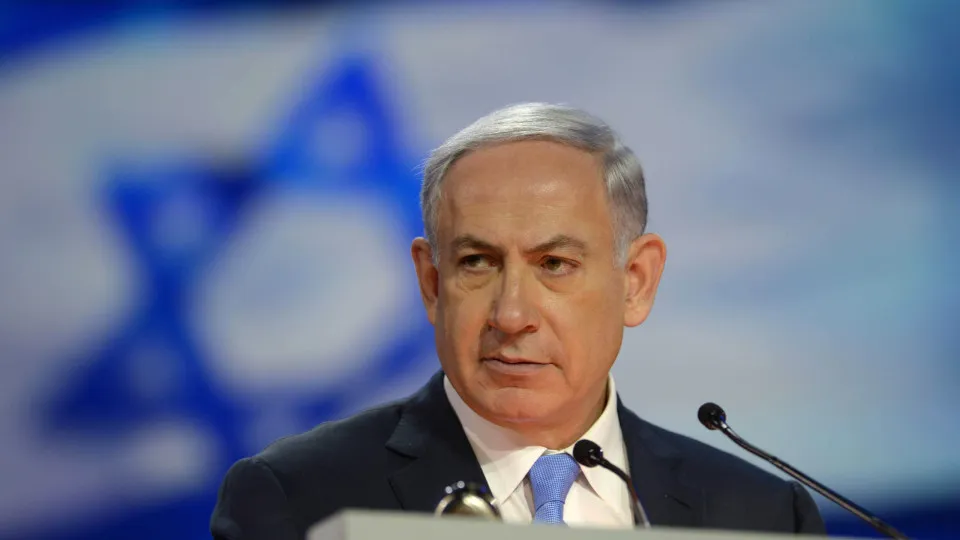
Israel's Prime Minister, Benjamin Netanyahu, today promised to remove radical politician Itamar Ben Gvir from the portfolio he occupies in the current government, National Security, and also Defense, in an executive out of the upcoming elections.
© Amos Ben Gershom/GPO via Getty Images
15/10/2026
by
Lusa
O israel's prime minister, Benjamin Netanyahu, today promised to remove radical politician Itamar Ben Gvir from the portfolio he occupies in the current government, National Security, and also Defense, in an executive out of the upcoming elections.
At an event in the Israeli city of Acre reported by the ‘Times of Israel’, Netanyahu rejected Ben Gvir’s taking over the Defense portfolio and ensured that the Likud party will take control of the ministry that the radical politician currently runs, that of National Security.
From the President, Isaac Herzog, he suggested that Ben Gvir, linked to the most radical sectors of society and known for his inflammatory claims on the Palestinians and Arabs, should not take over the portfolio of Defense.
The leader of the extreme Jewish power party reacted to Netanyahu's claims in a statement accusing the Likud party of preparing a coalition with former army chief and party leader Yasar, Gadi Eisenkot, who leads the polls.
"All this reinforces the conclusion that the decision was taken to expel ministers Ben-Gvir and Otzma Yehudit from the coalition, replace them with Eisenkot and turn these folders to the left," the radical party said.
The newspaper ‘Israel Hayom’ reported in the meantime that the United States advocated a post-election solution Netanyahu-Eisenkot, leading US ambassador to Israel, Mike Huckabee, to state that such a solution is “absolutely false.”.
“The United States Government is not trying to manipulate the Israeli elections or tell the Prime Minister what to do. End”, concluded the diplomat.
The vote for the legislative elections in Israel, scheduled for October 27, began today in almost 100 countries, including Portugal, although only reserved for diplomatic and family personnel.
According to the Israeli press, the early voting period for some 4,800 diplomatic and family officials takes place throughout today at 101 voting assemblies in 99 Israel representations around the world.
Correspondence votes of Israeli citizens abroad are not allowed except for diplomatic personnel.
On the day of the vote, Israeli voters abroad have been encouraged to travel to Israel expressly to vote.
Aid Coalition, a non-governmental organization based in the United States, has supported the logistics of this process, so that some 50,000 voters may be in Israel on the 27th.
Next week, military personnel deployed abroad may also begin to vote.
The next legislatures are one of the most uncertain of all, with the majority of polls giving a slight advantage to the Yashar party, former Chief of the Gadi Eisenkot Armed Forces, ahead of the Likud, of the current Prime Minister, Benjamin Netanyahu.
However, either of the two candidates falls short of the 61 Members who allow the control of the Knesset (Parliament), even with alliances of the pro-government bloc or opposition.
Arab parties can achieve up to 20 seats in the Knesset, according to polls.