
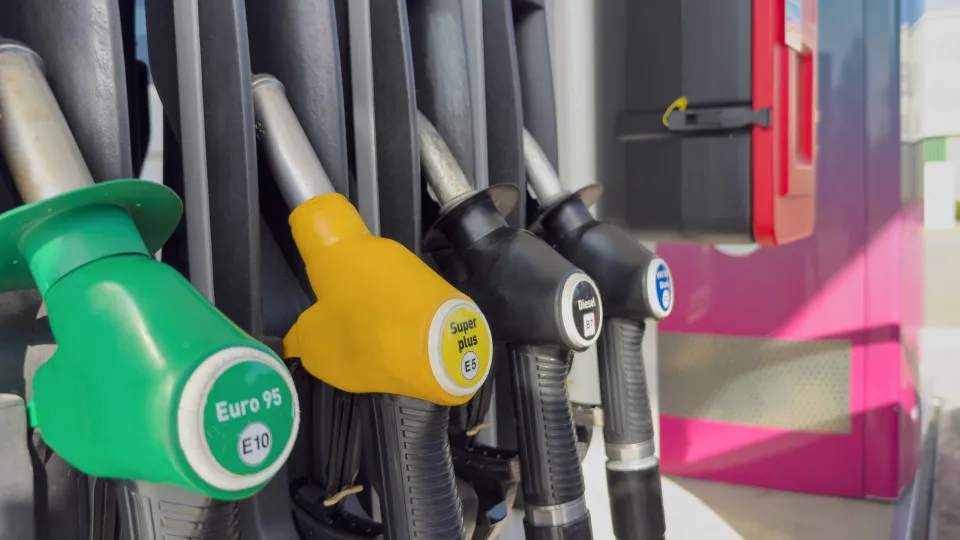
Mozambique spent $660,6 million (EUR 568.6 million) on fuel imports in the first half of the year, with the invoice going up 79.4% from March to June.
© Shutterstock
05/11/2026
by
Lusa
Moçambique spent 660.6 million dollars (568.6 million euros) on the import of fuels in the first semester, marked by supply and currency difficulties, with the invoice to be fired 79.4% from march to june.
Statistical data from the Bank of Mozambique indicate that fuel imports were spread between USD 236.4 million (EUR 203.5 million) in the first quarter and USD 424.2 million (EUR 365.1 million) in the second.
This was an increase of 79.4% in Mozambique's fuel import invoice from the first to the second quarter, a period precisely marked by fuel supply difficulties in several regions of the country and by constraints on access to foreign exchange to finance imports.
In April and May there were long queues at the gas stations, temporary closure of some pumps and supply difficulties that affected carriers, companies and consumers.
In the same six-month period Mozambique imported intermediate goods worth 1,198.7 million dollars (EUR 1,031.5 million), and fuel accounted for around 55% of this category of imports.
The Government decided on 7 May to increase fuel prices, with the liter of diesel rising 45.5% and that of gasoline 12.1%, justifying the measure with the effects of the conflict in the Middle East on international energy markets.
Gas oil continued to represent the largest share of the national energy invoice, with external purchases valued at USD 455.6 million (EUR 392 million) in the semester, followed by gasoline, with US$ 166.7 million (143.4 million), and aviation fuel (‘jet fuel’) with US$ 38.4 million (EUR 33 million).
In the second quarter alone, fuel imports amounted to $424.2 million (EUR 365.1 million), almost twice the $236.4 million (EUR 203.5 million), an increase driven mainly by diesel purchases, which went from $164.9 million to $290.7 million, and gasoline, which rose from $56.4 million to $10.3 million.
In March, the government explained that about 80% of the fuels imported into Mozambique originated in the Middle East and transited through the Strait of Ormuz, one of the world's leading oil and derivative transport routes. At the same time, the central bank has admitted that some companies in the sector have difficulties in accessing currencies to finance imports.
In response to the constraints on supply, the government approved in August an emergency mechanism to mobilise up to $50 million (EUR 43.1 million) via Petromoc State oil to ensure the import of fuel and national supply in crisis situations.
The measure, approved by the Council of Ministers on 3 August, allows the use of an account entitled by the Ministry of Finance and domiciled at the Bank of Mozambique to ensure payments to external creditors linked to the import of fuels.
The diploma also provides that, “exceptionally, and whenever justified”, the Minister of Finance, in coordination with the Minister responsible for fuel, can authorise the use of up to 40 million dollars (34.5 million euros) to ensure the import of liquid fuels into the internal market.
On the basis of the resolution, the executive justified the creation of this mechanism with the need to “ensure the import of liquid fuels into the internal market in the event of a crisis”.