
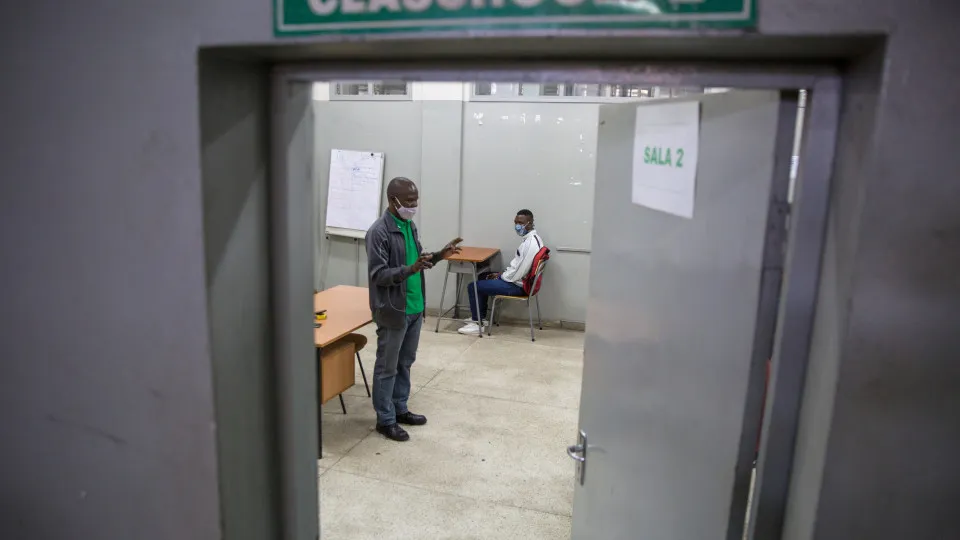
The Mozambican Government wants to adapt technical and professional training to the needs of the labour market and prepare young people for entrepreneurship, with greater participation of the private sector in defining the skills required by graduates.
© Lusa
12/11/2026
by
Lusa
O Mozambican government wants to adapt technical and professional training to the needs of the labour market and prepare young people for entrepreneurship, predicting greater participation of the private sector in defining the skills required by graduates, was announced today.
The Minister of Education and Culture, Edson Macuacua, argued in Maputo that educational institutions should give priority to the acquisition of practical skills, rather than a training focused on obtaining diplomas, in order to prepare graduates to meet the demands of companies and develop activities on their own.
“ The productive sector should dictate what technical schools must teach so that the training offer will marry perfectly with the real demand of the market ", said the minister, during the opening of the second National Meeting of Professional Education.
The ruler considered that training should prepare young people not only to seek employment, but also to create their own businesses, such as small workshops, agro-industry and technological services, defending the development of management skills, innovation and enterprise initiative.
“We don’t train young people just to get a diploma. We train professionals to fill real gaps in the business fabric,” he said, adding that the ministry has strengthened partnerships with the private sector, particularly through the Confederation of Economic Associations of Mozambique (CTA), to bring training closer to the needs of the labour market.
Macuacua acknowledged, however, that the subsystem faces challenges related to the rehabilitation and preparation of technical institutes and schools, the creation of laboratories, the expansion of access, the continuing training of teachers and the financing of institutions, defending greater articulation between the government, partners and the productive sector.
“ We also face the urgent need to rehabilitate and equip all our institutes and technical schools of laboratories, equipment and machinery that simulate the current industrial reality ", said the minister.
Mozambique started a professional education reform 20 years ago to replace the traditional, discipline-based model with a competence-based training system. ~
In June, the Secretary of State for Technical-Professional Education, Leo Jamal, acknowledged that the transition still faces difficulties, especially in the implementation of the new model by the institutions.
Data from 2024 indicated the existence of 264 professional education institutions in the country, against 171 in 2017, of which 162 were private. The number of students also increased from 83,000 in 2017 to 122,000 in 2024, with about 70% coming from private institutions.
The second National Meeting on Vocational Education brings together representatives of the Government, educational institutions, cooperation partners and the private sector, to assess the advances in vocational training, discuss the challenges of the subsystem and define strategies to bring the qualification of young people closer to the needs of the labor market.