
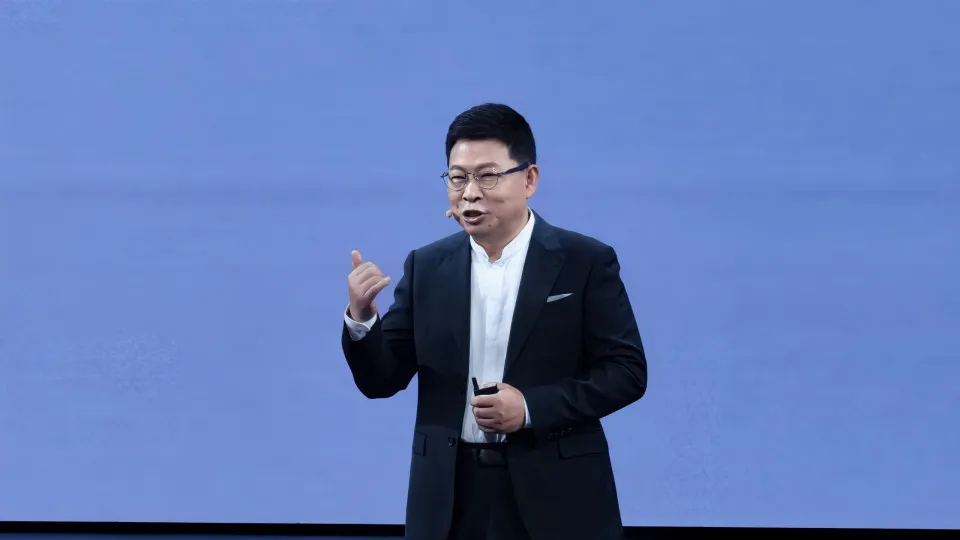
Huawei's president, Richard Yu, revealed that the company plans to gradually launch the HarmonyOS mobile phone operating system outside China to rival Android and iOS.
© Getty Images
07/10/2026
by
A Huawei revealed his plans to launch out of China the HarmonyOS operating system, created to rival the two largest mobile phone operating systems – Android and iOS.
The Chinese company did not reveal dates or the timetable it intends to follow to launch HarmonyOS in markets outside China, but Huawei's president, Richard Yu, said in an interview with international media that the launch will take place gradually.
“ We are considering taking HarmonyOS to the global market gradually in the future”, said the executive according to the android Headlines website. “ However, that is only our initial plan. We will do this slowly, step by step”.
It is worth remembering that the development of HarmonyOS began shortly after Huawei ceased permission to integrate Google services into its mobile phones, a situation caused by US President Donald Trump in his first term.
However, HarmonyOS has started to be integrated into virtually all Huawei products and today the operating system is a notable rival for Android and iOS in China. However, the software has not yet had the adherence Huawei expected in international markets.
Huawei says the HarmonyOS ecosystem currently has over 90 million devices, 450 thousand apps and services, 11 million developers and 23,000 innovation partners. Despite this, Yu recognized the difficulty of developing an operating system for mobile phones.
“Developing an operating system is not an easy task”, said Yu. “ Previously there were attempts by other brands such as Microsoft's Windows Phone, Samsung's Bada OS and Nokia's Symbian. They didn't succeed. Even if we did it many years later, we succeeded. I think it is certainly something incredibly difficult to achieve”.
In addition to HarmonyOS, Huawei’s president took the same opportunity to reveal that the brand’s latest triple fold – the Kill XT 2 – will also be launched on markets outside China.