
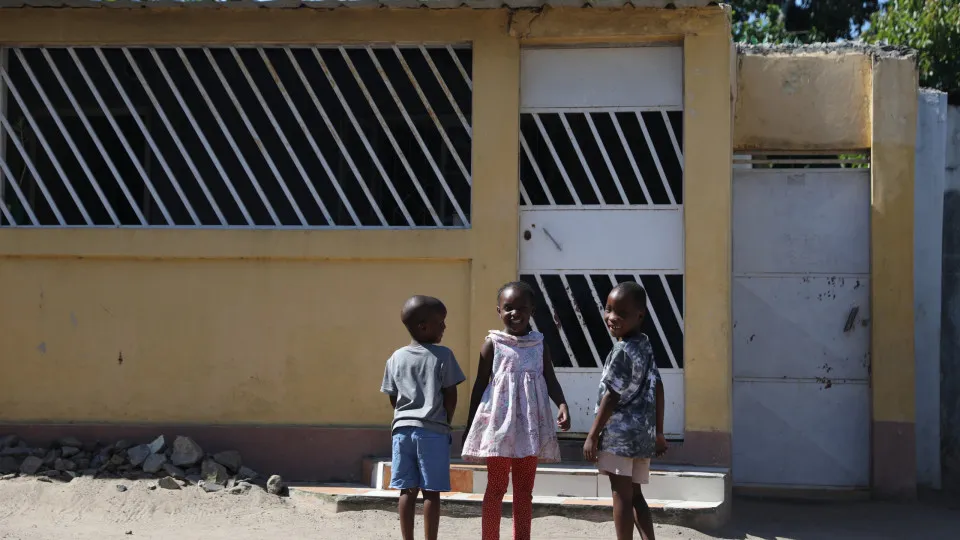
A quarter of Mozambican children have never received any vaccine, but an artificial intelligence platform is supporting the identification of risk areas in the country, guiding decisions to strengthen vaccination coverage.
© Lusa
08/11/2026
by
Lusa
Um fourth of mozambican children never received any vaccine, but an artificial intelligence platform is supporting the identification of risk areas in the country, guiding decisions to strengthen vaccination coverage.
The Advanced Data Analytics Platform (PAAD), developed by Zenysis Technologies, in partnership with the Ministry of Health of Mozambique and supported by Gavi (Vaccines Alliance), is being expanded to more than 80 districts in six provinces, after being used at national and provincial levels throughout the country.
According to an article published this week by Gavi, consulted today by Lusa, the tool uses artificial intelligence and advanced data analysis to integrate information from more than a dozen health systems, allowing authorities to gather in one place indicators on vaccination, vaccine availability and service performance.
The reinforcement of the use of the platform arises in a context in which 24% of Mozambican children are considered “zero dose”, that is, they never received any routine vaccine, according to data from the Demographic and Health Survey of 2022-2023 cited by the publication.
“ When data is spread across different systems, it is very difficult to understand quickly what is happening,” said Gabriel Risk Martins, Zenysis partner director, quoted in the article, adding: “PAAD gives teams a clearer view of vaccination activity, vaccine availability and other indicators in a single location.”
According to the publication, the platform helps health teams identify areas with low vaccination coverage, detect inconsistencies in the data and locate communities where there are gaps in vaccination, also reducing the time needed to consolidate and analyze information.
In the province of Zambézia, the provincial immunization officer, Alberto Jacenau, stated in the same publication that the use of the tool simplified the data analysis work.
“PAAD made my work much easier; now I can complete several analyses in a fraction of the time it used to take more than a day using excel,” he explained.
Technological advances coincide with a recovery of vaccination indicators and data from the United Nations Children's Fund (UNICEF) and the World Health Organization (WHO) cited by the publication indicate that coverage of the third dose of vaccine against diphtheria, tetanus and pertussis (DTP3) increased from 55% in 2022 to 70% in 2023.
The article also recalls that the technology was initially used during the response to cyclone Idai in 2019. After the integration of data related to a cholera outbreak into a virtual emergency operating room, cases in Sofala province have gone from about 400 a day to zero in less than a month.
For Bertrand Pedersen, interim partner and innovation manager of Gavi, experience demonstrates the potential of using artificial intelligence and data analysis in public health. “When INFUSE [the Alliance initiative] selected Zenysis almost a decade ago, no one spoke of AI for immunization. What we saw was the solution to a recurring problem: countries had many data that could not be used together,” he said.
In September, Mozambique announced the expansion of PAAD from the previous 15 districts to more than 80 districts in six provinces, while maintaining the use of the platform at national and provincial levels in the 11 provinces of the country.