More than 500 minors continue “surely” to “sleep in the storm” in the Príncipe de Ceuta neighborhood, almost four months after the entry of tens of thousands of people into the city, according to the association of residents.
© Getty Images
21/11/2026
by
Lusa
Mais 500 underage children continue “surely” to “sleep at the storm” in the Príncipe de Ceuta neighborhood, almost four months after the entry of tens of thousands of people in the city, according to the association of residents.
“ At least here in the Prince's neighborhood we're still almost the same. There are many people still on the street,” said Prince’s Residents Association president Ahmed Enfedal in an interview this week to Lusa in Ceuta, a Spanish enclave in North Africa with less than 20 square kilometers and a population of 83,500 people.
Located on a hillside attached to the border with Morocco where at the end of July more than 90,000 people entered in a few hours illegally, according to estimates from security forces, the Prince's neighborhood, classified as one of Spain's poorest and most vulnerable, had and continues to have the greatest direct impact of what happened this summer in Ceuta.
“ We were here and we started seeing a river of people coming up. Because 80% of the people who entered went up by the Prince,” said Ahmed Enfedal.
Almost four months later, “there are still many people” in the streets of a neighborhood with obvious social and infrastructure deficiencies and deficiencies.
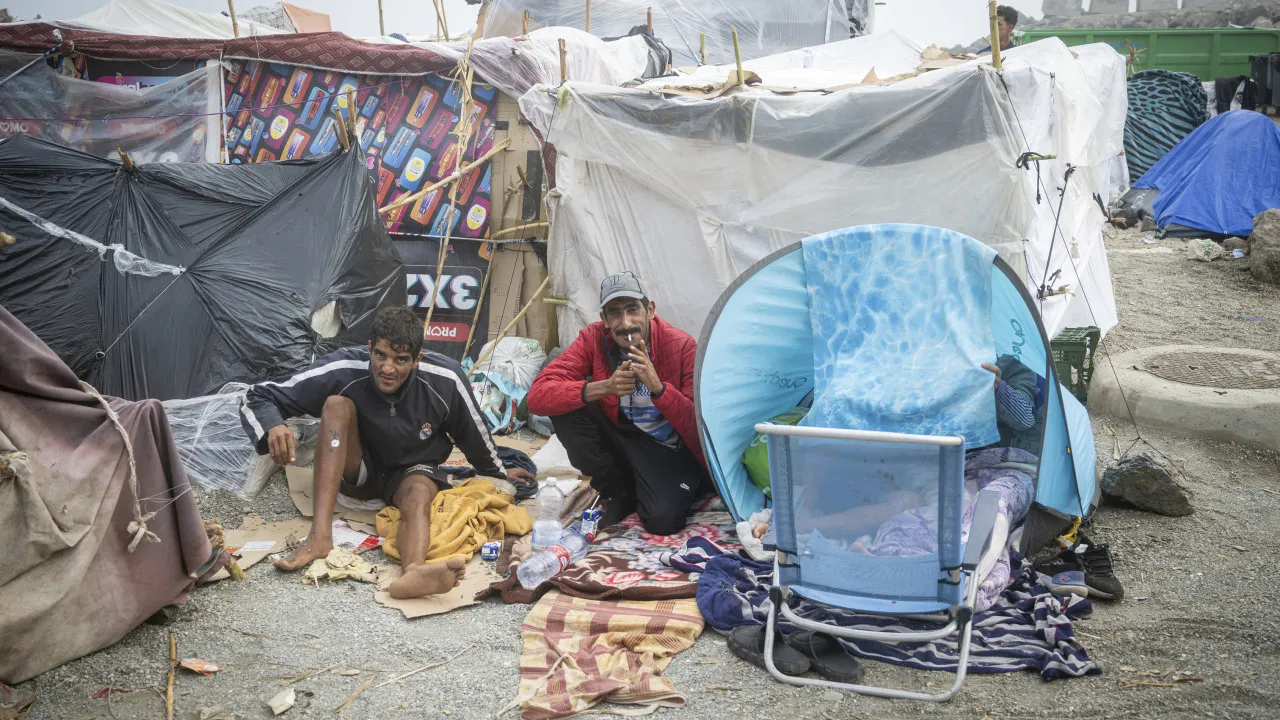
They are above all “many smaller who are not yet in reception centers and are living on the streets,” said Ahmed Enfedal.
“There are more than 500 of them, of course,” according to association records, which refers and communicates them to non-governmental authorities and organizations (NGOs), he added.
Above all, they are “boys between the ages of 16 and 17” who “go walking down the street, ask for food, clothing and sleep at the storm”, in an incomprehensible and unacceptable situation for Ahmed Enfedal.
The authorities argue that the reception centres are crowded and without more capacity, with 3,767 unaccompanied minors housed in specific facilities for children and adolescents of the autonomous city government and another 532 in temporary camps installed by the central executive and initially intended for adults only.
“ How is there no capacity? Camps are being set up everywhere. And now even one is being dismantled at the port [of the central government after the return of thousands of adults to Morocco]. And the kids are still on the street. The minors could have been housed there,” said Ahmed Enfedal.
“ They don't care or they don't want to. There's no explanation for this. Especially because the protection rights of the minor are being vulnerable,” he added.
According to Spanish legislation, foreigners who enter Spain unaccompanied are under the protection of regional governments, something that the central government (currently led by socialists) has repeatedly stressed in this situation in Ceuta.
The president of the association of residents of the Prince pointed out that there is no response for the 17-year-olds, who will soon be 18 years old and can already be “treated as an adult” and thus be the subject of repatriation and expulsion processes.
Much of the slope of the Príncipe district has a privileged view of Morocco, the sea and the fence lifted over the eight kilometres of the land border line between the Spanish city and the country of North Africa.
On 30 and 31 July, the tens of thousands of people who entered Ceuta illegally did so at the border crossing of Tarrajal, at the foot of the Prince, and most of them swam around the pontoon (known as a spike) that is right next to the control posts of the Spanish police.
When “the river of people” began “to climb by the Prince”, who was in the association of residents began to pull hoses for those who arrived “to clean themselves from the sand” and went to get first aid boxes to help with the wounds, said Ahmed Enfedal.
“ Then we started to see the girls of 13, 14, 15 going up with the group and started putting them into the association. They were very many”, he added.
The association eventually contacted “the neighborhood’s little voices” who live alone to ask them to welcome several girls and in the following days decided to proceed with a census of minors filling the streets of the Prince – recorded more than 4,800 in 48 hours.
“ We just wanted to have a reference to how many more or less children there could be here in Ceuta because at first the institutions said it was between 500 and 1,000. Which shocked us because we saw many here,” Ahmed Enfedal explained.
Faced with the delay in an institutional response, the association – which has an annual budget of 1,800 euros – ended up setting up a temporary camp to house minors and some women.
“ We started camp with 100 euros. Five people put 20 euros each and we bought some tarps. Then, we asked the mosques of the neighborhood for carpets and when this came out on the NGO televisions, associations and private people began to bring clothes, blankets and food,” said Ahmed Enfedal.
The camp eventually hosted 350 girls and 180 women for 47 days, until all were taken to official reception centers.
Giving the example of the neighborhood itself – “very stigmatized”, with high rates of poverty and unemployment, “drug problems” in a population of 12,000 people who are more than 99% Muslim – Ahmed Enfedal believes that “a border cannot be a problem” and can be safe and, at the same time, supportive.
“The problem is the management of this border. What you can't do is delegate border control to a third country. Here had to be the Frontex [European Border Agency], there have to be more patrols and we cannot prevent people who seek asylum, who are vulnerable people. I think that if things are done well we could have an orderly border, as the extreme right says, but also safe and, at the same time, solidarity ", defended.
Ahmed Enfedal stressed that the camp was raised “to try to protect the minors and to stop the neighborhood from being stigmatized”, after “in the first days the city had cleaned the center and expelled everyone [who had entered illegally] to the peripheries, to the part of the Prince, above all”.
“ They believed that since it is a dangerous neighborhood, as they say, there would be abuse and everyone would leave. The residents had a totally opposite reaction. It was solidarity, support, understanding the situation of the other,” he said.