The National Museum of Ancient Art (MNAA), in Lisbon, reopens today to the public, at 3:00 p.m., after renovation works financed by the Recovery and Resilience Plan (PRR), with new route by the decorative arts and cultural programming.
© Lusa
21/11/2026
by
Lusa
O National Museum of Ancient Art (MNAA), in Lisbon, today reopens to the public, at 15:00, after renovation works financed by the Recovery and Resilience Plan (PRR), with new route by decorative arts and cultural programming.
The intervention, which took place over a year and represented an investment of 8.5 million euros, allowed renewing expository spaces, recovering the Chapel of the Albertas, said the museum director on a visit with the Lusa agency, days before the reopening.
Maria de Jesus Monk indicated that a new reading of the collections was introduced, centered on the cultural meetings provided by the voyages and historical contacts of the Portuguese with other peoples.
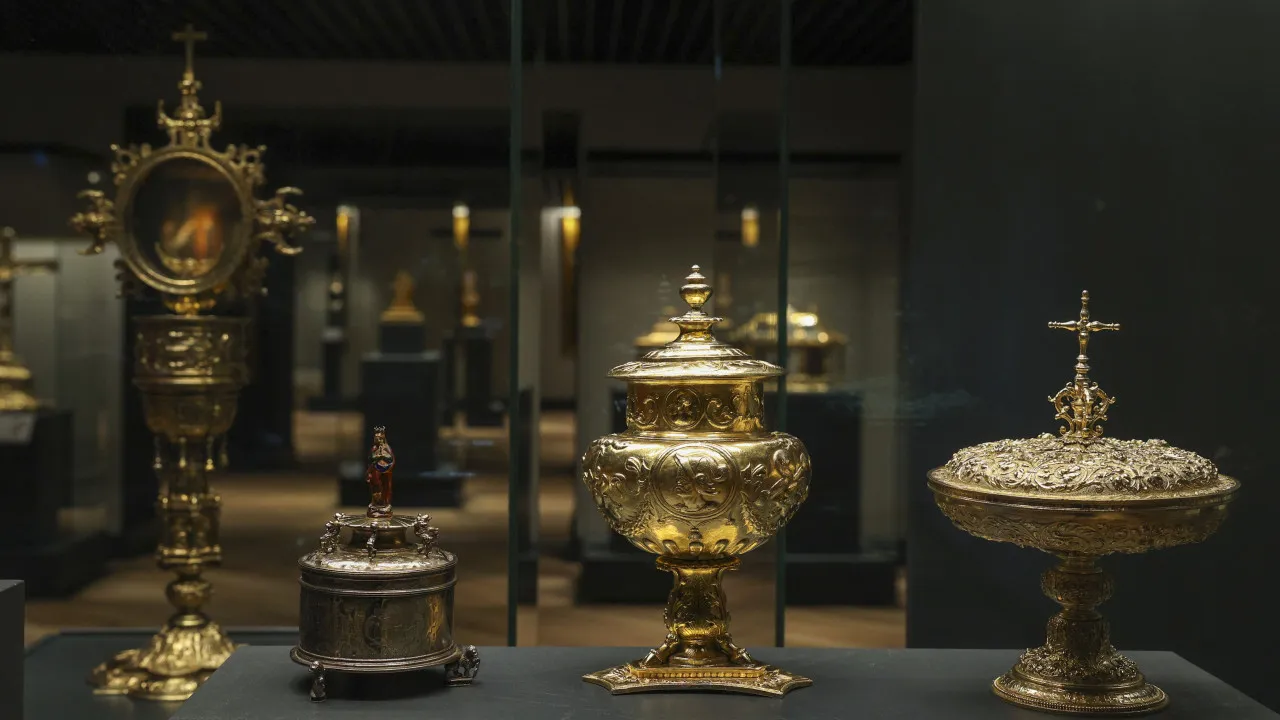
The new route, which responds to a “need to reformulate the exhibition discourse identified since 1994”, presents pieces from different origins and times, seeking to show how the influences of other cultures were incorporated into Portuguese art and identity.
“ We now have a speech about the meeting of the Portuguese throughout their history, the meeting in the direction of the journey that was constant at all times in our history, and that allowed us to come into contact with other cultures, with other objects”, explained Maria de Jesus Monk.
Among the novelties are works that were found in the reserves, some of which were restored, as a figure of Christ in ivory of the sixteenth century, by Francesco Terilli, the “Birth of St.John the Baptist”, in wood, by Juan de Montejo, and a “Virgin with the Child and St.John the Baptist”, in enameled baked clay, by Bartolomé Ordoñez.
The route also includes a rare Namban bed, recently acquired by the museum, and is accompanied by an olfactory experience, through a scent created by the perfumer Lourenço Lucena, called “Namban-Jin”, inspired by the collections and the history of cultural contacts.
“ All the senses are summoned in the museum, but we thought there was one that is not normally so present and we would like it to be summoned, which is the smell ", said, in the visit with Lusa, Maria de Jesus Monk.
The renovation included new windows, with better environmental and safety conditions, and technological resources that allow to deepen the knowledge of the works during the visit and at a distance, through digital content.
The project, also supported by the PRR, also allowed scanning thousands of objects in two and three dimensions.
Among the recovered spaces stands out the Chapel of the Albertas, the target of an integral restoration that sought to return its baroque appearance, having also been intervened the north facade, the roofs of the wing of the old Alvor Palace, the windows and the auditorium.
Despite the reopening, several areas will remain closed, since the work focused mainly on the decorative arts floor. The reorganisation of European painting is expected to be completed in the second half of 2027, while the area of major temporary exhibitions is expected to open at the end of that year.
From today, however, reference works of the collection will be accessible, including “The Temptations of Saint Anthony”, by Hieronymus Bosch, and paintings by Dürer, Cranach and Rafael.
The museum also opens a temporary exhibition of six Chinese wallpapers, which represent the porcelain cycle and have been restored over about a year and a half, with the support of the Millennium BCP.
Visitors will be able to continue to follow the conservation and restoration work of the São Vicente Panels, by Nuno Gonçalves, through the glazed structure that allows us to observe the team of conservative-restorators.
The director expects the process to be completed in the spring of 2027, allowing to present the set with its original appearance.
“ We hope, there for April, eventually, to have definitively restored the São Vicente Panels ready so that all the Portuguese can finally see them as they were originally painted ", said.
On the weekend of the reopening, the entrance will be free, with a programme of guided visits, workshops and concerts, which will last until 1 December and includes the opening of the international decorative arts floor and the opening of temporary exhibitions.
The institution expects to progressively recover the public after the closing period, aiming to reach 100,000 visitors in the first year of operation.
Created in 1884, the National Museum of Ancient Art comprises about 40,000 pieces and has the most relevant national public collection of Portuguese and European painting, sculpture and decorative arts, from the Middle Ages to the 19th century, including the largest number of works classified as national treasures.