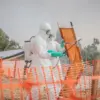
More than 6,000 people have died due to the outbreak of Ebola declared on May 15 in the eastern region of the Democratic Republic of Congo (DRC), which has spread to other provinces of the country, the Congolese authorities today reported.
© Reuters
29/11/2026
by
Lusa
M6000 people have died due to the outbreak of Ebola declared on May 15 in the eastern region of the Democratic Republic of the Congo (DRC), which has spread to other provinces of the country, the Congolese authorities reported today.
According to the latest report published by the National Institute of Public Health (INSP) of the DRC, with data collected until 27 November, a total of 12,254 confirmed cases were recorded, including 6,025 deaths.
The epidemic — the seventeenth outbreak in the DRC and the second most deadly in global history — has a mortality rate of 49.2%, and the contact tracking rate is 77.6%.
In addition, 3,387 patients have recovered from the disease so far, and another 1,160 are hospitalized or in isolation.
According to the INPS, the eastern province of “Ituri remains the epicenter of the epidemic, concentrating 67.1% of the total confirmed cases and 41% of the new notified cases”.
This province follows the neighboring North Kivu, which represents 55.1% of the new cases.
In total, the epidemic affects 69 health zones in eight of the 26 DRC provinces: In addition to Ituri and North Kivu, the outbreak hits Tshopo (central-north), Bas-Uélé (north), Haut-Uélé (northeast), South Kivu (east), Ubangui do Sul (northwest) and Ubangui do Norte (north).
The Director-General of the World Health Organization (WHO), Tedros Adhanom Ghebreyesus, confirmed on 18th that the epidemic continues to be a public health emergency of international importance following the quarterly meeting of the Emergency Committee on this crisis, which follows the outbreak.
The African Union (AU) Centers for Disease Control and Prevention of Africa (CDC) spoke similarly, warning on 15 November that the humanitarian crisis, insecurity and displacement of the population in eastern DRC may result in a “great continental outbreak”.
The epidemic has already surpassed that which occurred in the same Congolese region between 2018 and 2020, although it is still far from the most serious to date, which caused about 11,000 deaths and 28,000 cases in West Africa between 2014 and 2016.
The outbreak spread to neighbouring Uganda, with an end declared by the World Health Organization (WHO) on 26 August, after 20 confirmed cases were registered, including 15 imported from the DRC, including two deaths.
Cases related to the outbreak in Kenya (nine, including two deaths), Nigeria (one) and France (one case) have also been detected, and three people have been removed after they have contracted the virus in the DRC, the Netherlands (one) and Germany (two).
The Bundibugyo strain, responsible for the current epidemic, does not have specific treatments, but WHO is working on two vaccines that have already started phase 1 trials in humans and that have so far proved safe, although their development may take several months.
In addition, Uganda started on Friday the first phase 1 clinical trial of an experimental messenger RNA vaccine (mRNA) against this strain.
Ebola virus is transmitted by direct contact with body fluids from infected people or animals and causes severe haemorrhagic fever, vomiting, diarrhoea and internal bleeding.