Guinean political coalitions PAI-TR and API-CG reject the extension of the transition for another two years, warning the risk of institutionalization of a military tutelage in the country.
© Lusa
28/11/2026
by
Lusa
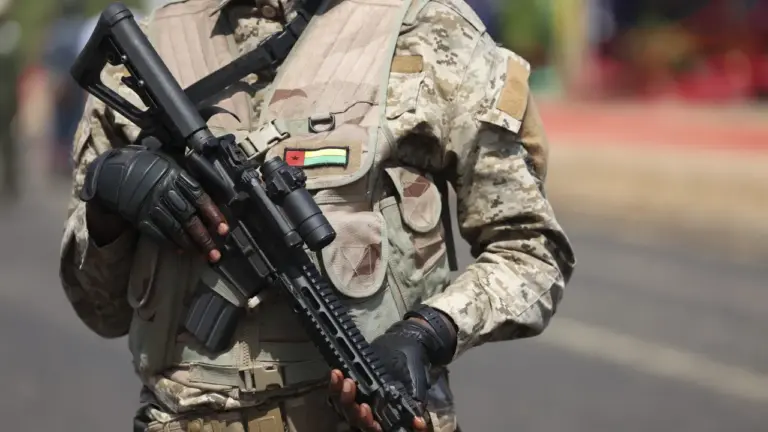
Aguinean political coalitions Platform of the Inclusive Alliance (PAI-TR) and Inclusive Patriotic Alliance – Cabas Garandi (API-CG) reject the extension of the transition period for another two years, warning the “risk of institutionalization of a military tutelage” in the country.
The position of the two political coalitions was expressed in a joint statement released by the Guinean press, consulted today by Lusa on the Internet.
In the document, the two coalitions expressed “surprise and stupefaction” with the military’s decision to mark the legislative and presidential elections for November 2028, classifying the measure as unilateral because it was announced on the same day that the President of the Transitional Republic, General Horta Inta-a should begin consultations with the parties in an inclusive political dialogue.
For the two coalitions, the decision raises doubts as to its compliance with the Transitional Political Charter, approved on 27 November 2025, which set a transitional period of 12 months for the management of the country by the military.
The PAI-TR and API-CG maintain that the marking of a new electoral date “does not confer legitimacy” to unilaterally prolong the transition period and call for a “clear separation” between political power and military institution in the country.
They also call on the Castrian authorities to reassess their position in order to allow the return to constitutional normality, the replacement of democratically elected institutions and the realization of free, fair and transparent scrutiny.
Despite the challenge, the PAI-TR and the API-CG reaffirm the readiness for dialogue aimed at a consensual national solution, stressing that political legitimacy must emanate exclusively from the popular will, in accordance with the Constitution and the law.
“It is up to the Armed Forces to serve the Republic, not to replace the sovereign will of its citizens,” the two coalitions concluded in the statement.
The Transitional President of Guinea-Bissau, Horta Inta-a, marked this Wednesday the legislative and presidential elections for November 26, 2028.
According to a note issued by the Guinean Presidency, the postponement was decided after an evaluation of the electoral process concluded that there are currently no technical, material and financial conditions for the vote.
The polls were initially scheduled for December 6 this year.
Last October, the transition prime minister, Ilídio Vieira Té, had already warned about the lack of operational conditions, referring the definition of a new date to the head of state.
The Guinean military staged a coup a year ago today, on November 26, 2025, a day before the publication of the results of legislative and presidential elections, and removed from power the then President and candidate, Umaro Sissoco Embaló.
They created a National Transitional Council (CNT), which took over the powers of parliament, and appointed Ilídio Vieira Té Prime Minister and Minister of Finance.
The opposition considered that this was a staged coup d'état to allow Sissoco Embalo, who has been living regularly in Morocco since leaving the country, to return to power through new presidential elections.