
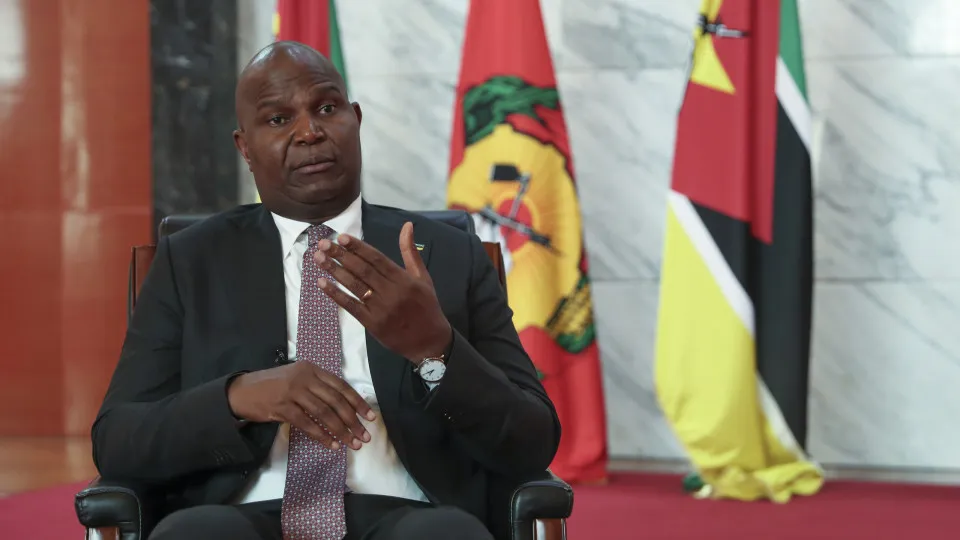
The Mozambican President said today that the main lesson left by the General Peace Agreement, signed 34 years ago, remains the capacity of Mozambicans to replace confrontation with dialogue when the country seeks to consolidate political stability.
© Lusa
04/10/2026
by
Lusa
Fcalling at the central ceremony of the Day of Peace and Reconciliation, held in the city of Xai-Xai, Gaza province, the head of state, Daniel Chapo, considered that October 4 continues to represent more than a historical landmark.
“ On this day we remember not only a document signed in Rome, but the noblest decision that a people can make, by replacing confrontation with dialogue, division with reconciliation and war with hope”, he said.
According to Chapo, the agreement reached between then President Joaquim Chissano of the Mozambique Liberation Front (Frelimo), in power since the country's independence in 1975, and Afonso Dhlakama, the historic leader of the Mozambican National Resistance (Renamo), who died in May 2018, which ended the 16 years of civil war in Mozambique, demonstrated that political and military conflicts can be overcome through dialogue and negotiation.
“ Mozambicans have proved to the world that the word can be stronger than the weapon, that dialogue can overcome the conflict and that love for Mozambican homeland can be greater than any division among Mozambicans ", said.
The President argued that peace achieved in 1992 is not a definitive achievement and every generation has a responsibility to preserve it: “Peace is not a gift we receive to keep in a window of history. Peace is a commitment that each generation must renew.”.
According to Chapo, the current process of Inclusive National Dialogue is part of this effort of permanent renewal of the national commitment to peace, at a time when Mozambique seeks to overcome the political and social tensions that followed the general elections of 2024, marked by demonstrations, violence and destruction of public infrastructure in various parts of the country.
“The peace of 1992 silenced weapons. Today’s peace requires us to be able to listen to each other and tomorrow’s peace will depend on our ability to build a country where every citizen finds dignity, opportunities and hope,” he said.
In his speech, the President also recalled the human and economic costs of the armed conflict which ended in 1992.
“It was 16 years of armed conflict, more than a million Mozambicans died and the Mozambican economy, including the social fabric, was completely torn apart,” she said.
Chapo also took the opportunity to warn the need to transmit to the younger generations the value of peace. According to the President, this reality is a victory for peace, but also a challenge for the preservation of collective memory.
“Millions of young people were born after 1992. Millions of young people did not live the war of the 16 years (...) many never heard the sound of war and a weapon ", he said.
The Head of State also associated political stability with economic development, arguing that peace dividends should translate into employment, income and opportunities for the population.
“ The fruits of the fight for peace must increasingly reach the concrete life of Mozambicans ", concluded.
In 2013 there were other clashes between the parties for 17 months, which only stopped the signing on 5 September 2014 of the Agreement on the Termination of Military Hostility, between Dhlakama and former Head of State Armando Guebuza.
A few years later, on August 6, 2019, the National Peace and Reconciliation Agreement was signed, the third and being materialized, between the then Mozambican President, Filipe Nyusi, and the leader of Renamo, Ossufo Momade, predicting, among other things, the Demilitarization, Disarmament and Reintegration (DDR) of the armed arm of the main opposition party.