
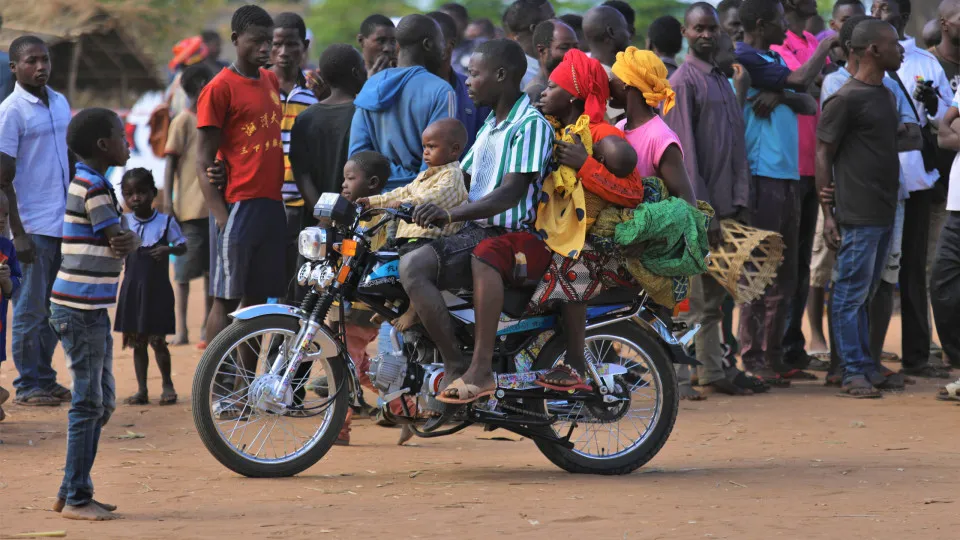
At least 4,445 people fled between September and October from various locations in the Mozambican province of Cabo Delgado due to attacks by armed insurgent groups, according to data from the International Organization for Migration (IOM).
© Lusa
13/10/2026
by
Lusa
4.445 people
Plink less 4,445 people fled between September and October from various locations of the Mozambican province of Cabo Delgado due to attacks by armed insurgent groups, according to data from the International Organization for Migration (IOM).
According to the latest report of the IOM emergency displacement monitoring mechanism (ETT), population movements occurred between September 21 and October 2 in the districts of Nangade, Macomia, Muidumbe and Mocímboa da Praia, involving 4,445 people, corresponding to 1,493 households.
According to the organization, the movements were triggered by attacks and fear of further attacks by non-state armed groups, with the largest movements registered in the locality of Nambedo, Nangade district, from which 2,682 people came out, followed by Chai, in Machonia, with 569 displaced people, and Miengueleua, in Muidumbe, with 370.
Most of the displaced population was registered in Nangade, which welcomed 3,041 people, equivalent to 68% of the total, including 2,307 displaced persons in Nambedo and 734 who followed to Muadi Center in Mualela.
In the district of Macomia 1,174 arrivals were registered, especially in the Center of Nondje in Muagamula, which welcomed 815 people, followed by the centers of Xinavane, Serração and Songueia.
The report also refers to the movement of 156 people to the district of Mueda, 48 to host communities in Namacande, Muidumbe district, and 26 from Mocímboa da Praia to Mpeme, Mueda.
The majority of displaced people took the route on foot or by bus, including 691 men, 1,364 women and 2,390 children, representing 54% of the total affected population.
The IOM also identified 85 pregnant women, 73 elderly over 60 years of age, 31 unaccompanied or separated from families, 31 disabled people and 10 people with chronic diseases among displaced persons.
According to the survey, the duration of displacement remains uncertain, while food, shelter and non-food goods constitute the most urgent needs of the affected population.
A province rich in natural gas, Cabo Delgado, northern Mozambique, has been devastated since 2017 by an armed insurgency that has already caused more than 6,600 deaths and 1.2 million displaced since then, according to international organizations.
The incidents associated with the conflict in Cabo Delgado increased 10% in the first semester, compared to 2025, with kidnappings being increasingly used for rescues and forced recruitment, including children.
The conclusion is contained in the report “Mozambique: The cost of inaction”, released by the United Nations Office for the Coordination of Humanitarian Affairs (OCHA), released in September, which describes a worsening of the security situation in the north of the country and alerts the increasing impact of violence on civilians.
According to the document, “in the first six months of 2026, more than 400 incidents of conflict were recorded, 10% more than in the same period of 2025,” including episodes such as homicides, destruction of dwellings, looting and kidnappings.
Currently, some 1.38 million people live with the consequences of the trip to Cabo Delgado, including approximately 662,000 internally displaced people and 722,000 inhabitants who have returned to their respective areas of origin.
“ Behind these figures are families repeatedly forced to leave their homes, children whose education has been interrupted and communities whose livelihoods and access to basic services have been destroyed,” the UN said.