
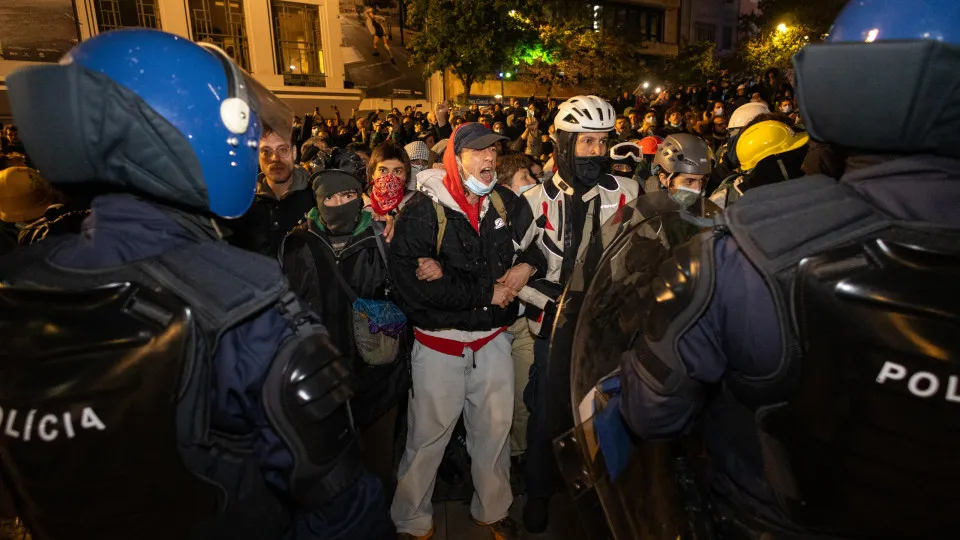
About half an hour after the emptying of Praça D. João I, the police and protesters of the Porto Camp came back to confront the City Hall. The group, which demand the reversal of the new Rent Law, was beaten to the batonada and there was a skirmish with an armed man.
© Diogo Baptista/SOPA Images/LightRocket via Getty Images
01/11/2026
by
Lusa
Ca half hour after emptying the square D. João I, the police and protesters of the Porto Camp met again at the City Hall.
The organization's call was for protesters to go up Allied Avenue to count wounded and missing. Along the way, the protesters were beaten to batonada, found Lusa on the spot.
In the same period there was a skirmish with some men to the civilian, one of them wielding a firearm.
The group eventually gathered near the Trinity station.
According to the organization, in a preliminary review about 5:45 p.m., today's demonstration resulted in 35 minor and three serious injuries.
The lawyer of the movement, Tiago Machado, said that seven people were arrested.
Before, in front of the City Hall of Porto, about half an hour after the police load that “pulled” the protesters to the Allies, two protesters who were wearing a helmet and masked in the cordon reported to Lusa that they were “pulled by police with batons, knees and kicks”.
“They used everything against someone who was just making a cord. The amount of people who had to pull themselves up [at the site of a concentration of people] was a lot. This time they pushed more but we retreated faster ", described.
During the night, the PSP and the protesters talked about staying in the square, with the police calling for the tents to be dismantled, a condition that would allow them to stay overnight. The gifts rejected the dismantling of the tents.
At 3:50 p.m., a subintendent of PSP talked to the lawyer of the movement, Tiago Machado, about the legal foundations of the intervention.
The protestors demand the reversal of the new Rent Act, the end of demolitions and evictions without alternative housing, a brake on housing purchase by real estate funds, the increase in public housing, the recovery of vacant buildings for housing purposes and “truely accessible” ceilings to income.